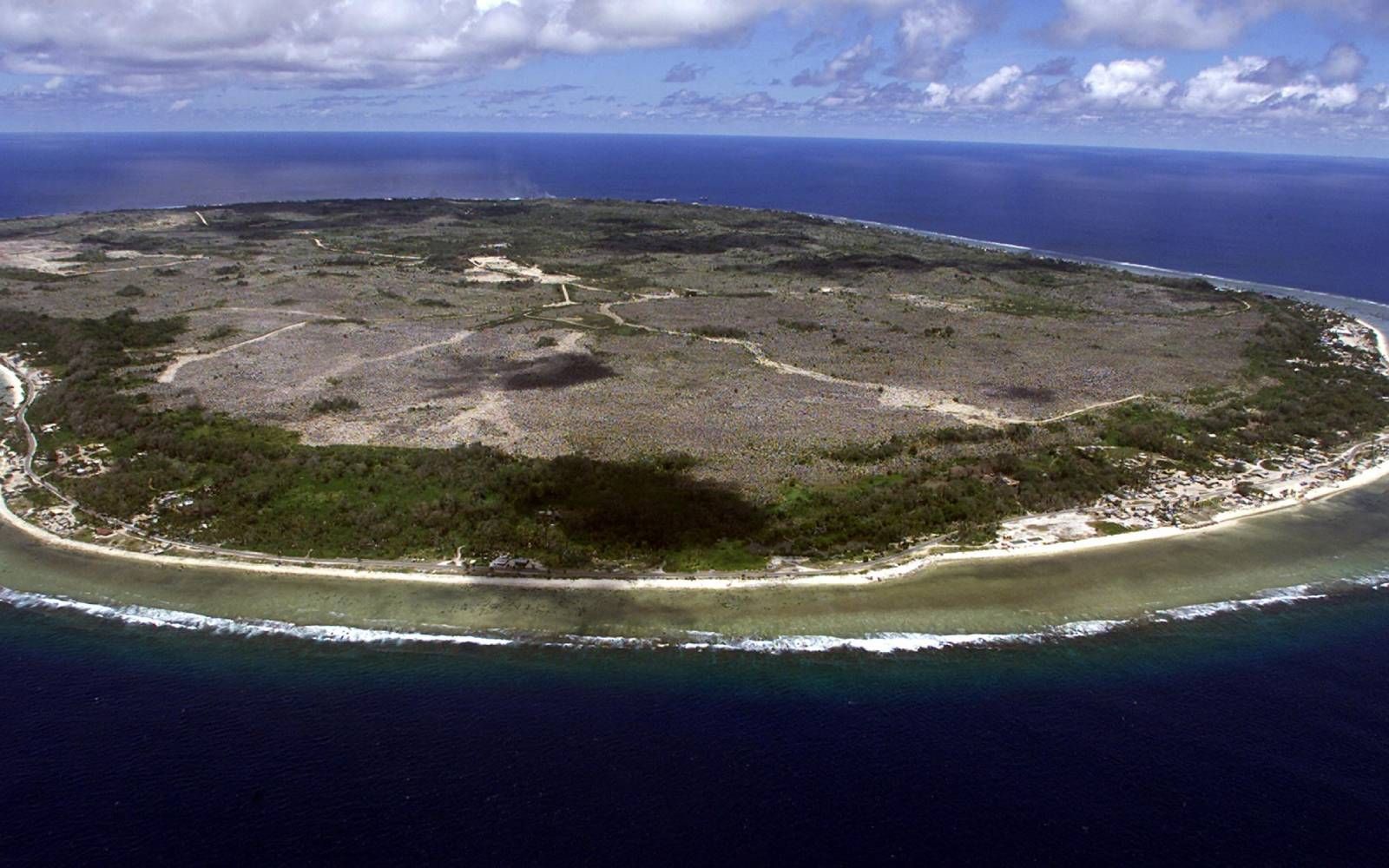
Nauru would change its name to “Naoero” to “more faithfully honour our nation’s heritage, our language, and our identity”, President David Adeang said in a statement Tuesday evening.
The tiny nation’s native language is “Dorerin Naoero”, which is spoken by the vast majority of its approximately 10,000 inhabitants.
“Nauru emerged because Naoero could not be properly pronounced by foreign tongues, and was changed not by our choice, but for convenience,” the government said in a statement explaining the change.
“This name change will be reflected across the country, from the renaming of the national aircraft and ships, to official identity regionally and internationally, including at the United Nations, and across national official records and symbols.”
The government must hold a referendum because the name change requires altering the country’s constitution.
Germany claimed Nauru as a protectorate from the late 1880s until World War I, when the island was captured by Australian troops.
It was jointly administered by Australia, the United Kingdom and New Zealand before gaining independence in 1968.
Nauru is one of the world’s smallest countries, with a mainland measuring just 20 sq km.
It is especially vulnerable to climate change and has high rates of unemployment and health issues, a recent World Bank assessment said.
Unusually pure phosphate deposits – a key ingredient in fertiliser – once made Nauru one of the wealthiest places, per capita, on the planet.
But those supplies have long dried up, and researchers today estimate 80% of Nauru has been rendered uninhabitable by mining.