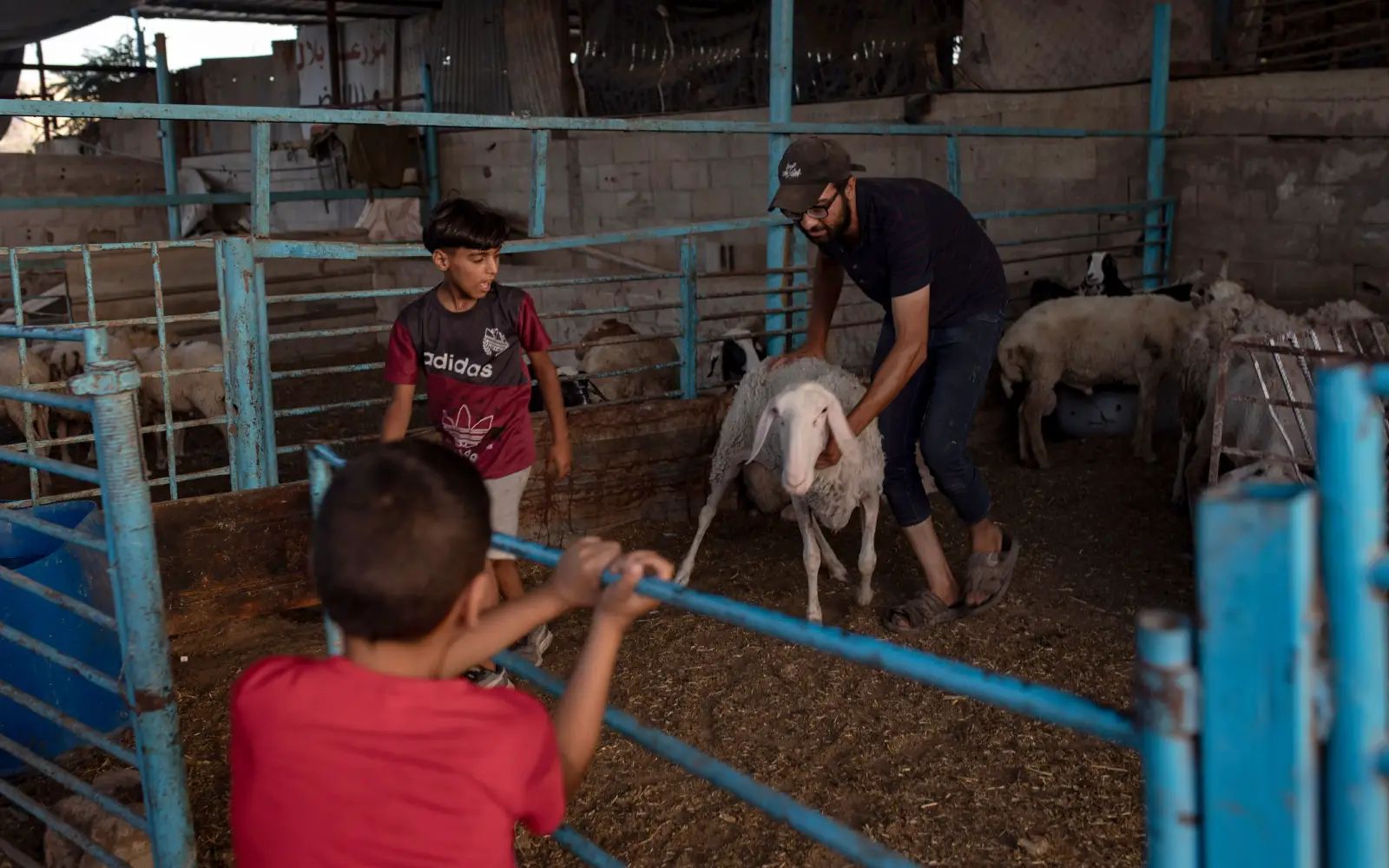
The territory’s ministry of agriculture said the livestock sector has been devastated by the ongoing war since October 2023, alleging the destruction of farms, veterinary facilities and feed storage sites, as well as the killing of large numbers of animals.
It said imports of live animals, feed and veterinary medicines have dropped to “zero” due to the continued closure of crossings.
Officials said Gaza previously received between 10,000 and 20,000 cattle and 30,000 to 40,000 sheep annually ahead of Eid, but this year supplies have collapsed entirely, contributing to a breakdown in markets.
Traders and breeders said remaining livestock numbers have fallen sharply, with some estimating sheep availability at no more than 10% of pre-war levels and warning that rising feed costs have pushed many out of the sector.
A livestock trader told Qatar News Agency (QNA) that he lost his farm and dozens of cattle during the war and now holds only a fraction of his previous stock, describing severe difficulties in keeping animals safe amid continued insecurity.
Prices, according to traders, have risen dramatically, with some reporting that a sheep which previously cost around US$300 now sells for between US$4,000 and US$5,000.
Residents said the crisis has stripped Eid of its traditional celebrations.
A displaced mother of five described living in tents and struggling to feed her children, saying the holiday now brings “grief rather than joy”.
Another resident said many families have not seen fresh meat for years, as high prices have put it far beyond reach, while others said they now rely on limited food aid and cope through prayer and fasting during the first days of Dhul Hijjah.
Calls have increased for international organisations to launch cross-border sacrificial aid programmes, as hopes remain pinned on an end to the conflict and relief from blockade conditions.