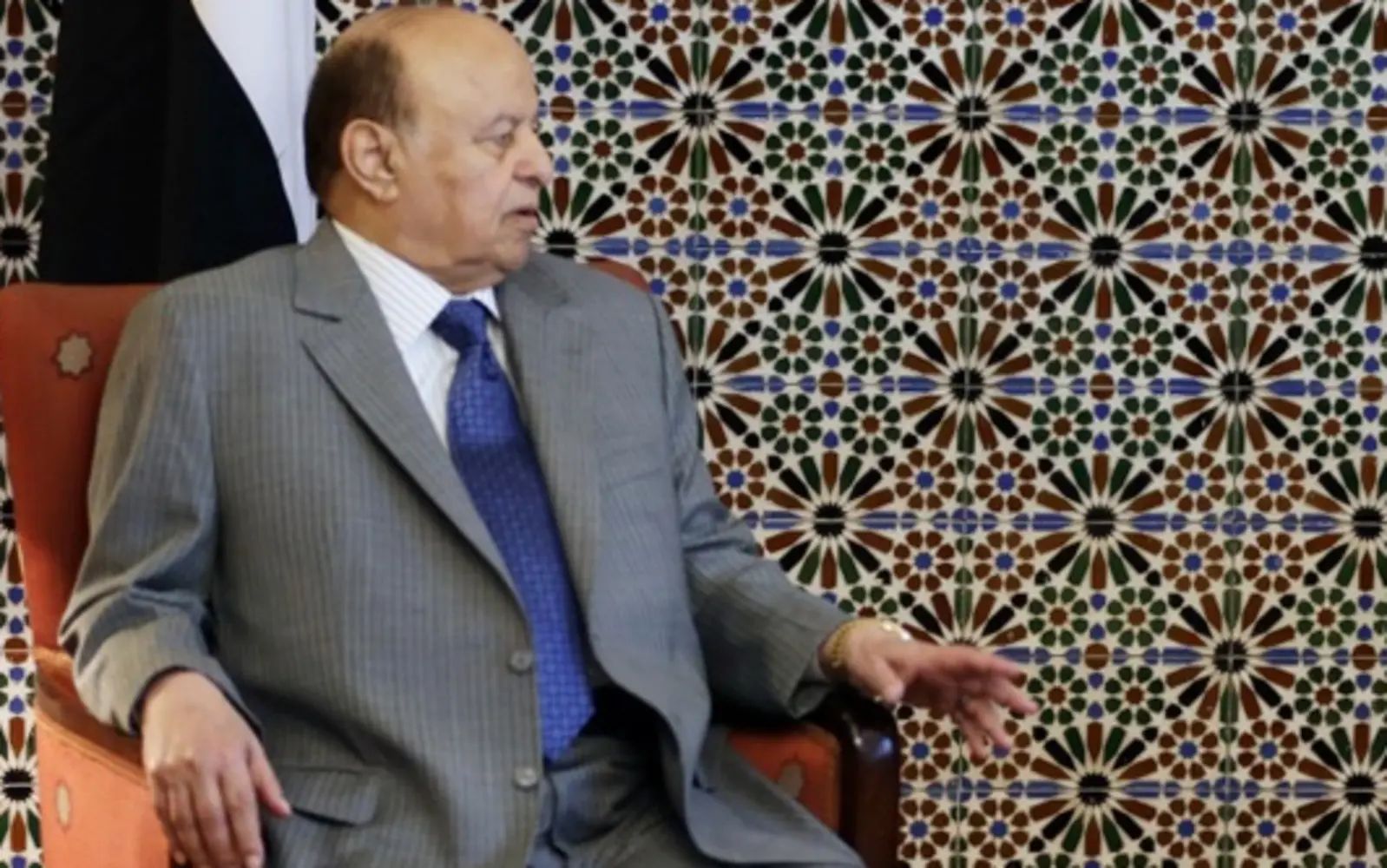
Three days of mourning, with lowered flags and condolence books, was declared to commemorate Hadi, who oversaw a tumultuous period when the Houthis seized large swathes of Yemen, triggering a devastating civil war.
The presidency’s statement praised his “wise leadership”, saying he “led the Yemeni state through one of the most complex phases the country has ever experienced, amid war, coup, and unprecedented humanitarian and economic crises”.
Hadi, who was in his eighties, “died in the Saudi capital following a sudden health crisis”, a source in the presidency told AFP separately, requesting anonymity.
Hadi fled to Saudi Arabia in 2015 as war erupted between the Iran-backed Houthis, who had forced the government from the capital Sanaa, and a Saudi-led coalition.
He handed over his powers – reportedly under Saudi pressure – to the newly formed Presidential Leadership Council in April 2022, as Yemen entered a UN-brokered ceasefire.
Yemen remains divided between the Houthi-controlled north and the government-run south, which includes a patchwork of factions.
“Although the ceasefire is largely holding, the war left hundreds of thousands dead through direct and indirect causes. Last year 19.5 million people needed aid,” the UN said.
Hadi took office in 2012 after a long stint as vice president to Ali Abdullah Saleh, who reluctantly ended his 33 years in power during Arab Spring protests.
Hadi, a career military officer, was waved through as the sole candidate in an election in which he won 99.8% of the vote.
After the Houthis overran the capital in 2014, they placed Hadi under house arrest in early 2015. He escaped in February that year.
In 2022, he made the surprise announcement that he was transferring his powers to the eight-member Presidential Leadership Council, headed by Rashad al-Alimi.
Rise and fall
Born in 1945, the discreet Hadi graduated from a military officers’ school in 1964.
He completed military training in Britain, followed by specialised instruction in armoured weapons in Egypt until 1970.
He allied himself with Saleh before the unification of North Yemen and communist South Yemen in 1990, and was appointed defence minister in 1994, when Saleh crushed a southern secession attempt.
However, despite serving many years as vice-president, Hadi never played a top role in politics before taking over Saleh’s powers in June 2011, after Saleh was wounded in an attack on his presidential compound.
A few months later, he helped convince Saleh, confronted with widespread street protests, to resign as part of a transition plan that paved the way for Hadi’s election.
However, the would-be consensus figure oversaw a sharp slide into grinding conflict that triggered what the UN said was then the world’s worst humanitarian catastrophe.
Hadi, who was married with children, wrote several books, including one on the military defence of mountainous areas.