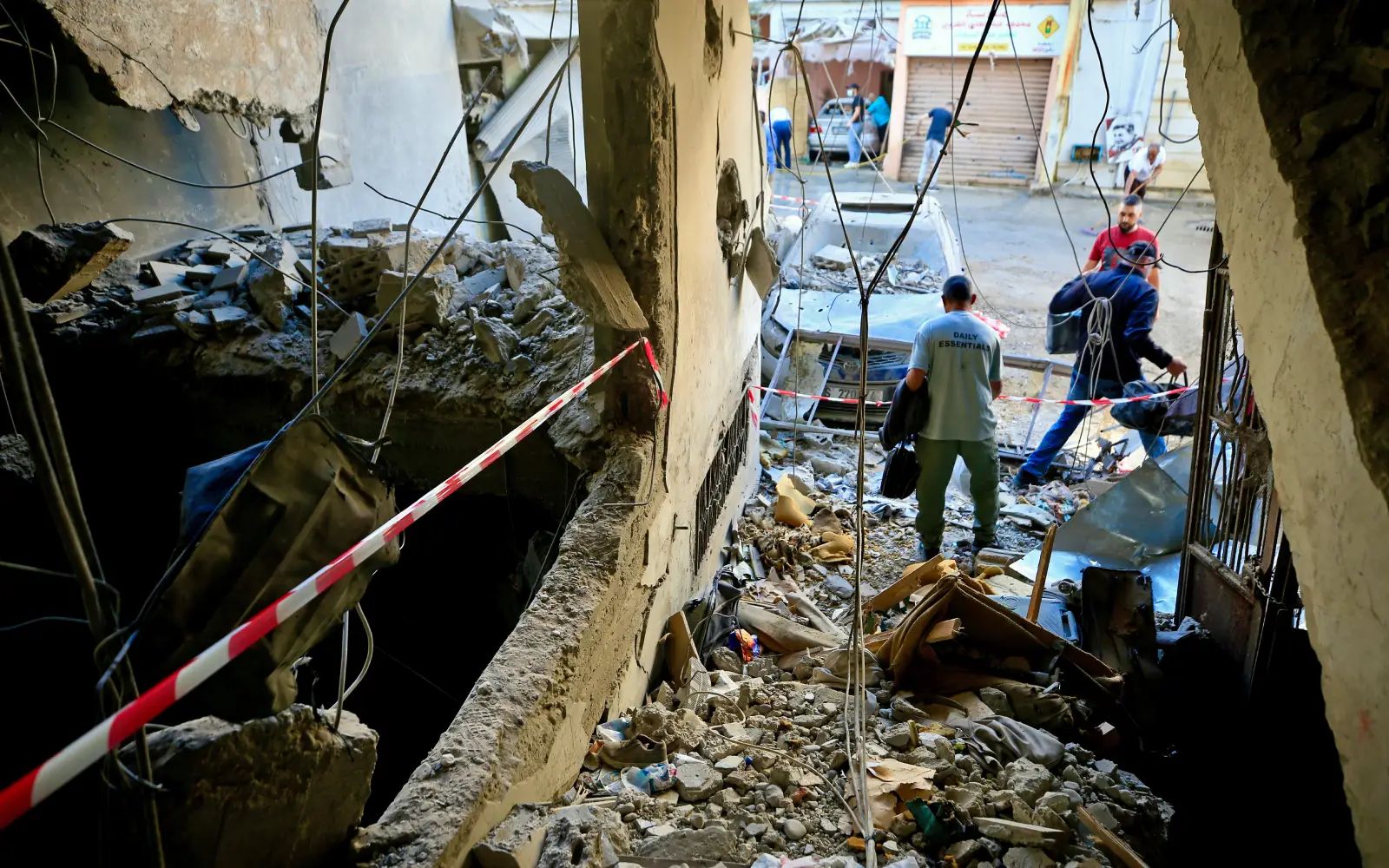
Israel also kept up its heavy bombardment of south Lebanon on Friday, with Lebanese President Joseph Aoun emphasising in a call with US secretary of state Marco Rubio “the need to exert all efforts to reach a ceasefire” as an essential first step, his office said.
A truce to halt the fighting between Israel and the Iran-backed Hezbollah group was supposed to have taken effect on April 17, but has never been observed.
Both sides accuse each other of violating it and justify their attacks by the other’s alleged breaches.
Hezbollah said it had launched a series of attacks targeting soldiers, barracks and a military camp in northern Israel on Friday.
It also said its forces were attacking Israeli troops trying to advance in the area of the medieval Beaufort fortress, near the city of Nabatieh.
Israeli forces used the castle, also known as Qalaat al-Chakif, as a base during their previous two-decade occupation of southern Lebanon which ended in 2000.
Israel and Lebanon, officially at war for decades, began direct talks in April, with a fourth round expected next week in Washington following Friday’s meeting at the Pentagon.
A Lebanese military source told AFP the country’s delegation would “emphasise the need for a ceasefire, and will present the army’s plan for a state weapons monopoly and the extension of state authority across the country”.
Hezbollah strongly opposes the talks and has refused to disarm.
US state department spokesman Tommy Pigott said Rubio had “commended President Aoun’s courage and vision in pursuing direct negotiations with Israel” despite Hezbollah’s opposition, adding the group was “entirely responsible for the ongoing fighting”.
‘Very difficult’
Netanyahu announced Friday that Israeli forces had advanced beyond a river that runs around 30km north of the Lebanon-Israel frontier.
“Our forces have crossed the Litani, they have moved up to the commanding terrain,” he said in a video released by his office, adding Israel was “hitting Hezbollah head on”.
The NNA said Israeli troops reached the outskirts of the southern town of Debbine overnight, while an AFP correspondent saw Israeli tanks between there and neighbouring Christian-majority Marjayoun.
On Friday, Lebanon’s state-run National News Agency (NNA) reported Israeli airstrikes on more than 20 locations in the south, both before and after its military issued evacuation warnings for eight towns, sparking a wave of displacement.
Hundreds of people have recently fled to the usually touristy old city of Tyre, which has been spared recent Israeli army evacuation orders issued for swathes of the rest of the city and its surrounds.
With shelters full, some are sleeping in their cars or tents, an AFP correspondent said.
Karam Amin, 43, and seven family members have been sleeping in his clothing shop.
“I sorted out a shower… and we put mattresses on the floor,” said Amin.
“The situation is very difficult. Tyre is a peaceful, touristic city. We never imagined going through this.”
‘Serious danger’
Lebanon’s health ministry said Israeli attacks have killed more than 3,355 people since the war began on March 2 — an increase of 31 compared to Thursday, which saw broad attacks on the south and the first airstrike near Beirut in weeks.
The UN children’s agency Unicef said 15 children had been killed over the past week, with 55 killed since the ceasefire announcement.
This week, Israel’s military declared all areas south of the Zahrani River — an area that includes the cities of Tyre and Nabatieh — as “combat zones” and told residents to evacuate.
Lebanon’s culture minister Ghassan Salame told AFP on Friday that Israeli strikes on the country’s south were putting heritage sites including in Tyre in “serious danger”.
Lebanon’s military delegation to Friday’s talks includes six officers, headed by the army’s director of operations, Georges Rizkallah.
On the Israeli side, Brigadier General Amichai Levin, head of the strategic division within the army’s planning directorate, is in Washington for the talks, an Israeli military spokesman said.