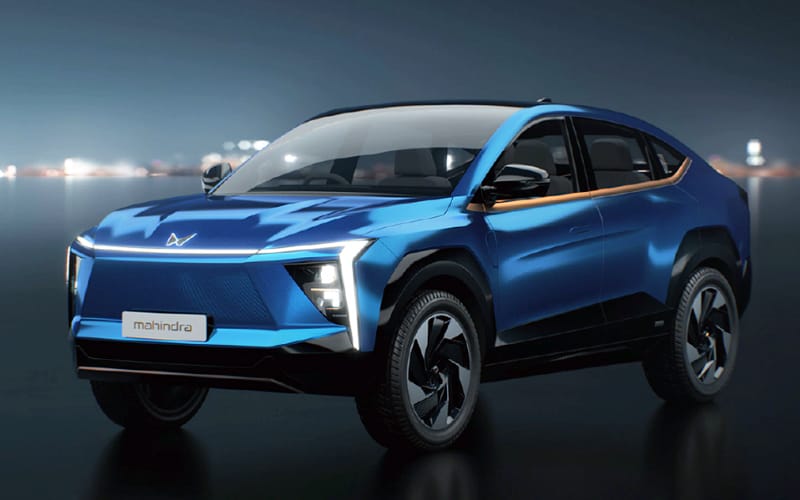
Mahindra, along with local rival Tata Motors, is rushing to beef up its operations to head off growing competition from overseas manufacturers speeding into the South Asian nation.
Indian authorities want electric vehicles to make up 70% of sales of commercial cars and trucks, 30% of private cars, 40% of buses and 80% of two- and three-wheelers by 2030.
That would mean 102 million EVs plying the country’s roads, a dramatic increase from around 1 million in the 2022 fiscal year, according to estimates from researchers at the CEEW-Center for Energy Finance (CEEW-CEF).
Mahindra announced plans for its plant in the city of Pune in a statement on Wednesday, saying the investment would be spread over seven to eight years.
The company’s electric vehicle unit in July raised US$250 million from British International Investment, pushing the division’s valuation to US$9 billion. That follows India’s largest maker of electric cars, Tata Motors, sealing US$1 billion of finance in October 2021 at a similar valuation.
Tata Motors has already launched electric versions of its popular Nexon SUV, its Tigor range of sedans and its Tiago hatchback.
Mahindra aims to roll out electric vehicles, including a battery-powered version of its popular XUV sport utility vehicle, in 2024.
Foreign companies have also been flocking to a market they see as ripe with potential. Japan’s Toyota Motor and South Korea’s Hyundai have announced a total of US$1.15 billion in investments in the burgeoning sector, while Japan’s Suzuki Motor has committed another US$1.26 billion to build a new factory for electric car batteries.
Suzuki’s Indian unit, Maruti Suzuki, is the nation’s largest passenger car company, with a nearly 43% market share in fiscal 2022. It aims to launch electric cars by 2025.
Kia Motors, one-third owned by Hyundai, and China’s MG Motors are also stepping up EV sales in India, and Germany’s Volkswagen aims to launch an electric model in the country next year.
So far, the electric trail has been blazed mainly by scooters and other two-wheelers. The CEEW-CEF says only 16,853 electric four-wheelers were sold in the nation in the last fiscal year, compared to 231,357 electric two-wheelers.