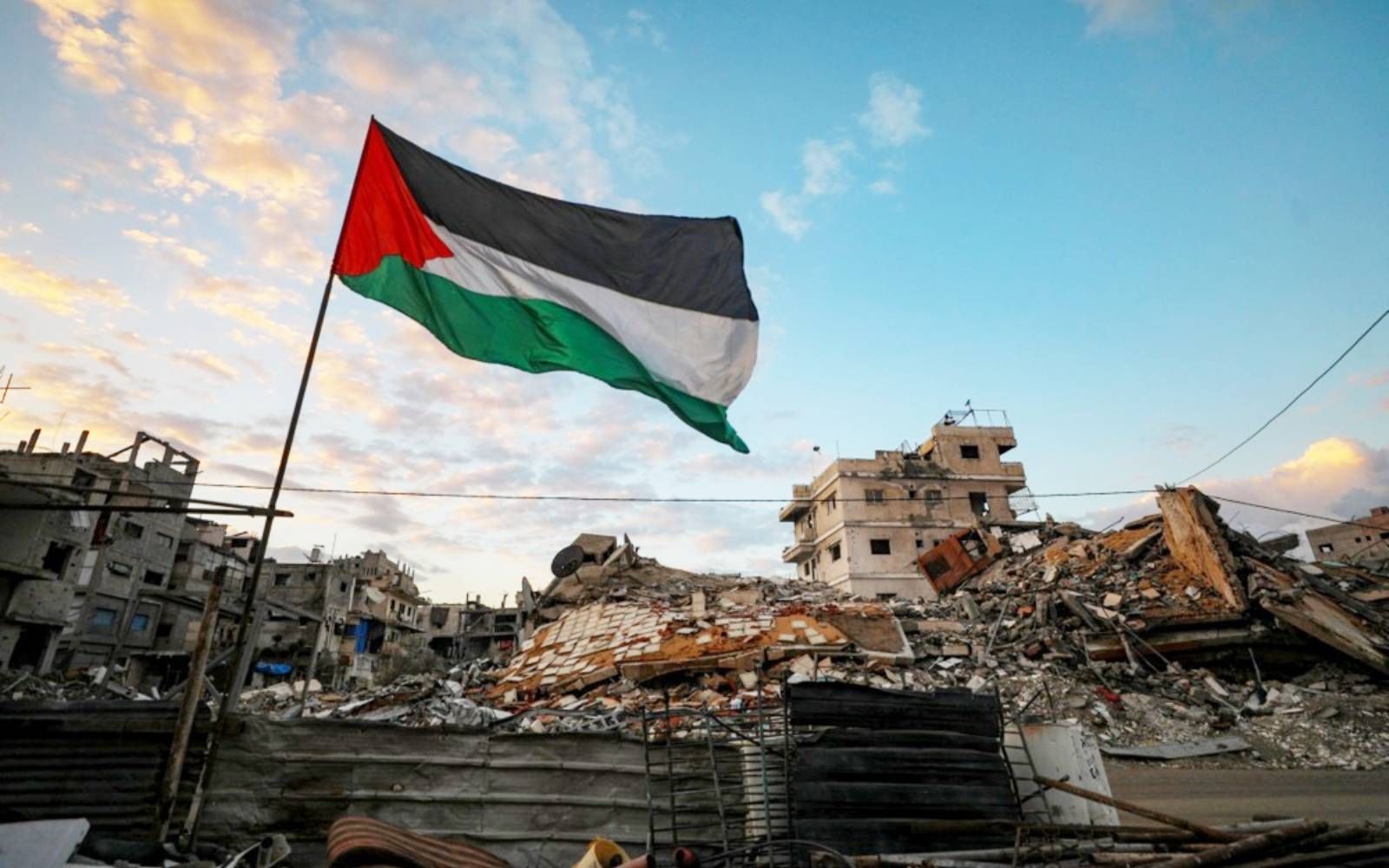
Despite an October ceasefire, Gaza remains gripped by daily violence as Israeli strikes continue, with both the military and Hamas accusing one another of violating the truce.
“We have a ceasefire. It is holding… It is far from perfect. There are violations every day, and some of them are very serious,” said Nickolay Mladenov during a press conference in Jerusalem.
The ceasefire officially came into force on Oct 10, shortly after the second anniversary of the outbreak of the war triggered by Hamas’s attack on Israel on Oct 7, 2023.
But the ceasefire has seen daily violations.
More than 850 Palestinians have been killed since the truce began, according to Gaza’s health ministry, which operates under Hamas authority and whose figures are considered reliable by the UN.
Over the same period, the Israeli military said five soldiers have been killed in Gaza.
The first phase of the truce saw the release of the last hostages seized in October 2023, in exchange for Palestinians detained by Israel.
The transition to the second phase – involving Hamas’s disarmament and a gradual withdrawal of the Israeli army, which still controls more than 50% of the Gaza Strip – has been stalled for weeks, while international attention has been focused on Iran and the Strait of Hormuz.
Mladenov urged Hamas to relinquish power over the parts of the Gaza Strip it controls and lay down its weapons.
“We are asking the political leadership of those who govern Gaza now to step aside. This is required by the Security Council resolution in the 20-point plan”, said the envoy, referring to the peace plan for the territory sponsored by the US president.
“We are not asking Hamas to disappear as a political movement. A political party that disavows armed activity can compete in national Palestinian elections”, he said.
“What is not negotiable, however, is that armed factions or militias… can exist alongside a transitional Palestinian authority,” he continued.
For those who refuse disarmament, the plan offers the option of “safe passage to third countries”, he added.
Mladenov, who spoke to journalists after a meeting with Israeli Prime Minister Benjamin Netanyahu, pointed to the scale of destruction in the Palestinian territory, noting that it would take a long time to rebuild.
“If we look at the tens of millions of tonnes of rubble that need to be removed and at the number of people, over a million people, who need some sort of permanent shelter and basic water and sanitation – this is, by any scale, a generation of work for Gaza,” he said.
‘Civilians still being killed’
In his first briefing with journalists since becoming the Gaza board envoy, Mladenov said violations of the fragile ceasefire meant that “civilians still are being killed, that families live in fear, and that delays and restrictions continue to affect humanitarian access and daily life.”
“For many Palestinians in Gaza, in fact for all Palestinians in Gaza, the war does not yet feel fully over,” he added.
Mladenov admitted that seven months after the ceasefire came into effect, Hamas was “consolidating its grip on the population” in the areas it still controlled.
He said this included control through taxation and “blocking Palestinian workers and contractors approved by the Board of Peace from building temporary communities” in the devastated territory.
Mladenov said he could not comment on the exact numbers given in media reports that Israeli forces were expanding their area of control in the Gaza Strip.
But he reiterated that Israeli forces were required under the ceasefire plan to gradually withdraw from the strip.
“What we have done is what we’ve put in the implementation roadmap is how to do that and how to do that in a way that ensures that as Israel steps back within Gaza to the perimeter, reconstructions take place, and disarmament takes place,” he said.