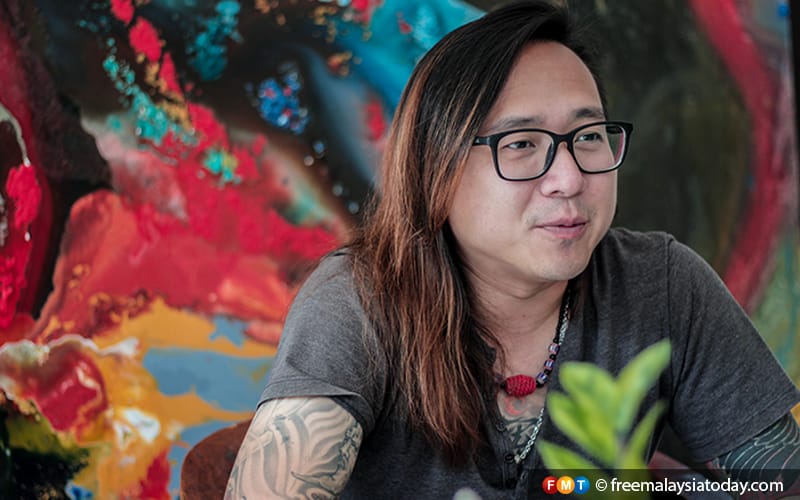
This is the home and office space of 38-year-old Malaysian filmmaker, director and artist Mark Lee See Teck, who returned to the country six years ago from New Zealand.
By then, he had earned a name for himself in the film industry for his 2017 “At Rainbow’s End”, the first locally-produced documentary about a man with HIV who loses contact with his family after contracting the virus.
Despite his professional success, Lee said his life was in utter turmoil. “I was going through a very rough time. I lost friends. I was seriously in debt. There were so many other things going on,” he told FMT.
Lee said that it got so bad at times that he even contemplated suicide. He recalls one harrowing incident when he found himself on the ninth floor of an apartment building and almost jumped to his death on the urgings of the demons in his head.
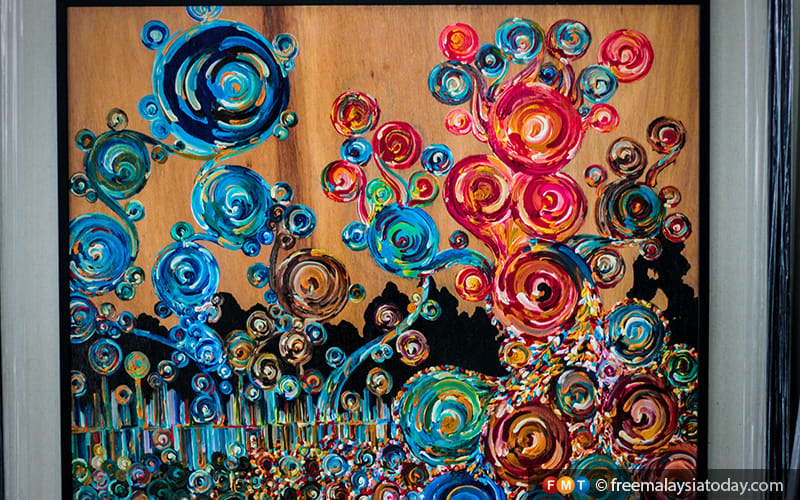
“I am a person who is really afraid of heights. I have a serious phobia, so something like this is very shocking, even for myself. That’s when I picked up my brushes and started to paint.”
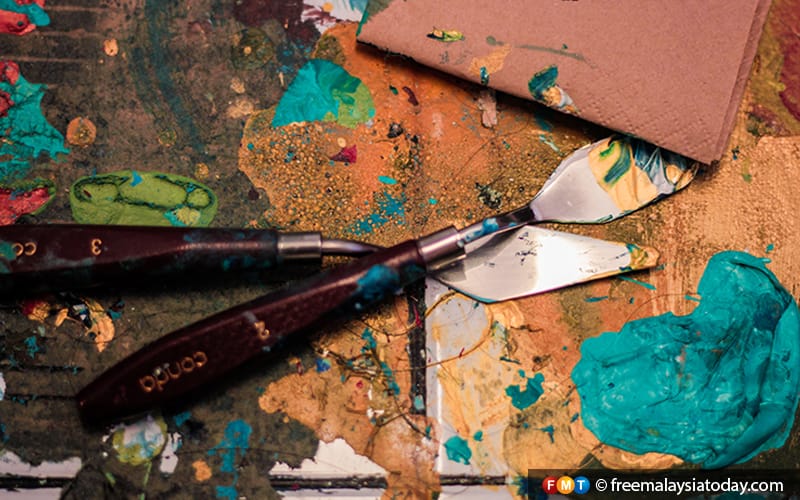
Pouring his anguish, sadness and disillusionment with life into his paintings, Lee said he used art as a remedy and a form of expressing the torment he was feeling at the time.
“My early paintings are really loud and sharp, and the colours are exploding,” he said, explaining that the film and entertainment industry he was in then had become too overwhelming and stressful for him to handle.
Driven to work through his pain using art as a medium, and eventually coming to terms with life, Lee’s works began to take on a different tone – his pieces more relaxed and calm, a direct reflection of his new emotional state.
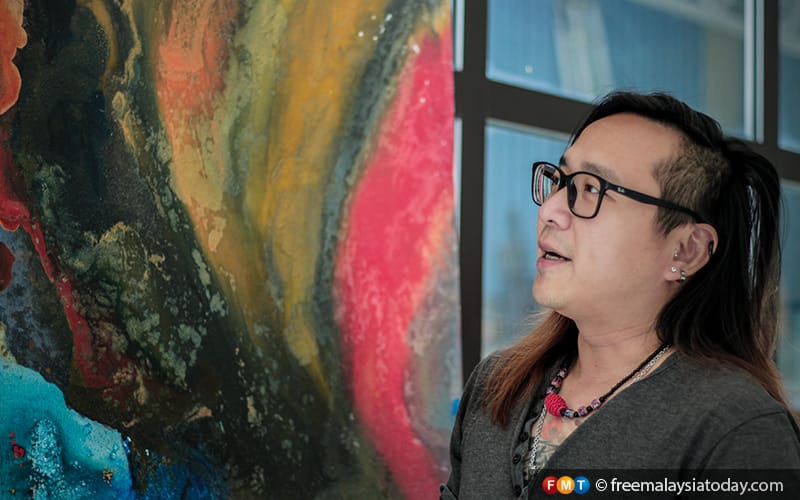
“My paintings are now more mellow. And as you can see, I’m more into nature – I have a love for mountains and greens, they make me feel calm.”
Lee calls this form of art “expressionism” and as the name suggests, it involves surrendering to the paints and colours and brushstrokes to express one’s state of mind.
Looking every inch an artist – colourful inked arms, piercings and long hair – Lee said everyone should practise art in some form or other, regardless of whether the artwork was skill-based or not.
Speaking from experience, Lee said art to him was therapeutic because it allowed him to express pent-up emotions and eventually reach a calmer state of mind.
“City life is very crammed, uptight, busy. Art is like good medicine for it, it can slow things down a little.”
Coming from the perspective of a filmmaker, Lee says art is also a way to tell stories.
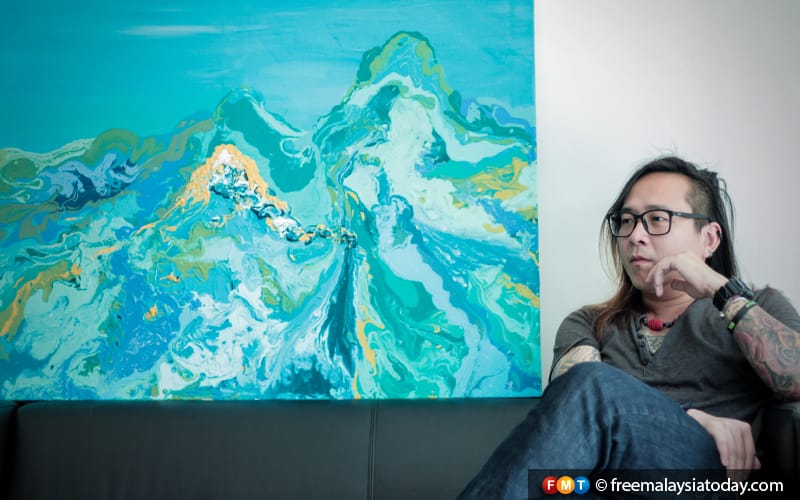
He points to his own painting “Seven Peaks”, based on his upcoming film, “At Rainbow’s End II”, about seven stateless youths with HIV/AIDS.
The story deals with how these youths are bullied, shamed and abused, all the more since they are denied mainstream schooling.
He describes “Seven Peaks” as a story of hope and a gentle reminder that regardless of the struggles in life, anyone, even those feeling totally hopeless and helpless can stand proud and tall like the mountain in his painting.
“Regardless of their identity and circumstances, they can still achieve their dreams,” he said, pointing to himself as living proof.
Commenting on the art scene in Malaysia, Lee said more people needed to be educated about the arts as many did not appreciate art or at best had a superficial understanding of it.
“Education is very important, and we need support from the government for that.
“Many people think art is free, but you need to pay for the craft. Many think art is not a necessity, but it is part of culture. Art is life itself.”