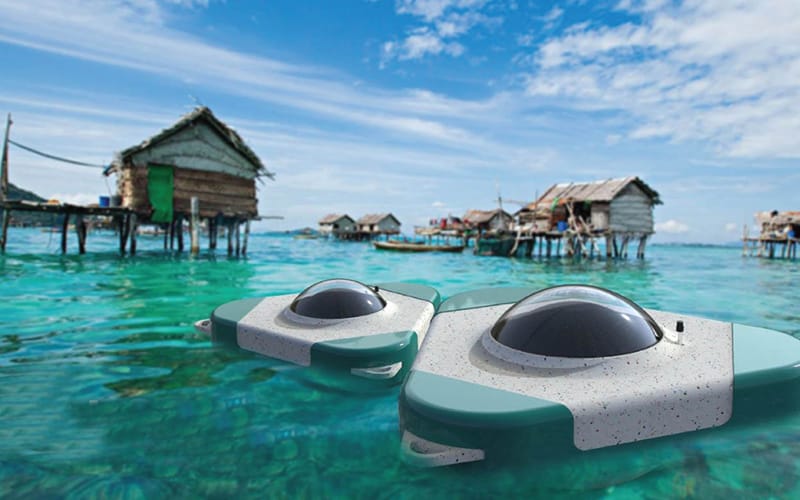
The community also happens to be counted among Malaysia’s underprivileged groups. Getting access to fresh water ranks high on their list of challenges, never mind the irony that they are surrounded by water.
Indeed, the Bajau Laut spend much of their income from fishing to buy water for everyday use. Up until now, a cheap and reliable freshwater source has not existed for them.
But thanks to an innovative trio of 21-year-old university students, this just might change soon.
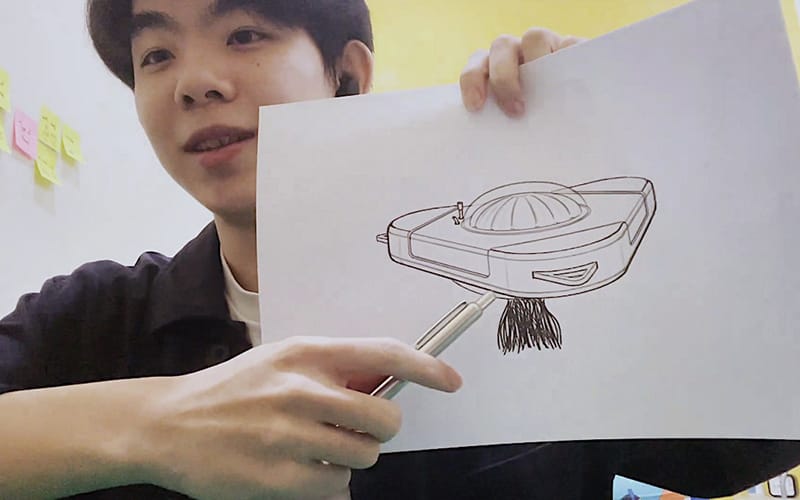
Bennie Beh Hue May, Loo Xin Yang and Yap Chun Yoon have recently been in the spotlight as their proposed invention, the WaterPod, has been named the winner of the James Dyson Award.
The prize is an annual international product-design competition that invites engineering students to pitch world-changing ideas.
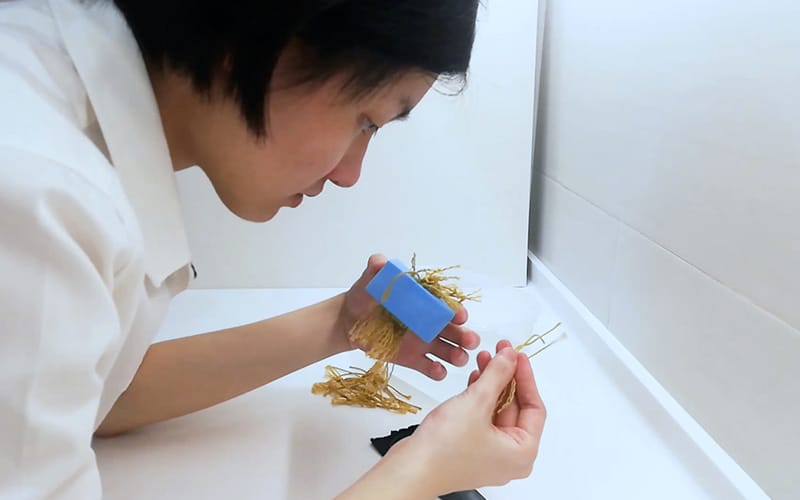
The WaterPod is a desalination device that turns seawater into drinkable water via cheap and environmentally friendly means. It draws inspiration from mangrove roots, which absorb seawater before filtering out the salt for the tree’s own sustenance.
In essence, the device draws seawater through a wick cord and converts it into fresh water using a process that involves evaporation and condensation.
A WaterPod unit is designed to stay buoyant, absorbing and filtering seawater that will later be pumped out for consumption. According to computer simulations, a single WaterPod can contain up to 40l of water.
The trio are elated at having snagged the award, beating out hundreds of other entries.
“We were shocked but happy when we heard the announcement,” Beh tells FMT. “This award has given us a chance to present and share our idea with more people around the world.”
The Asia Pacific University students were not actually able to meet in person due to movement restrictions, but their shared passion for the field brought them together to devise the idea.
It took them three months to come up with the concept, and they are excited to physically meet in due course to create a working prototype.
Loo says the potential widespread use of the WaterPod could improve the Bajau Laut’s economic status as they would no longer need to spend their hard-earned money acquiring fresh water from the mainland.
“Many of them depend on rainwater. Otherwise, they barter for water from nearby towns,” he says.
He explains that they got into contact with the maritime peoples through one of their lecturers who works with an NGO serving the community.
Beh adds that although the world has greatly advanced technologically, “we were struck by how many people lack access to something as basic as clean drinking water”.
As the team now represents Malaysia at the international stage of the James Dyson Award, they look forward to the WaterPod being fully recognised for the potential game changer it is.
In addition to building and testing their invention, the team hopes government agencies or private financers will consider investing in their product.
“The award is a chance for us to demonstrate how we solve problems faced by communities,” Loo adds. “It’s a good way to introduce this Malaysian idea to the world.”