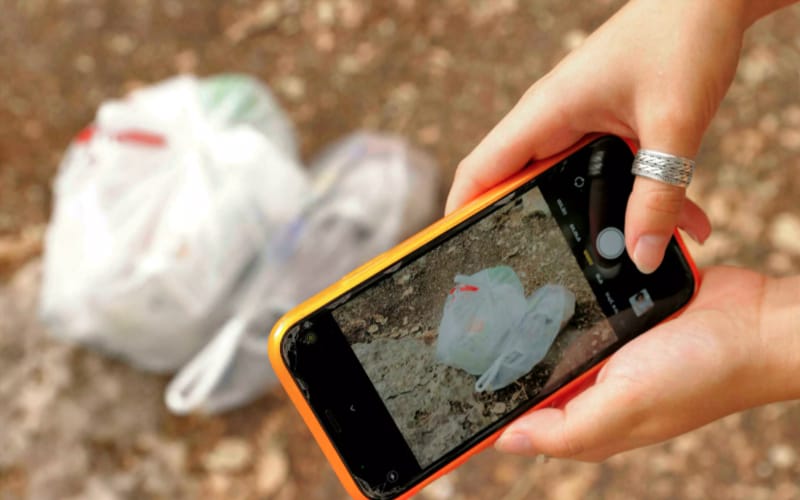
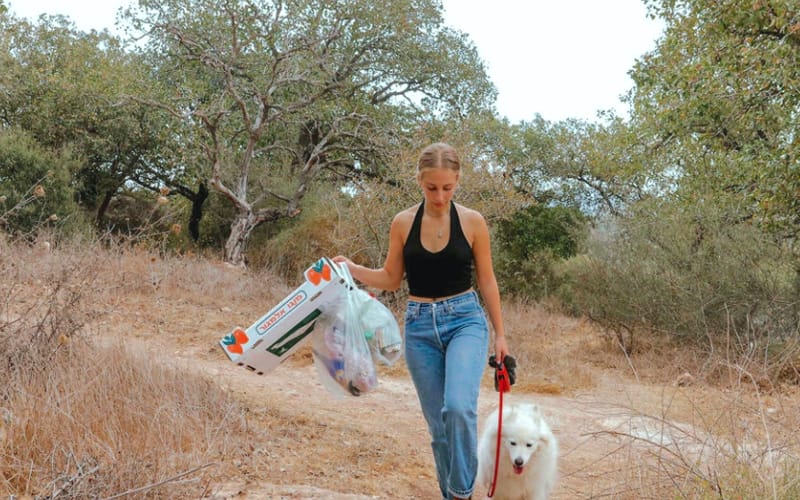
HAIFA (Israel): As she walks her dog Luna near her northern Israel town, Elishya Ben Meir collects litter that has been reported through a new app that turns trash into goods.
For each bag she fills in the valley near her home, she receives around 10 “Clean Coins”, a virtual currency that can be redeemed for goods from participating businesses.
The green scheme aims to encourage citizens to pick up trash in a country ranked among the world’s leading litter producers per capita.
“As soon as I get out to the valley, I see trash wherever I look,” says Ben Meir, 18. “People drink, barbecue and leave all their garbage outside. It’s really unpleasant.”
Before throwing her bags of rubbish into a nearby bin, Ben Meir snaps pictures of her day’s haul, which is worth around 30 Clean Coins.
“Each black dot on the map represents waste reported by a user,” says Adam Ran, 35, co-founder and CEO of Clean Coin, demonstrating the app in his office in the northern port city of Haifa.
“By viewing the photos, I can really see the amount of trash, where exactly the trash is located, how many bags are approximately needed in order to collect it, and the amount of credit.”
The company says more than 16,000 users have already signed up, of whom some 1,200 are active each week.
Gal Lahat, 21, co-founder and technical director, says he designed the app to be playful, with users earning points and unlocking different levels.
“You can see your progress compared to other users, but also when you search for the trash in the field, we want it to look like a game,” Lahat says.
The compensation adds an incentive for people to get outside and clean up, he adds.
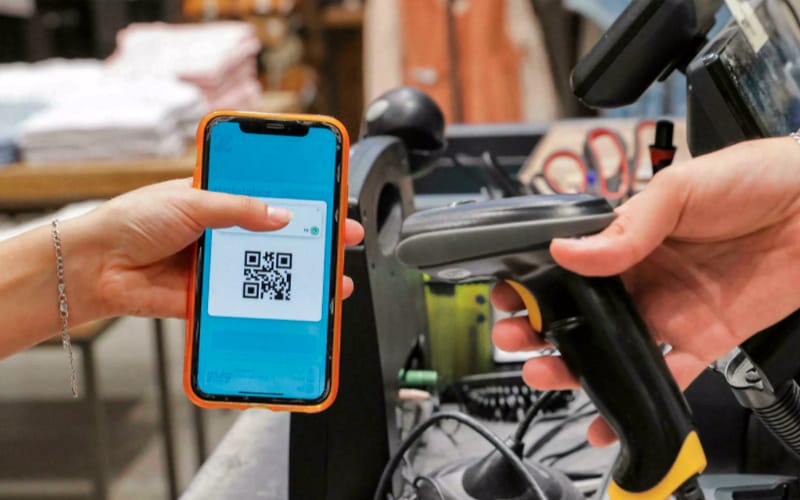
“Nature benefits from it, and I also get a small personal benefit for myself that gives me motivation,” Ben Meir says, before exchanging her Clean Coins for a T-shirt at a Haifa branch of the surf shop Billabong.
Clean Coin is not a cryptocurrency, with energy-intensive “mining” of coins that requires massive computer power. Instead, it is a kind of voucher to reward trash collection.
More than 25 brands have joined the network, according to Ran, allowing users to redeem coins for clothes, indoor climbing and hotel stays, among other options. Some supermarkets are poised to join.
The virtual currency is subsidised by several private and public organisations, in particular municipalities and regional councils that see Clean Coin as a tool to optimise waste management.
“Everyone has an interest in it,” Ran says.
Amiad Lapidot, solid waste expert at environmental advocacy group Adam Teva V’Din, calls Clean Coin “a very good thing” in “one of the countries which produces the most waste per capita”.
Israelis generate an average of 1.7kg of waste per person per day, compared with an average of 1.4kg per person per day in European countries.
In all, Israel produces around one million tonnes of plastic waste a year, which represents about 18% of the total waste in the country, Lapidot says. This compares with a rate of 12% in European countries.
According to him, Israelis tend to use and toss plastic bags and packaging, which pollute its coasts and green spaces, and they strongly rely on disposable dishes.
He says Clean Coin can help amplify the effects of government actions his group is promoting, such as extending existing laws levying a deposit on bottles.
Still, he says, it is only a start. “We must absolutely find a way to produce less waste,” Lapidot adds.