
Despite these obstacles, Malaya, Singapore, Sarawak, North Borneo, and then Sabah forged ahead and founded Malaysia on Sept 16, 1963, each in the hope of becoming equal partners in the federation.
Yet, racial and economic tensions between Singapore and Malaya led Malaysia’s first prime minister Tunku Abdul Rahman to expel Singapore in 1965. In response, the late Lee Kuan Yew, Singapore’s first premier, announced independence on a televised programme in a tearful speech.
Over the years, stereotypes of both nations have been portrayed by the mainstream media: think the rising Singapore dollar, or tourists flooding Malaysia for cheap petrol and foot massages, and so on.
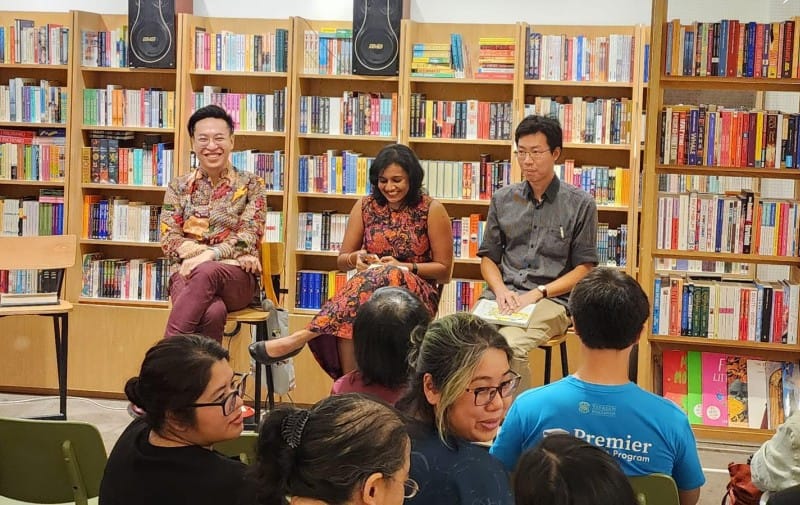
These were the types of tedious, clichéd themes that the editors of “The Second Link”, launched on Sept 16 at Lit Books in Selangor, wanted to avoid.
According to Daryl Lim, Hamid Roslan, Melizarani T Selva and William Tham, this collection of short stories, essays and poems seeks to explore the remaining ties between two nations that have been separated for nearly six decades.
Coincidentally, Lee’s 100th birthday fell on the day of the launch, which added a layer of political flavour.
So, what can readers expect?
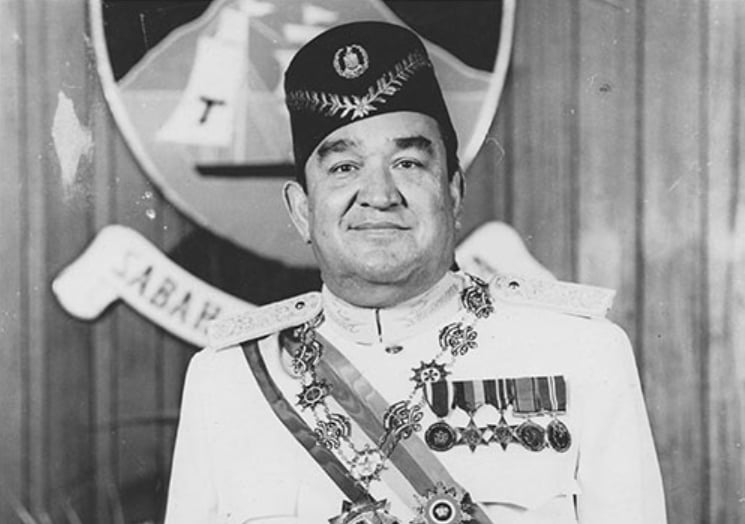
A good example of an East Malaysian voice is Sharmini Aphrodite’s “South of Memory”, which juxtaposes the perspective of Sabah’s first chief minister, Donald (Fuad) Stephens, with the experiences of a Sabahan girl working in Singapore.
The story starts with Stephens’ excitement for the merger during a meeting involving him, Tunku, Lee, and other foreign delegates. For Stephens, the union of Malaya, Singapore and North Borneo would bring about prosperity and modern infrastructure.
Yet, in the next paragraph, the story shifts to Johor Bahru and Singapore, where we follow the main character’s walk along the causeway before daybreak as she recalls her mother reprimanding her for having rejected a marriage proposal from a Singaporean citizen.
By showing the hardships experienced by this Sabahan girl, this tale cleverly explores the negative impacts of the separation on East Malaysian states – something that is hardly discussed.
While Malaysia and Singapore are two different entities politically, are the boundaries all that distinctive from an arts and ecological perspective? The essays in this collection argue “no”.
“From the Archives: Music and the Formation of Malaysia” maps out the connections between the music and performance scenes of Penang and Singapore. Jocelyn Marcia Ng and Paul Augustin from Penang House of Music write that back in the 1950s and ’60s, both port islands had attracted a sizeable migrant community and economic prosperity – and, along with it, the need for entertainment.
Artistes such as P Ramlee and Ahmad Daud made their base in Singapore, while collaboration among creatives from Penang and Singapore was frequent. Both islands, therefore, were crucial to the music ecosystem in Malaya.
In “Green Man’s Burden”, Tan Yu Kai acutely observes the unexpected impact of the separation on both countries’ conservation efforts.
To pander to western nations’ desires for “sustainable” ecological conservation, Singapore invested heavily into studies and research on the island state’s limited rainforest canopy.
Meanwhile, Malaysia remained indifferent towards its wealth of natural resources, largely owing to the pressure to shake off the perception that “Malaysians live on trees”. Instead, it built skyscrapers in the capital city.
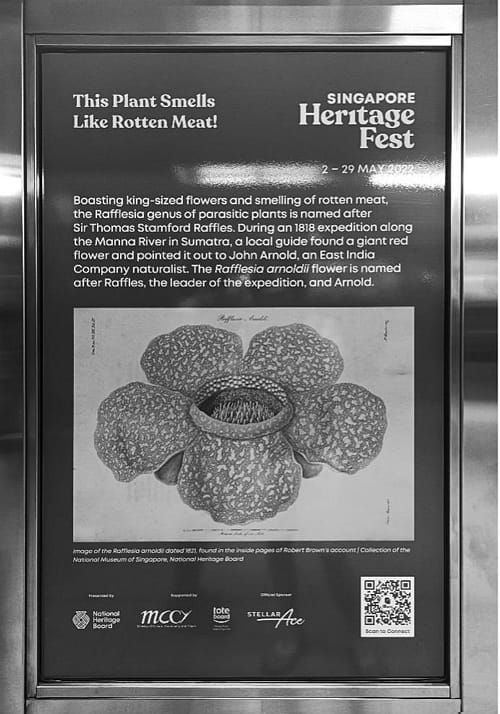
Tan makes his essay more compelling by opening with a rumination on a poster of a Rafflesia flower at a Singapore MRT station, and rounding it up with a visit to a Perak rainforest to see a real Rafflesia in bloom.
Overall, “The Second Link” is a rare and meaningful contribution to the region’s English-literature scene, thanks to its collection of high-calibre essays with experimental short stories and poems.
That said, if there is one weakness, it is the lack of participation from the Malaysian side, as only 10 out of 30 collected works were contributed by Malaysians or locally based writers.
Get your copy of ‘The Second Link’, priced at RM69.90 and published by Marshall Cavendish International, from Lit Books.