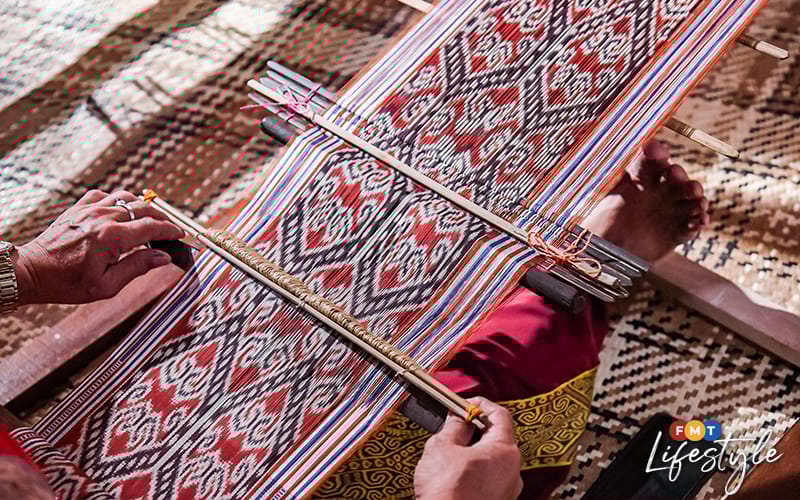
The Ikat 2.0 KL Edition, titled “Dreamweavers”, included a captivating showcase featuring traditional Borneo embroidery and craft, namely Pua Kumbu, Kain Pis, and beadwork.
This celebration of Malaysia’s rich heritage unfolded on Jan 6-7 at The Godown Arts Centre on Lorong Ampang, marking the start of a nationwide tour that includes Penang, Terengganu and Kuching. Each location will highlight distinct regional textiles such as batik and Peranakan fabric.
At the heart of this venture is Ikat, or “Immersive Knowledge And Textile”, supported by Yayasan Hasanah.
Speaking with FMT Lifestyle, founder Fariz Hanapiah explained the inspiration behind this initiative.
“I’ve been working with new media art for the past 15 years, and I’ve noticed it’s usually heavily influenced by the western world,” he said. He was referring to art forms that are produced, modified, and/or transmitted by means of new media or digital technologies.
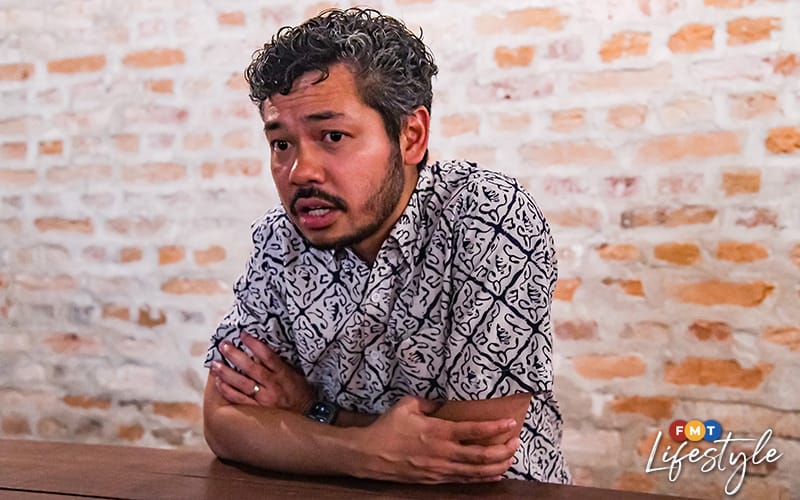
Looking to incorporate his roots with contemporary art, Fariz discovered a vehicle in the nation’s various textiles. “It’s one of those few creative mediums that is a hybrid of both art and utility,” he explained.
“When I came across the beautiful work of these Malaysian artisans thanks to Yayasan Hasanah, I felt it should be shared with others who, like me, have lived in a bubble most of their lives.”
Having evolved into a year-long programme, the exhibition encompasses an immersive installation, a heritage textile gallery, hands-on workshops and talks led by skilled artisans, and a captivating fashion show.
One of the featured artisans is Lucille Awen Jon, a bead artist from Kuching, Sarawak. Lucille’s journey began at age eight, when she learnt beadwork from her grandmother and mother in Kampung Sibuluh.
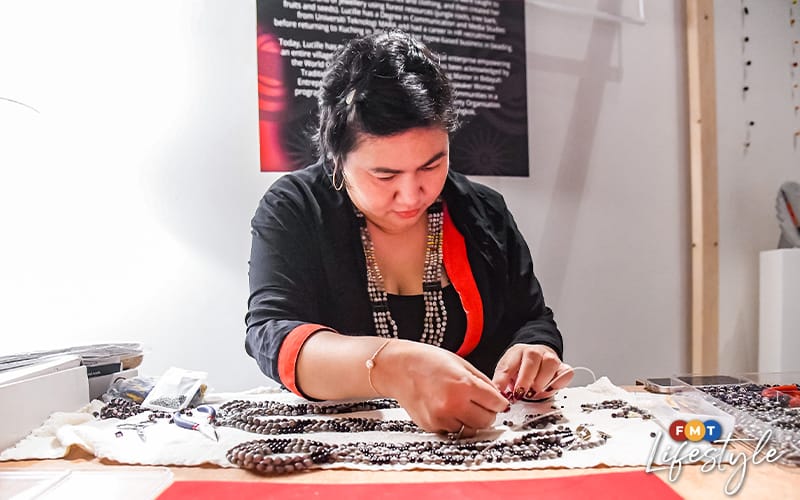
With a degree in communication and media studies, Lucille’s return to Kuching in 2014 marked the inception of her own home-based jewellery business, which uses forest resources like jungle roots, tree bark, fruits and seeds to create stunning beaded accessories.
“It is a form of pride for us,” she shared. “We wear these beads everywhere we go, as it represents which part of the community we belong to.
“Most indigenous craft masters in Sarawak are old, and there aren’t many people carrying on these traditional skills. So, for me, being able to bring the Bidayuh community’s heritage here in KL is a perfect opportunity to showcase and spread knowledge about this dying art.”
Today, Lucille has turned her business, Pungu Borneo, into a thriving social enterprise, empowering an entire village of beadworkers.
FMT Lifestyle also spoke with another artisan at Ikat 2.0. Crisna Mojupi is a Kain Pis embroiderer from Kampung Lompozou, Sabah.
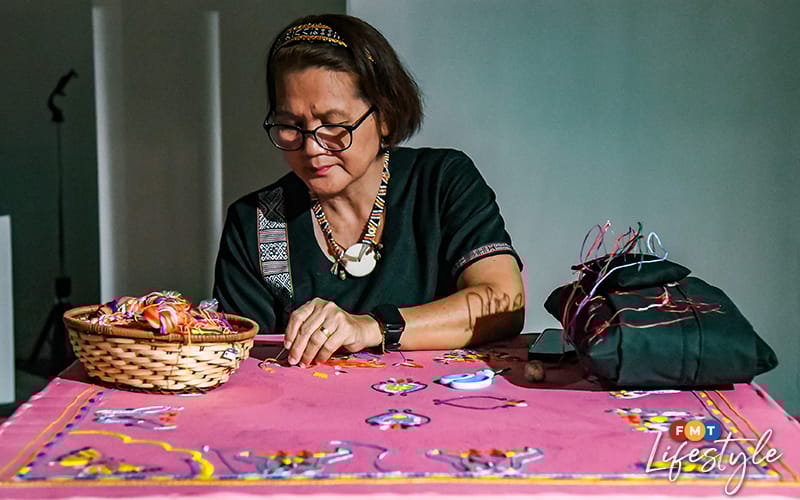
First exposed to this form of embroidery as a child, Crisna transformed her hobby into a thriving business named Vinotik, meaning “multitude of colours” in her native Rungus language.
Speaking about her creations, the 55-year-old said: “One piece of cloth takes us three to six months to complete. Each motif we embroider is a representation of our culture. For example, the butterflies, the flowers, are all found in the Borneo rainforests.”
Ikat 2.0 features many other master artisans, including Helen Manian Atong, a third-generation Pua Kumbu weaver from Kapit, Sarawak. Pua Kumbu is a traditional patterned multicoloured ceremonial cotton cloth used by the Iban people.
All in all, the initiative weaves a rich tapestry of Malaysian heritage, ensuring that each thread of tradition is meticulously preserved and celebrated.
“What really stands out to me is the patience these artisans possess,” Fariz noted. “Their craft is an embodiment of their soul, and a reflection of the pace at which they live.
“I see their work as a reminder to the rest of us living in this fast-paced modern society to simply take a breather once in a while.”
Admission to the Ikat 2.0 pop-up textile experiential hub is free. For more information, click here or follow Ikat on Instagram.