Amidst the bustle, a cool river breeze carries the aroma of freshly cooked traditional dishes, filling the air at Tamu Kianggeh and awakening the appetite of visitors looking for breakfast.
Surrounded by modernity, Tamu Kianggeh feels like a living museum. For this writer, setting foot for the first time in Brunei Darussalam’s oldest marketplace is like stepping into a story of the Bruneian Malay trading heritage, preserved for more than six decades and still deeply rooted in tradition.
The chance to visit and shop at Tamu Kianggeh came while attending a regional journalism workshop with media practitioners from Brunei and Indonesia in October – a trip that opened this writer’s eyes to how traditions are sustained behind the façade of modern infrastructure.
Tamu Kianggeh is believed to have existed since the 1960s, beginning as a meeting point between the residents of Kampong Ayer – Brunei’s iconic water village and the largest of its kind in Southeast Asia – and people living on land, to trade agricultural and marine produce.
While retaining its traditional elements, the market took on a new face after a surprise visit from Brunei’s Sultan Hassanal Bolkiah in 2016. Reports said he was displeased by the unkempt, dirty and disorganised state of the market, which affected visitor comfort.
As a result, a new single-storey complex was built and has been operating since June that year, housing 313 stalls separated by categories such as livestock, vegetables, food, personal care and beauty products.
During this writer’s visit, the Tamu Kianggeh Complex was spotless and well-arranged despite the variety of wet goods sold – making the market, managed by the Bandar Seri Begawan municipal department, one of the country’s tourism landmarks.

Open daily from 6am to 6pm, visitors can find produce such as fruits, vegetables, fresh and dried seafood, traditional snacks like kuih ampong (glutinous rice cakes) and kuih kipang (rice and sugar snacks), as well as local craft including “nyiru” (winnowing trays), “takiding” (woven rattan bags), keychains and postcards.
The market’s most striking sights lie in Block F, which operates only on Fridays and Sundays. This block houses vendors selling live chickens and ducks, as well as pets like turtles and pigeons – a unique experience that draws curious visitors.
The efficiency of one kampung chicken seller caught this writer’s attention. “I’ve been selling here for more than 20 years. When I was younger, this was just part-time work,” said 65-year-old Salleh Ghani.
With a warm smile, the elder shared that customers can choose to have their chicken slaughtered on the spot or take it home alive. But his expression dimmed when asked about the future of his business.
“No young people want to continue this kind of trade, not even my own children. They’re just not interested in selling live poultry,” said the father of seven.
A retired civil servant, Salleh gets his supply of chickens and ducks from regular wholesalers, selling them at around BND10 per kg (about RM32).
From observation, young people may be less drawn to poultry trading – perhaps due to the dirt and smell – but the craft, food and beverage sections are bustling with young entrepreneurs.
The experience in the live poultry block brought to mind Sibu Central Market in Sarawak, known for similar chicken stalls. But unlike in Sibu – where the chickens are wrapped in newspaper – the live chickens at Tamu Kianggeh crow freely in their cages.

Fresh produce at Tamu Kianggeh is also noticeably cheaper and fresher compared to supermarkets and convenience stores, largely because the items come directly from farmers.
Self-care and beauty products
Tamu Kianggeh also preserves Brunei’s traditional self-care culture, still practised to this day.
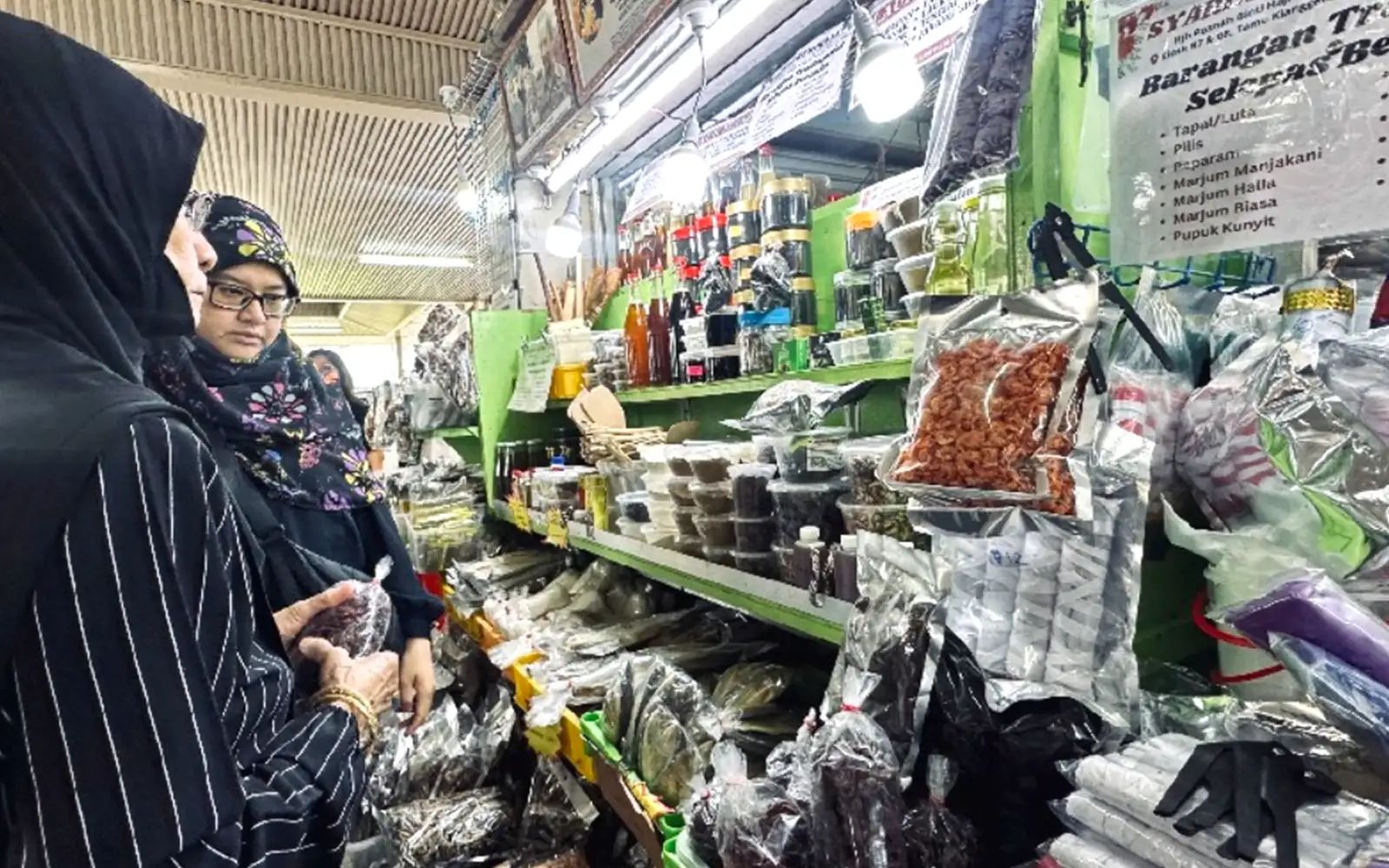
Block B features numerous personal care and beauty products. Among the most eye-catching are herbal oils, coconut oil, “hirup-hirupan” (a health drink paste), “pilis” (a type of traditional postpartum remedy), and various herbal concoctions for mothers after childbirth.
More interestingly, visitors can find traditional bridal sets, consisting of cooling powder, scented powder, and seven-colour powder, used in the Bruneian Malay “berbedak” ritual before a wedding.
For Bruneians, these products are not merely beauty items: they are cultural symbols; living markers of heritage passed down through generations.
Tamu Kianggeh is clearly more than just a market. It is a reflection of Bruneian life – a place where tradition is valued, heritage is preserved, and modernity is balanced with everyday cultural rhythms.