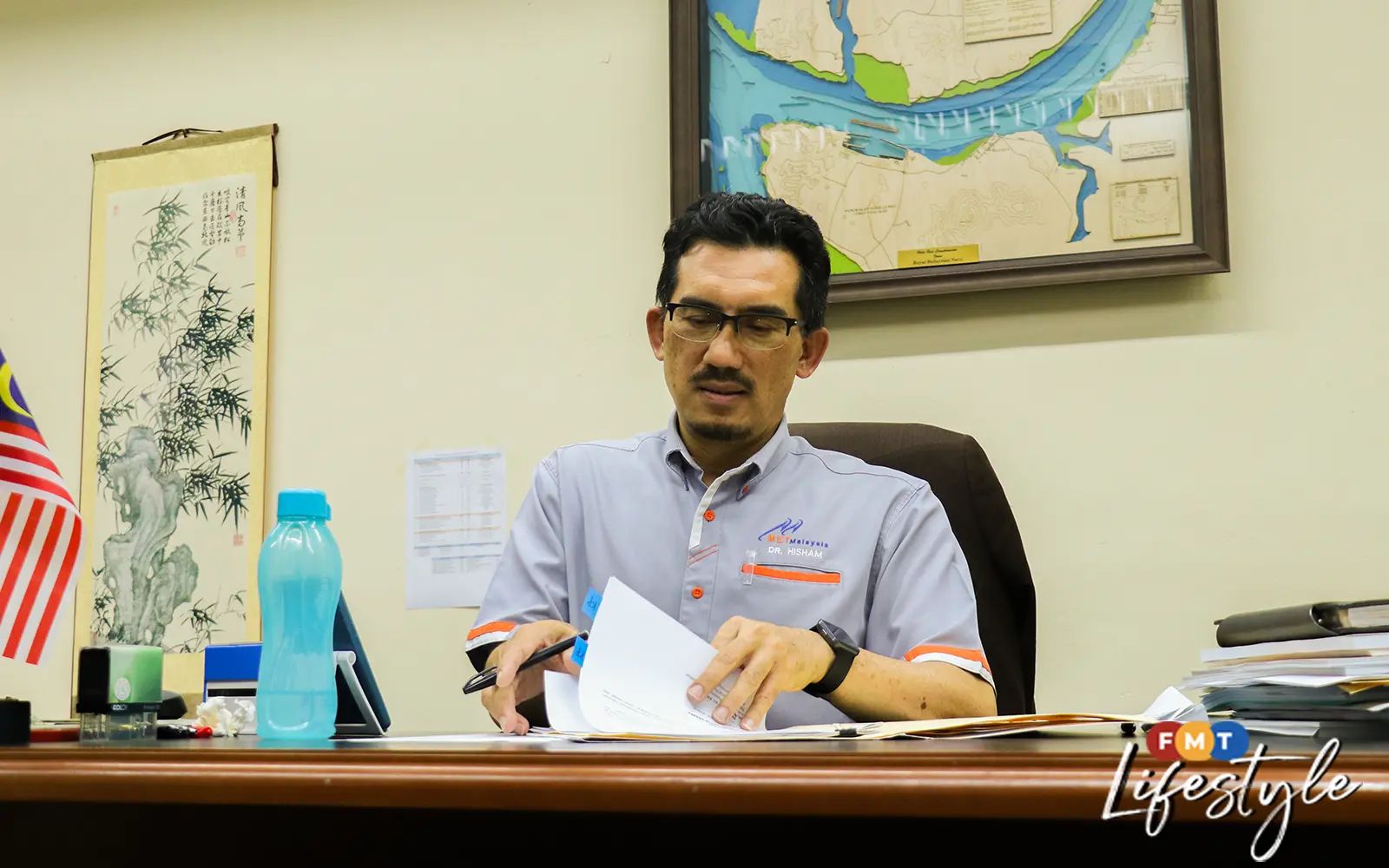
Hisham Anip was one of them. “During those days, as kids, we loved to play in the rain… even football,” he laughed. “There was no such thing as gadgets back then. Everything was outdoors. You play outside with your friends… you go fishing.”
Floods were not a disaster then. They were freedom. Now 57 and the director-general of MetMalaysia, Hisham studies storms the way he once chased them – except this time, the country is watching.
“I love to hear the sound of thunder and heavy rainfall,” he said matter-of-factly. “Actually, my favourite season of the year is the inter-monsoon season. It’s very nice.”
It is an unusual confession for the man responsible for warning millions about danger. And since his appointment in October 2024, Hisham has not had the luxury of easing into the job – sudden flash floods in the Klang Valley, mid-year floods in Penang, and the heavy Northeast Monsoon rains in the east coast.

One night last year when rain bands thickened over the Klang Valley, Hisham stood before layered radar screens, watching colours intensify from yellow to red. Highways were already beginning to pool. Videos were spreading online.
“In movies, the control room is always chaotic,” he said. “People shouting, alarms ringing. It’s not like that.” Instead, the room is quiet. Voices are measured. Data is checked, then checked again.
“You need to be calm when dealing with a crisis,” Hisham stressed. After all, he has spent more than three decades cultivating that calm.
In 1994, fresh from a mathematics degree and working as a tutor at Universiti Malaya, he answered a newspaper advertisement for a weather officer.
“Even my girlfriend at that time – who’s my wife now – asked, ‘what post is that?’” he recalled with a grin. “Nobody really knew what it was. They didn’t use the term meteorology.”
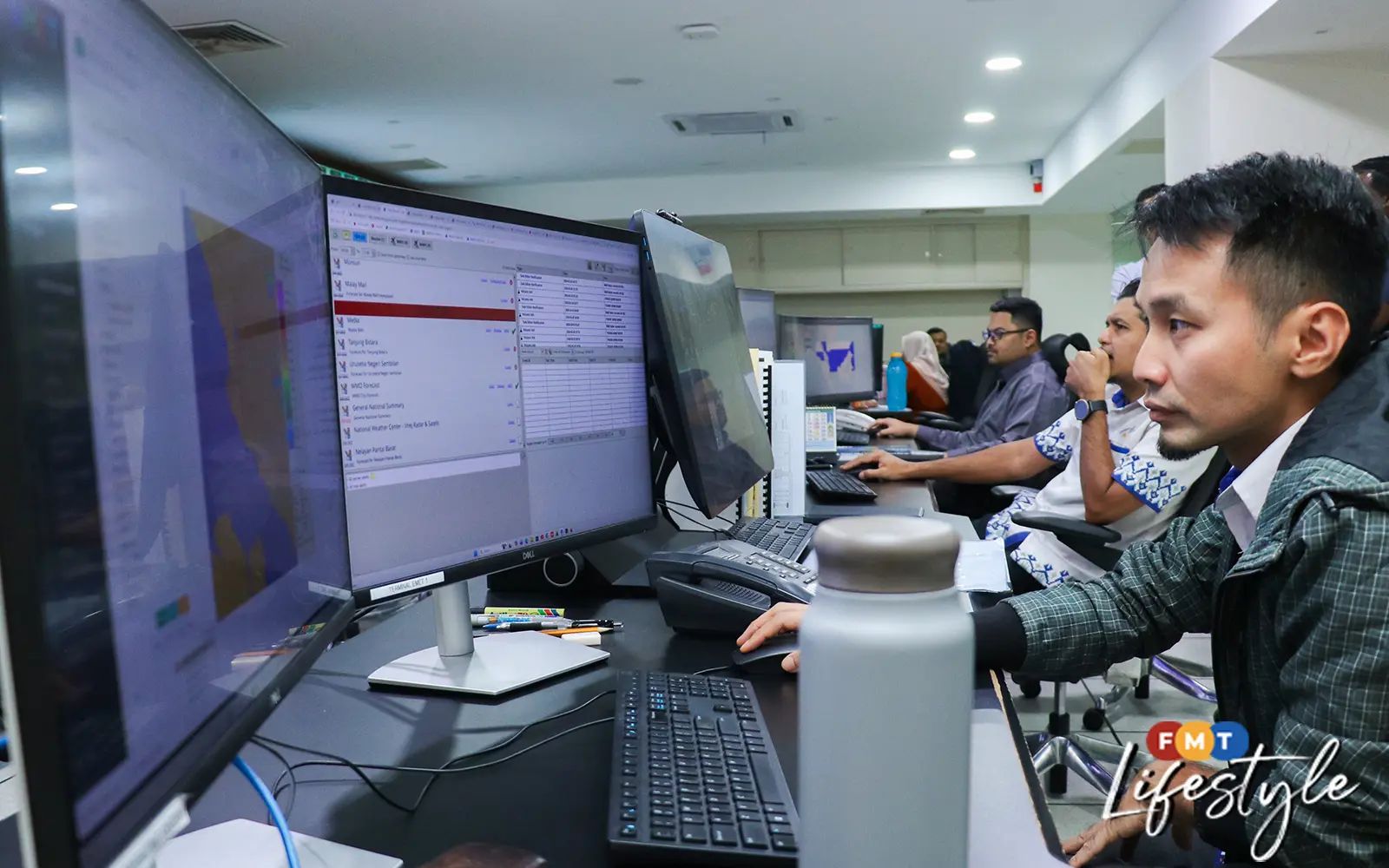
He applied out of curiosity. He got the job and he never left. “It’s very interesting work,” he said, though what he seems to mean is that it is never still. Weather shifts by the hour. Models evolve. Patterns refuse to behave.
“When you deal with weather, it changes very rapidly. You must update yourself as frequently as possible,” Hisham pointed out.
Every morning before the day’s meetings begin, he studies radar images and satellite feeds in silence. But data, for him, is never abstract.
He still remembers a tropical cyclone in the mid-1990s that caused more than 100 casualties across the region. The numbers stayed with him. So did the faces.
And despite years of handling crises, visiting relief centres has never become routine. “It’s very sad,” he admitted quietly. “The centre is not a convenient place. It’s crowded.”
Long halls filled with thin mattresses. Plastic bags of salvaged belongings stacked beside families who have nowhere to go. Children weaving between rows of makeshift beds. Sometimes someone recognises him – the familiar face from television – and asks when the rain will stop.
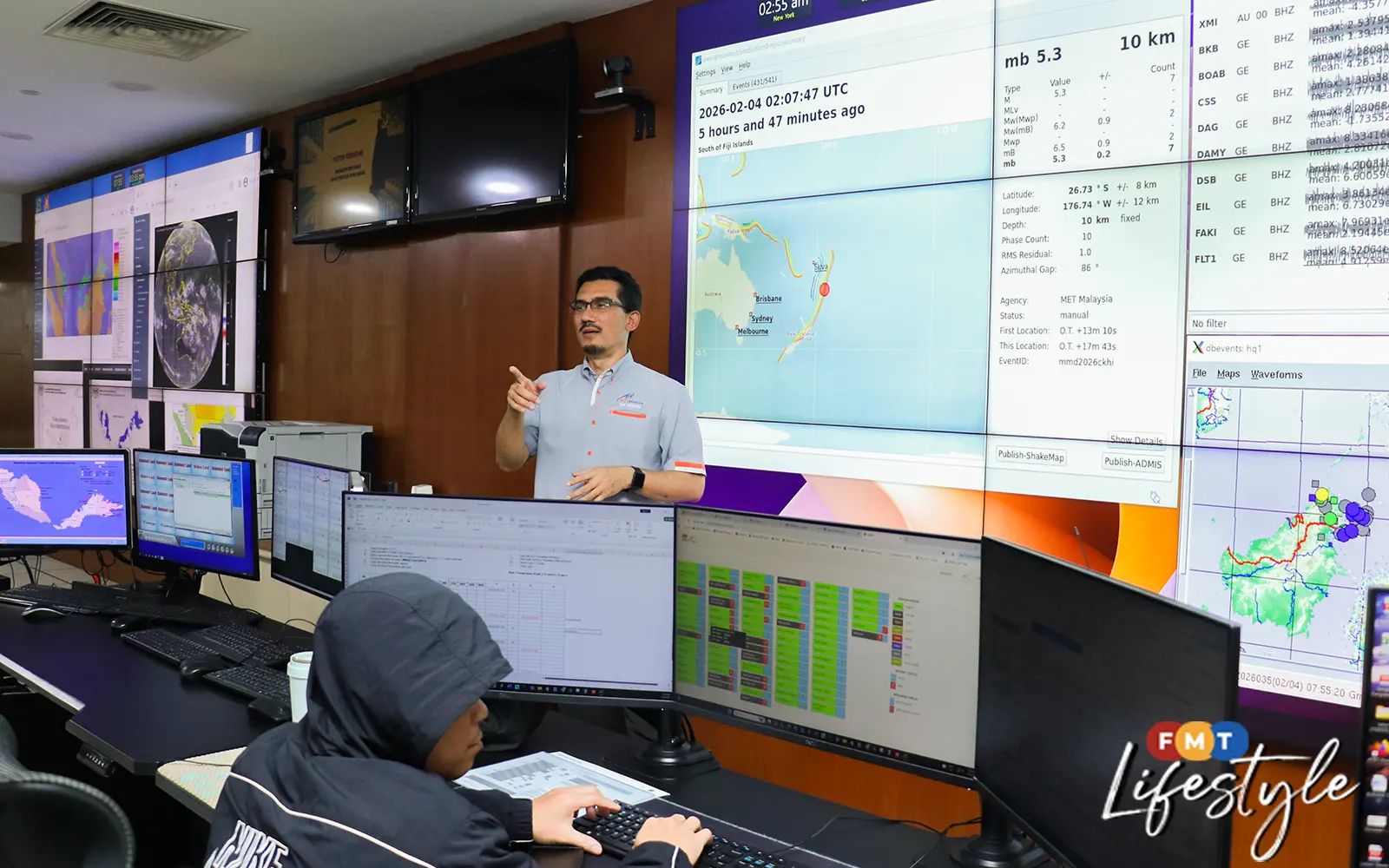
“There’s definitely a sense of responsibility,” he said. “We need to work hard to make sure the warning and the information we give comes as early as possible so that they have enough time to move. Otherwise, there’ll be casualties,” he said solemnly.
That is the weight behind the calm. And lately, the skies have felt different.
“Something is changing,” he reflected. Rainfall patterns shift. Storms intensify. The inter-monsoon season he loves for its dramatic thunderheads now carries sharper uncertainty.
The boy who once ran toward the rain now measures its risks. Yet at home, he insists, he is simply a husband and father. “At home, I’m still doing my normal work as a father,” he said. “My focus now is more on my wife since she retired early.”
As he approaches retirement next year, he hopes people remember more than the familiar television presence. “Not just the TV guy,” he said. “But the one giving early warning at the right time, and also helping them when it comes to floods.”
Once, thunder meant muddy football and diving into swollen fields. Today, when thunder rolls, Hisham still listens. Only now, he listens for what it might change into.