
In Kampung Kuala Sungai Pinang and Pulau Betong, the hot, dry weather has become a key advantage, speeding up drying time and improving product quality.
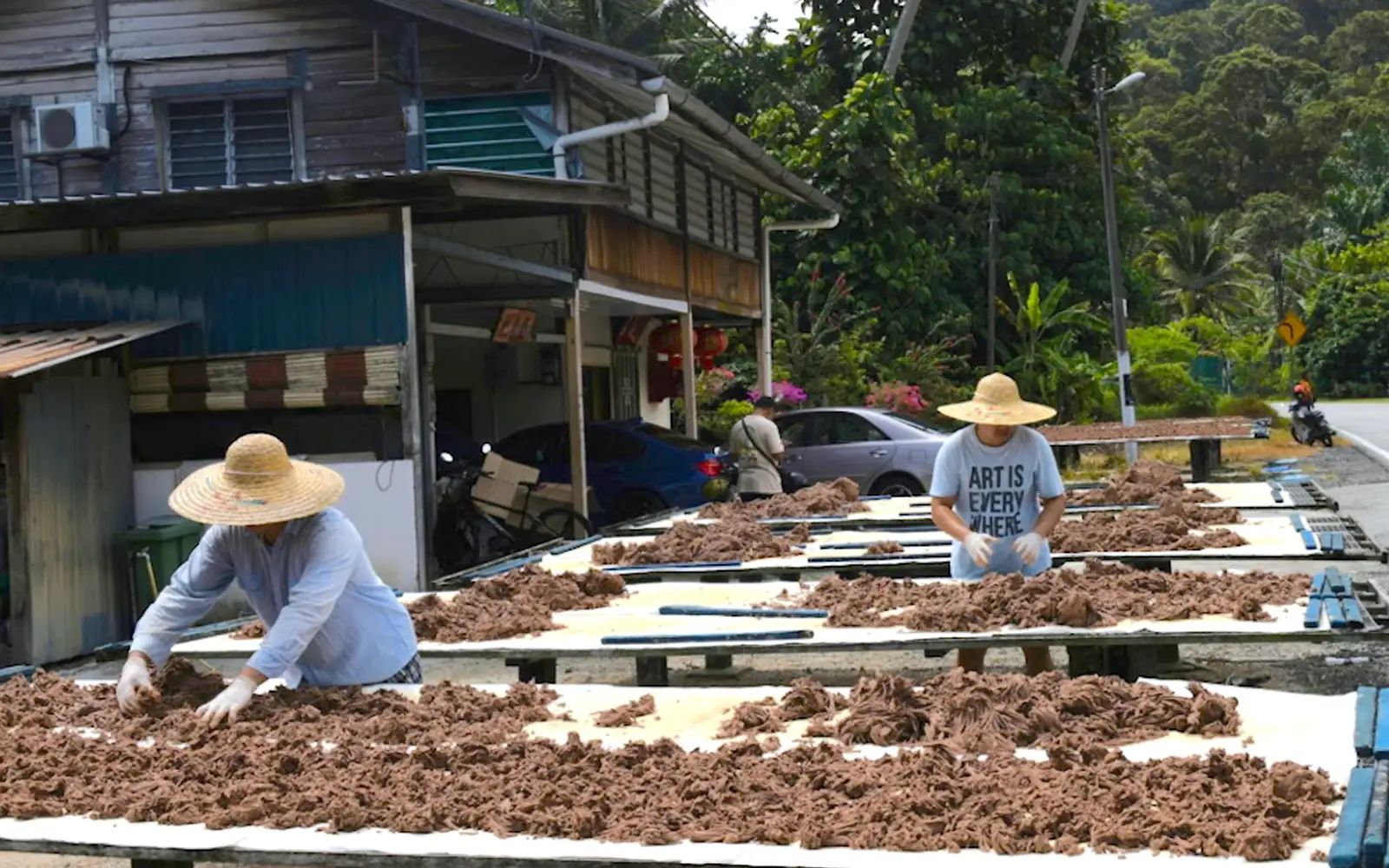
Belacan producer Lo Eng Joo, 78, said consistent sunshine allows his shrimp paste to dry naturally without disruption.
“Drying usually takes about a day, from around 10am to 6pm, but rain can delay the process,” he said at his family’s factory in Pulau Betong.
Lo runs the business with his two younger brothers and a small team of family members.
According to him, producing belacan is labour-intensive and time-consuming. The process involves repeated cycles of drying and machine processing, followed by fermentation for up to three months before final drying and packaging.
Lo’s family business, founded more than 70 years ago by his grandfather, now produces about half a tonne of belacan daily using geragau shrimp sourced from Terengganu, Perak and Selangor.
For salted fish producer Teoh Yoog Mooi, 60, the dry spell has also led to a sharp increase in output. Production has risen to about 300kg a day, compared with less than 100kg during the rainy season, helped by both faster drying and more frequent fishing trips.
“I only produce duri and gelama fish. Larger fish used to take up to a week to dry, but now it takes about four days,” she said. “Smaller gelama fish can dry in two days instead of three.”
The shorter drying time also improves quality, giving the fish a clearer appearance and making it more appealing to buyers.
Teoh said demand remains steady, with regular customers visiting daily. Prices are set at RM15 per kg for larger fish and RM10 for smaller ones.
“I know the heat can be uncomfortable, but for me it makes the whole process easier – from soaking and marinating to drying and packaging,” she said.
Despite her age, she continues to manage the entire operation, sourcing fish directly from local fishermen.