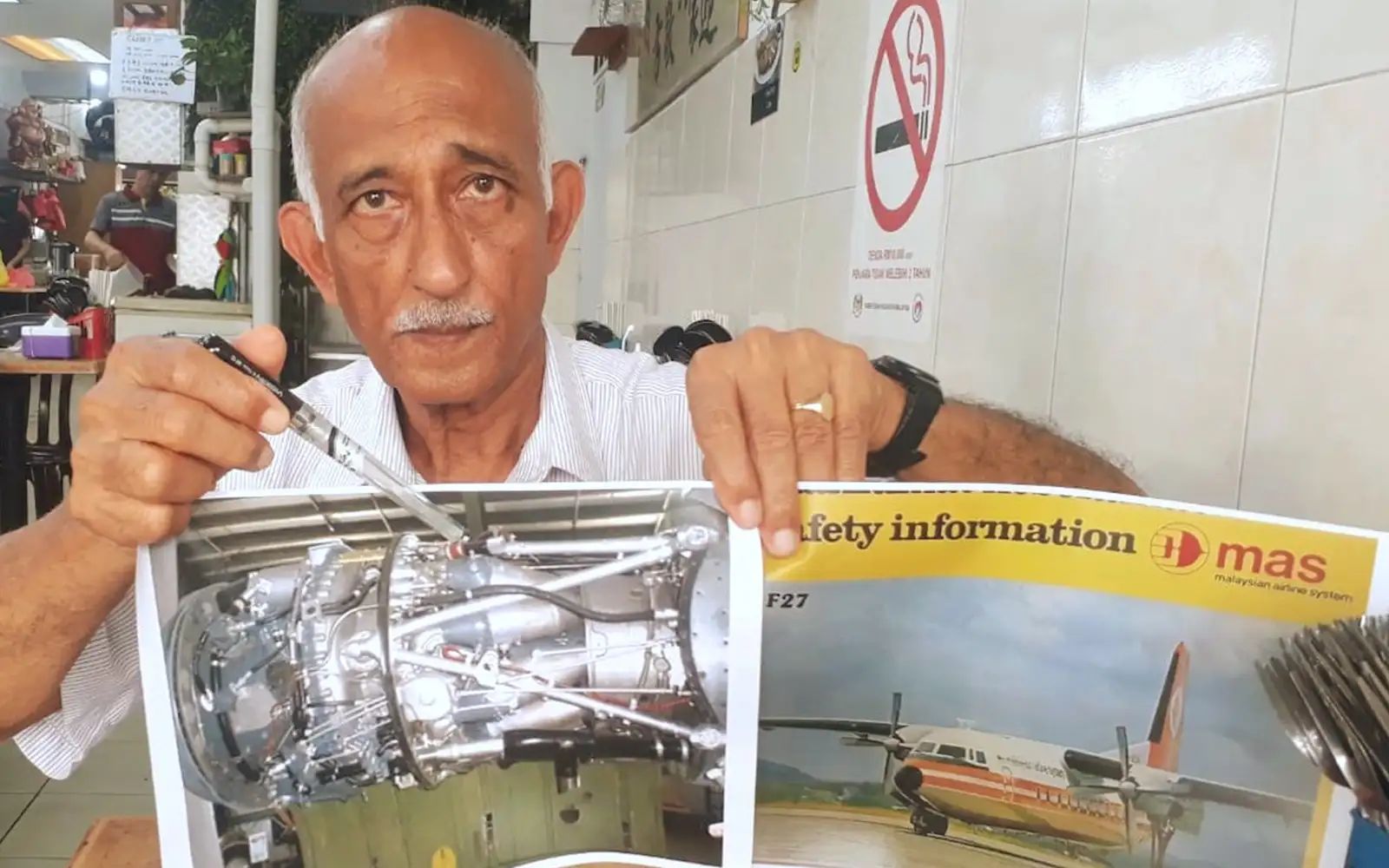
One day in 1982, those qualities would be put to the test. A licensed aircraft maintenance engineer, he was carrying out a routine inspection on a Malaysia Airlines Fokker F27 at Subang Airport when something caught his eye.
“I was on duty alone,” he recalled. “While passing the No 2 engine at the starboard side, I noticed that there was not enough clearance between the exhaust unit and the jet pipe. As a result, the engine appeared to have sunk slightly.”
Sensing something wrong, he removed the cover of the engine. “I discovered a completely sheared top engine-mount tube” – a serious fault that, left undetected, could have compromised the aircraft’s safety, with potentially devastating consequences.
Alexander immediately alerted his superior, and the aircraft was grounded. The Rolls-Royce Dart engine, worth an estimated RM1.5 million, was replaced before the aircraft returned to service.
At the time, the F27 had a strong safety record within MAS, making the discovery all the more critical.
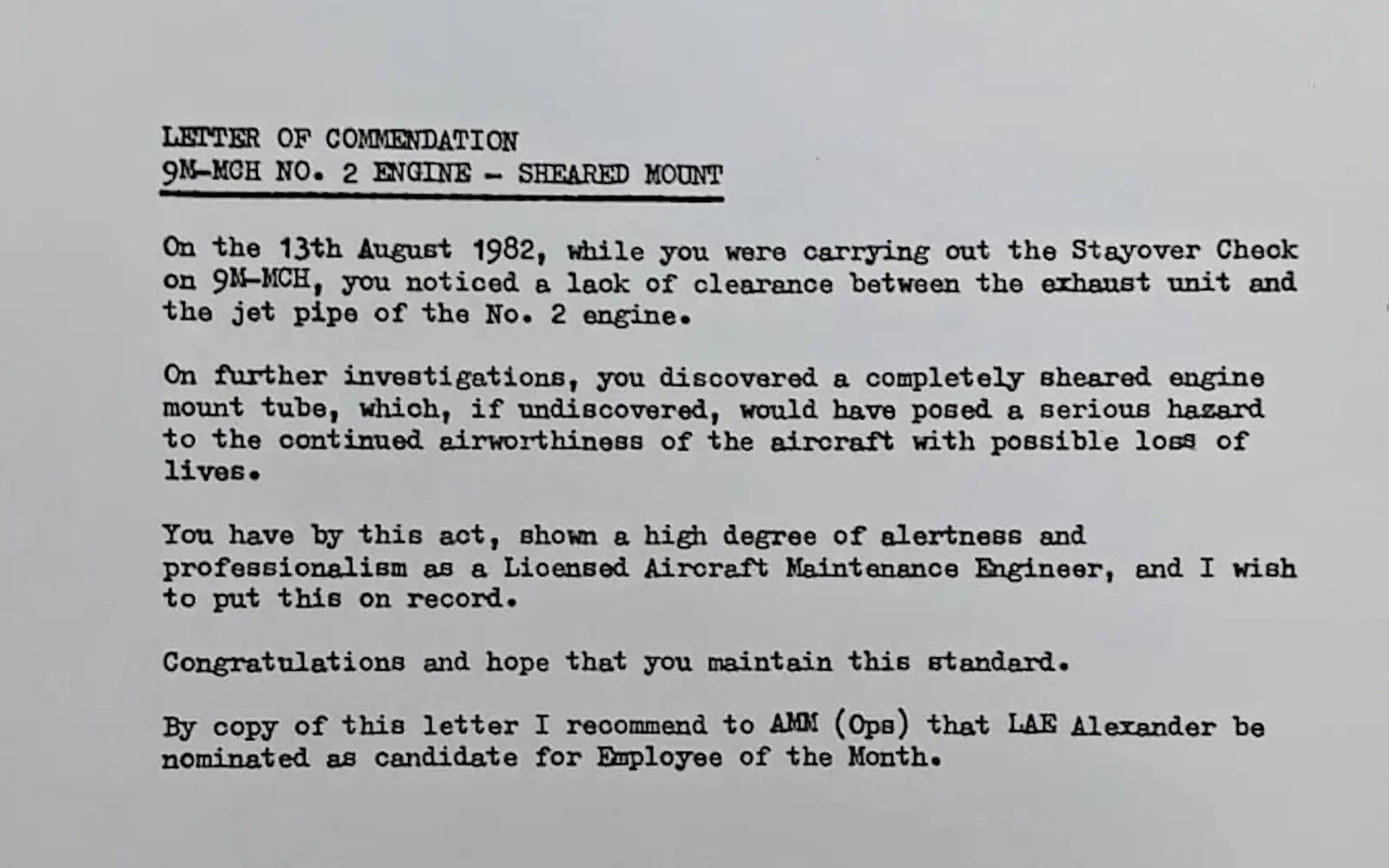
For Alexander, it was simply part of the job, but the airline’s management saw it differently. In a commendation letter dated Aug 19, 1982, quality-control supervisor Ng Fook Meng praised his “high degree of alertness and professionalism”.
Alexander was later recognised with an outstanding performance award, and received a certificate and RM100 from then MAS chairman Raja Mohar Raja Badiozaman.
The airline’s general manager also commended his careful judgment and technical skill, urging him to maintain the same high standards throughout his career.
Alexander did just that.
The 1982 incident may have stood out, but it was far from the only measure of his work. It reflected the kind of discipline and attention to detail he had built over more than a decade in aviation.
Alexander had joined the then Malaysia-Singapore Airlines as an apprentice in 1971, starting from the ground up in a field that would launch a career spanning 43 years.
He built his expertise through both training and experience, including a stint in Oxford, England, where he attended a course on piston-engine aircraft.
Colleagues would come to know him as someone who did not shy away from challenges – on the job or beyond it. Case in point: in 1975, he scaled Mount Kinabalu, a feat that reflected the same determination he brought to his work.
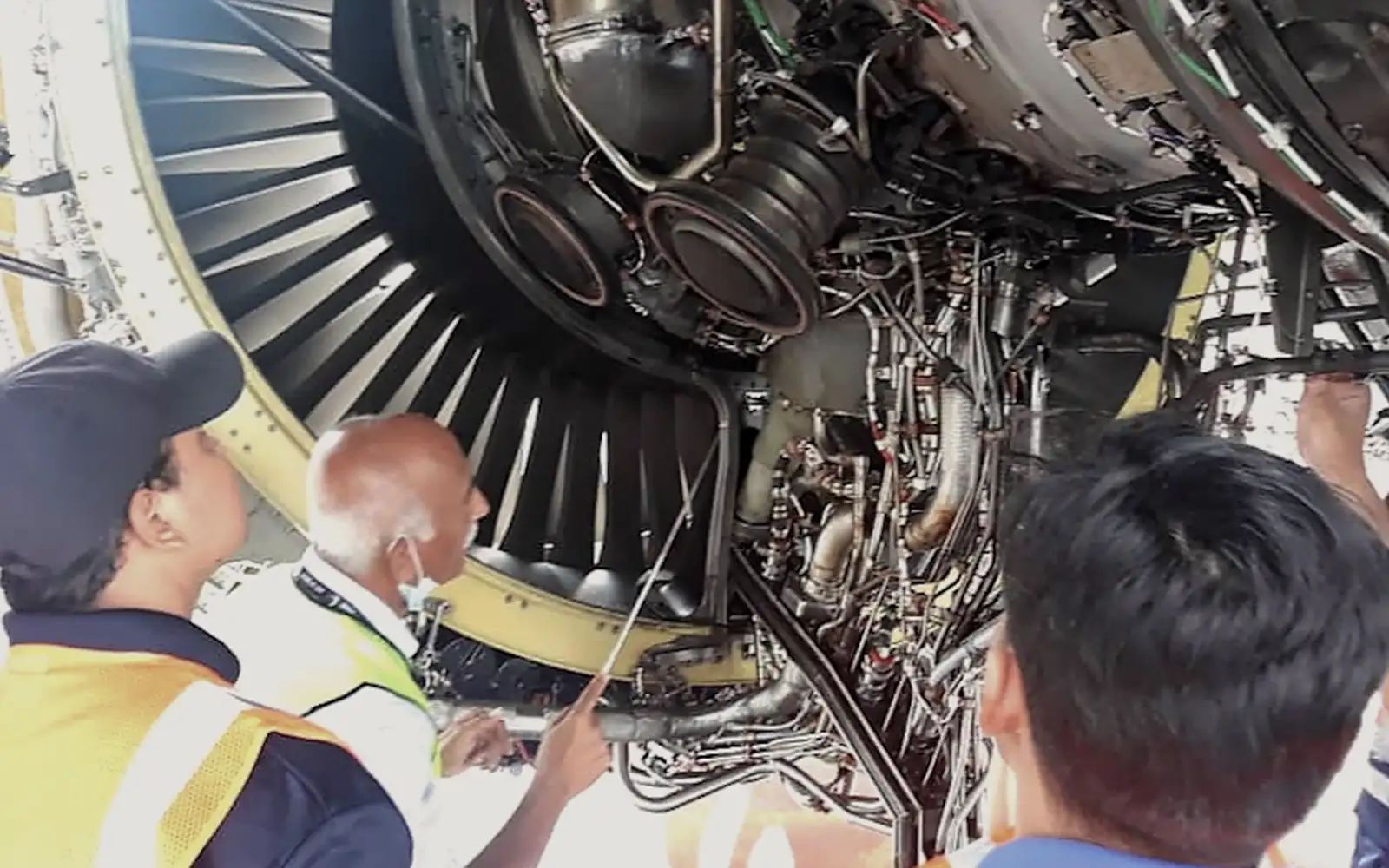
Later, in 1999, he was seconded to the Royal Malaysian Air Force, where he trained young recruits in gas-turbine and piston engines at the Alor Setar base. It was a role that reflected not just his technical knowledge but a willingness to pass it on.
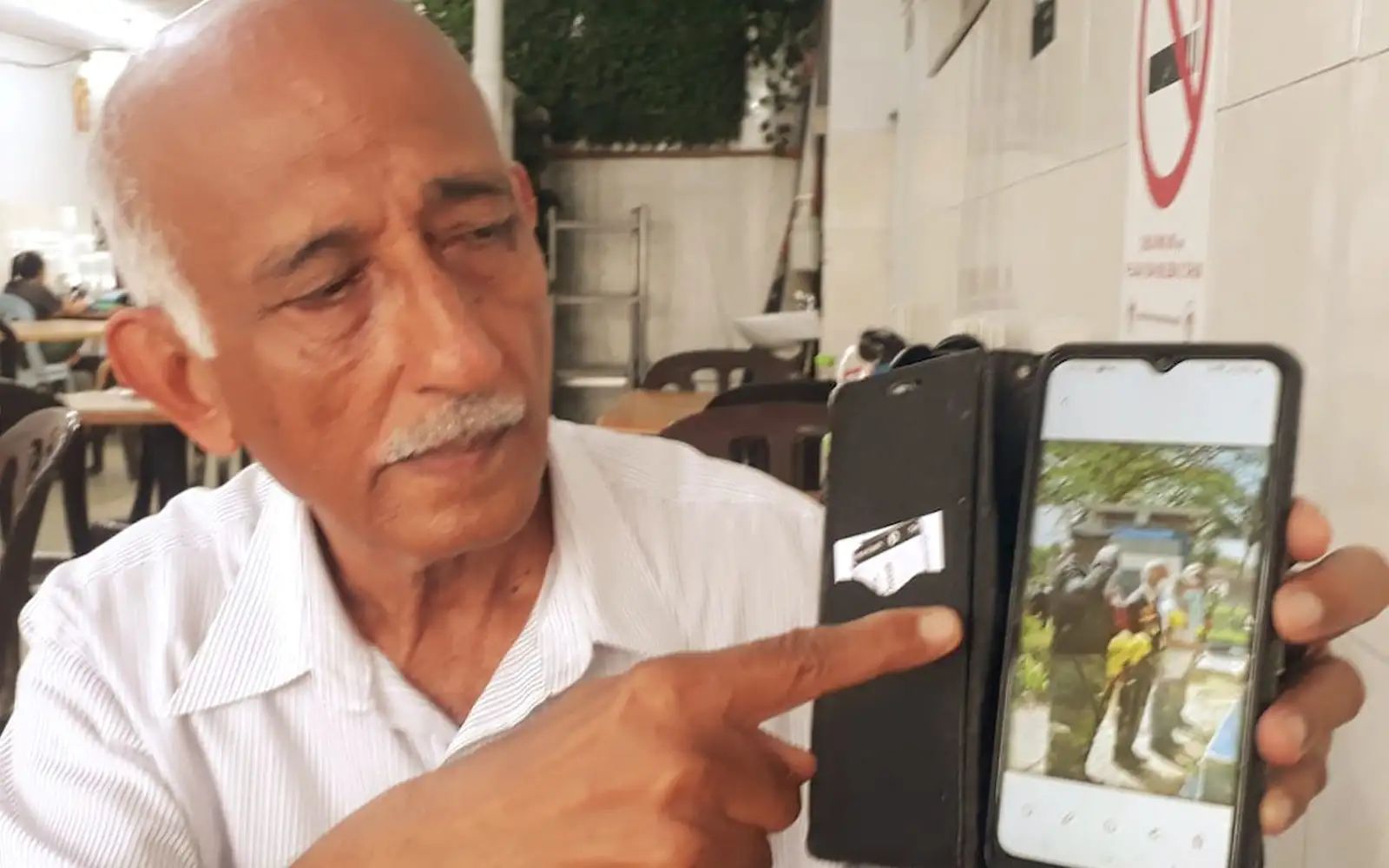
Service, in many ways, runs in the family. His father, Sgt Puthenveedu Idiculas Muthalaly, served with the British Army’s Royal Electrical and Mechanical Engineers, and was part of the Indian Regiment involved in Operation Zipper.
“Every year on Sept 9, I don my father’s service medals on the right chest of my suit (as opposed to the traditional left worn by veterans) to attend a commemoration ceremony with the war veterans in Morib,” Alexander said.
The amphibious landing at Morib beach on Sept 9, 1945 marked the liberation of Malaya from Japanese occupation.
Puthenveedu’s numerous medals, awarded for service during and after World War II, are a reminder of a different era of duty and sacrifice. And Alexander carried that sense of responsibility into his own career.
Today, at nearly 75, Alexander enjoys his retirement with his family – his wife, dentist Dr Rachael Matthew, and their daughter Maryanne, a chartered accountant and law graduate.
His long career, defined not by headlines but by consistency, tells a story of diligence, steady hands and a sharp eye – the kind that keeps people safe, often without them ever knowing.