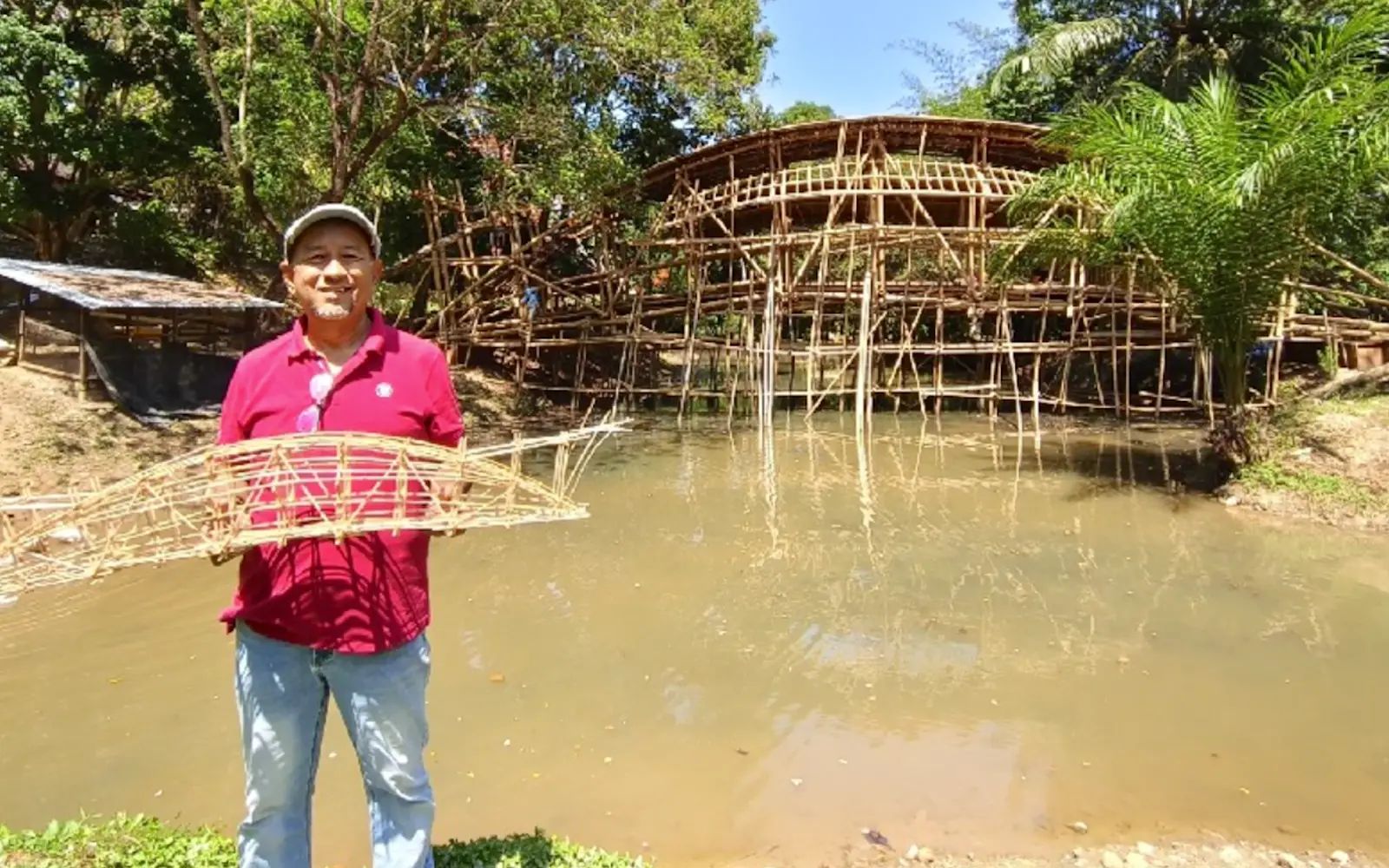
Curious, he tried one. “That was when everything changed,” he said.
That moment sparked a decade-long pursuit. Today, Mazlan designs and builds using bamboo – from bridges and mosques to cafés and even electric guitars – driven by a belief that the material could play a much bigger role in modern construction.
He describes bamboo as a “miracle plant”, not just for its versatility but for its environmental potential.
Unlike steel or concrete, bamboo is renewable, fast-growing and absorbs significant amounts of carbon. It matures in just three to six years, compared with decades for most timber species.
These factors are drawing renewed global interest. In January, the Institution of Structural Engineers in the United Kingdom released new guidelines encouraging architects to become “bamboo-ready”, positioning it as a viable low-carbon alternative for permanent structures such as homes and schools.
The timing is no coincidence. As countries struggle to meet climate targets, materials that reduce emissions are under increasing scrutiny – and bamboo is ticking several boxes.
Landscape architecture expert Sapura Mohamed said bamboo’s environmental benefits go beyond its rapid growth.
“With its large leaf surface area, bamboo is highly effective at absorbing carbon,” she said, adding that it also helps stabilise soil and prevent erosion.
Even after it is harvested, bamboo continues to offer value. It can be used for construction, furniture and interior fittings, while waste material can be turned into biochar or activated carbon for soil improvement and water treatment.
Real-world examples are already emerging. In Bali, a school built largely from bamboo has become a showcase of sustainable design, while in Ecuador, bamboo structures – including a fire station – survived a major earthquake in 2016.
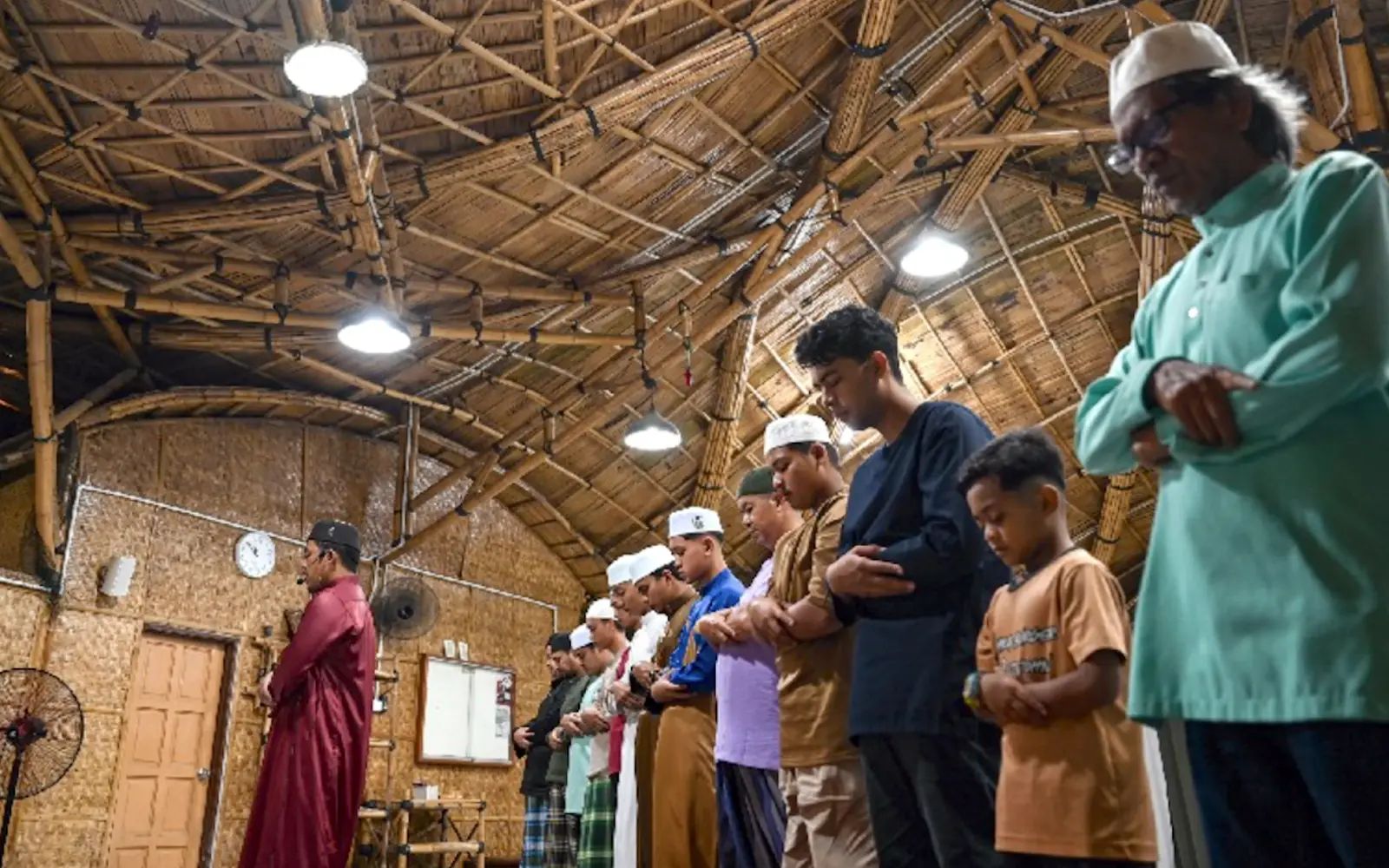
Malaysia, too, has its own examples. A mosque in Kelantan – aptly named Masjid Buluh – is built almost entirely from bamboo and serves as a working place of worship, while bridges in Langkawi and eco-resorts across the country are quietly testing its structural potential.
Bamboo pavilions and suraus – including one in Kuala Terus, Terengganu, and another in Ipoh’s D R Seenivasagam park – offer a glimpse of how the material is already being integrated into everyday spaces, and proving its structural and aesthetic potential.
“These projects show that bamboo can go beyond traditional uses and function as a viable construction material,” said Norhazaedawati Baharuddin of the Malaysian Timber Industry Board.
The government has also taken steps to develop the sector through the Bamboo Industry Development Action Plan 2021–2030, aimed at turning bamboo into a competitive, value-added industry.

There are now thousands of hectares under cultivation nationwide, supported by community farming programmes that provide seedlings, training and resources.
But despite these efforts, progress has been slower than expected. Industry players say demand remains limited, held back by regulatory gaps, lack of standardisation, and low awareness within the construction sector.
Mazlan knows this challenge well. After more than a decade advocating for bamboo, he is still trying to convince developers and authorities to see it as more than a niche or temporary material.
“We are still behind our neighbours,” he said, pointing to countries like Indonesia and Thailand, where bamboo is more widely adopted.
For now, much of Malaysia’s bamboo use remains in furniture and small-scale structures, rather than mainstream construction.
Still, interest is growing. And as the pressure to build more sustainably increases, bamboo – once seen as traditional – may yet find its place in the future of modern construction.