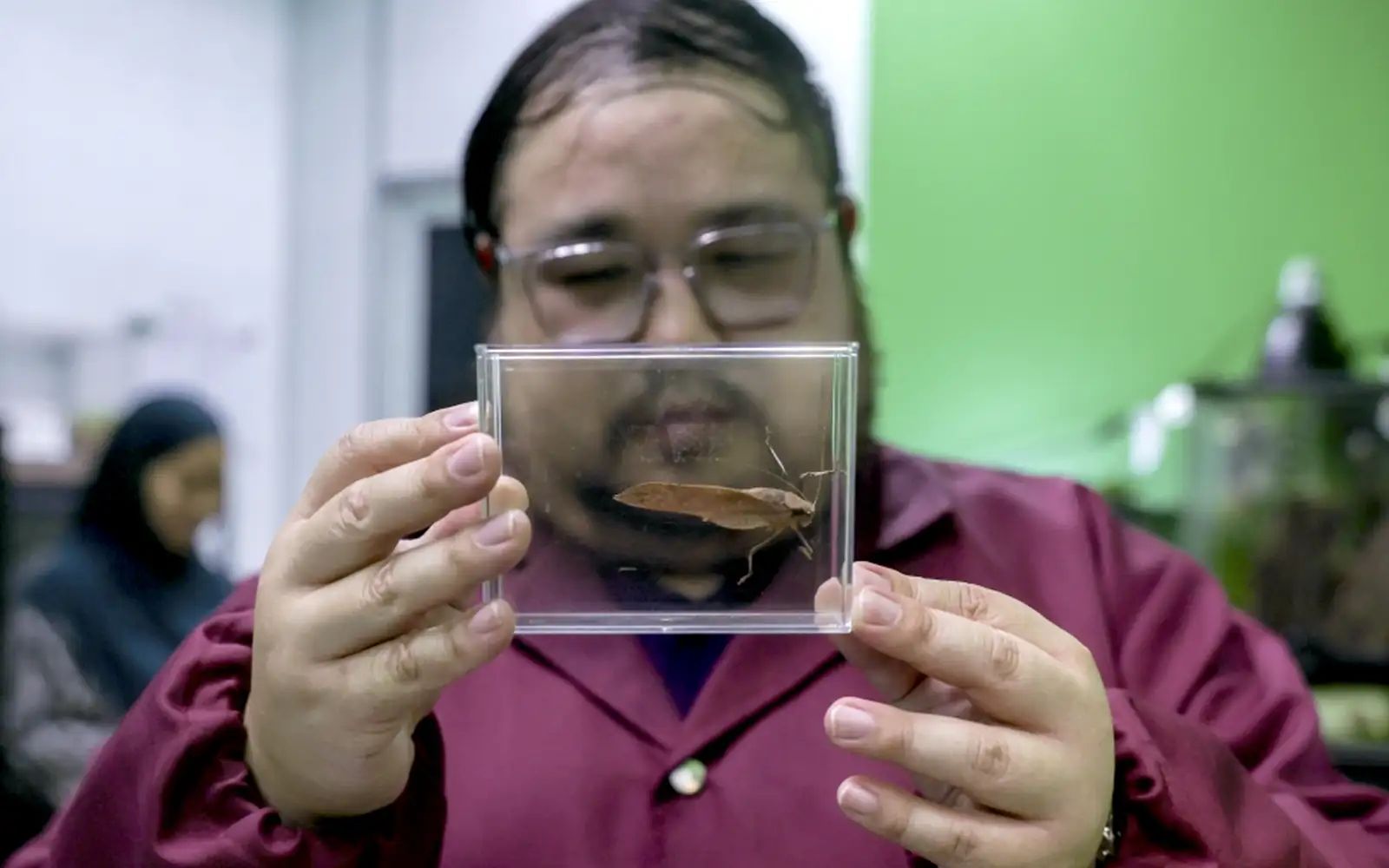
In Kelantan today, that quiet pastime is finding new life. What began as a rural habit of catching and keeping deer grasshoppers has evolved into a small but growing subculture, complete with night-time competitions and a loyal following among younger enthusiasts.
“It used to be something people did just to enjoy the sound. Now it has become a community activity that brings people together,” said Goh Soon Heng, department head of veterinary preclinical science studies at Universiti Malaysia Kelantan.
Unlike most competitions, this one is not about what you can see. It takes place at night, often in near darkness, when the grasshoppers are hidden from view. Participants have to sit and listen.
“This competition is very unique because it is usually held with the lights off,” Goh explained. “Participants cannot see the grasshoppers, they can only hear their sounds.”
In that darkness, the smallest details matter. Judges listen for tone and rhythm, measuring both the melodiousness and how often the insect produces its distinctive hiss.
Each chirp is counted over 30 seconds, turning something fleeting into something judged and celebrated.
For many, the appeal lies in its simplicity: the hobby is inexpensive, accessible, and deeply rooted in the rhythms of village life. It also offers something increasingly rare – a reason to slow down and pay attention.
Young people are increasingly taking an interest, drawn not just by curiosity but by a sense of connection, Goh noted.
“The participation of young people is very important because they are the ones who will ensure that this heritage continues to grow,” he added.
Sustainability matters
Behind the scenes, keeping these insects requires care. Adult deer grasshoppers can grow up to 8cm long and typically live for up to 12 months.
Those kept in captivity need a small, balanced environment, with leafy food sources and suitable surfaces such as soil or sticks for laying eggs.
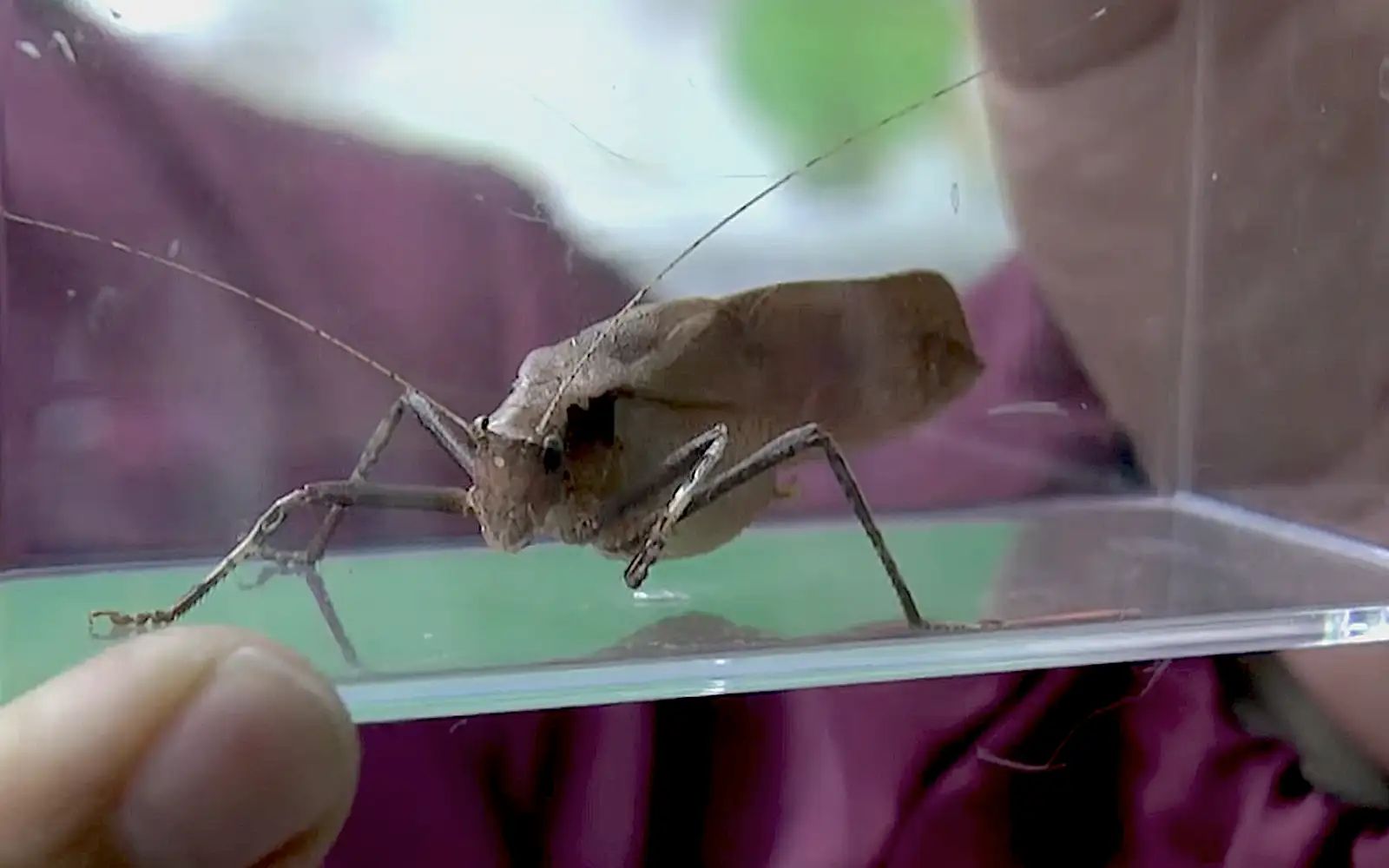
In the wild, they play a quiet but important role – keeping plant growth in check while serving as food for birds and other animals. Trouble begins when that balance is disturbed.
“Conflict will arise when their original habitat is destroyed,” Goh cautioned. “Without a natural food source, they may move to farms and become pests.”
He also pointed out a common mix-up: the grasshoppers commonly fried and eaten by villagers are not deer grasshoppers, but a different species found in paddy fields.
As the hobby grows, so do concerns about sustainability. For now, most enthusiasts still prefer to catch their own grasshoppers rather than buy them.
But Goh warns that this could change if wild populations decline: “The demand to buy them will definitely increase,” he said.
That makes research and responsible harvesting crucial, especially to understand how quickly the insects reproduce and how often they can be safely collected.
Even so, Goh remains optimistic about the future. He believes the practice may endure not just as a pastime, but as a form of living heritage – one that encourages people to reconnect with their surroundings in a quieter, more attentive way.
In a fast-moving world, the gentle hiss of a grasshopper may be easy to overlook. But in Kelantan, it is being listened to more closely than ever.