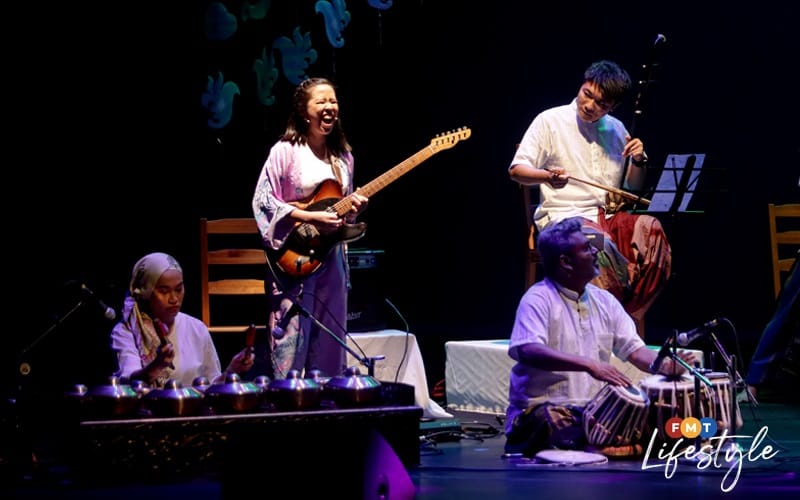
Recently however, some lucky Malaysians were able to reminisce about their childhood when they gamely sang along to these tunes during a stage production called ‘Irama Rimba’.
Held at Kuala Lumpur’s Temple of Fine Arts (TFA), the one-night show was the fourth production under the Ankur musical ensemble, who in the past have bagged the prestigious Boh Cameronian Arts Awards.
Catchy jingles aside, a string of other musical compositions was also performed. Opening song ‘Apa Khabar’ for instance, was a rousing welcome performed by award-winning composer Irena Taib on the electric guitar.
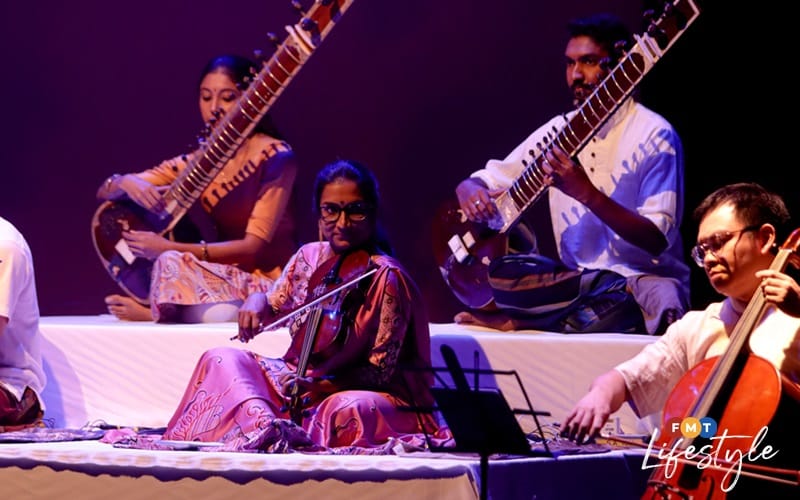
The performance built to a crescendo when the melodious sounds of traditional musical instruments like the sitar, ‘gambus’, erhu and ‘keromong’ were incorporated into the composition.
Other performances were just as memorable with string instruments taking the lead for upbeat and jazzy tunes. A moving backdrop consisting of scenes of popular tourist spots in Kuala Lumpur helped evoke a sense of nostalgia.
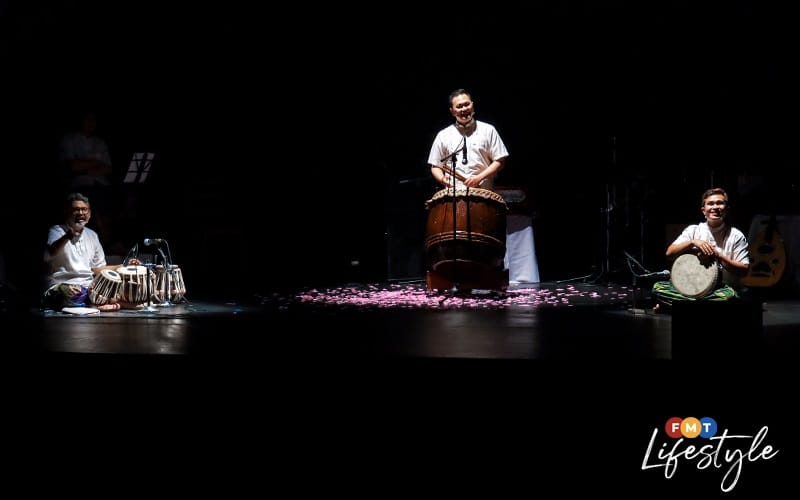
Audiences were also treated to a new dimension in music – a musical interpretation of how nasi lemak is cooked – using traditional percussions such as the tabla and kompang to create the sounds of cucumbers being sliced and sambal being cooked.
Percussionists Prakash Kandasamy, Hisharudy Mahmud and Thong Yoong How had fun with their performances, particularly with their creative twist on the familiar “Sao Kao Po Chi”, an announcement many in the audience still hear today in their neighbourhoods appealing for “old newspapers”.
Directed by pianist Jyotsna Prakash, and composed by Hariraam Tingyuan Lam and Irena, the performance also featured other artistes such as Eugene Chong, Satya Subramaniam and Pangasaasanii Ganesan clad in sarongs and sarees.
The concert also saw two first-timers join the team – erhu player Bryan Ngooi and ‘keromong’ artist Amira Farhana.
“Our aim was to bridge the gap between us, musicians, and the audience. That was why the opening song was called ‘Apa Khabar’ to connect to the audience,” Jyotsna told FMT.
Having worked with most of the musicians throughout her artistic career, she explained that bringing together the different talents to produce the ensemble was thoroughly enjoyable.
“The diverse musical instruments were important to highlight the cultures that we belong to. Plus, I’m familiar with the works of these musicians so we were able to blend in their instruments and make an array of songs.”
She explained that while some songs were well-rehearsed, others were mostly impromptu; ‘Apa Khabar’ for instance was performed on stage with minimal practice, to add to its element of surprise, as compared to the other songs.
She said it was much the same for the musicians in the percussion section who were given only a basic framework. Prakash and his team then further developed the idea to include the sounds of the nasi lemak, among others.
Jyotsna said that if a similar production was staged in the future, she would like to explore an east-Malaysian theme.
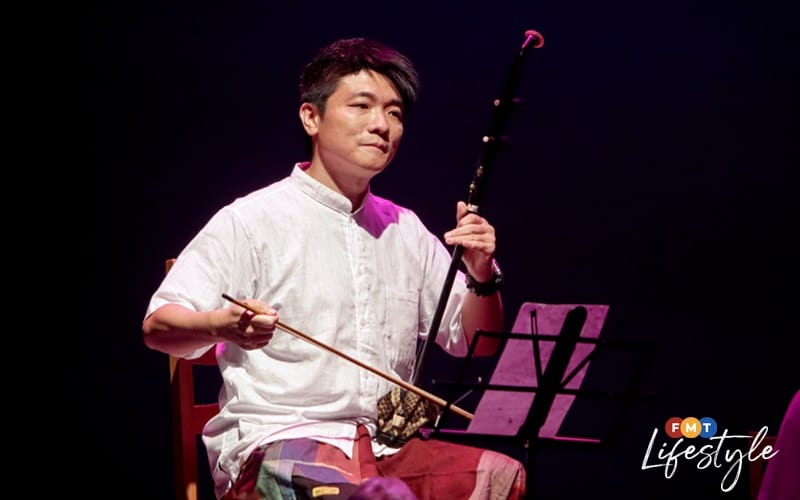
Ngooi, who is an erhu teacher and performer, shared how he enjoyed the sound of the erhu when played together with the other musical instruments.
“I felt so excited to work with musical instruments of different races, and I have learned a lot of music from different cultures. As a Malaysian, I can have the opportunity to communicate with different races through music,” he said.
Irama Rimba was truly a celebration of the Malaysian multicultural experience of sharing and creating through music. True to its name Irama Rimba, just like trees, people are diverse and different, but coming together, make up this forest called Malaysia.