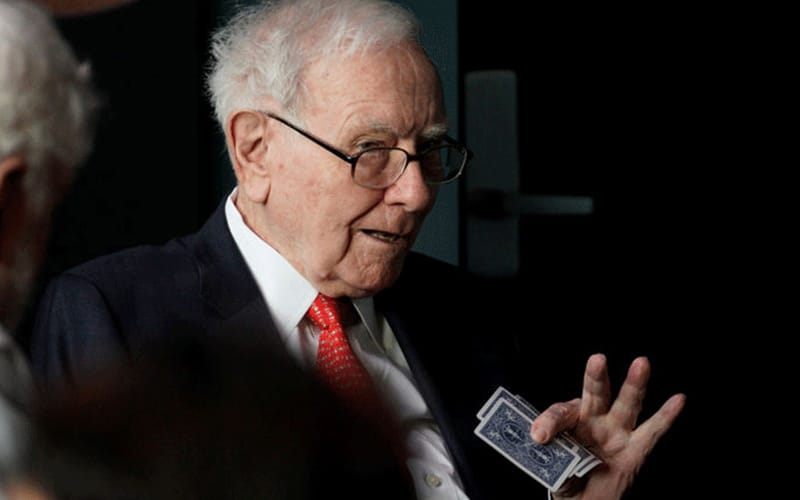
Part of any good investor’s education should be to read and study renowned magnate and philanthropist Warren Buffett’s letters in Berkshire Hathaway’s annual reports.
These letters contain Buffett’s wisdom, principles and seven decades’ worth of personal experience in investing and financial stewardship. Truly, they are masterpieces and are highly recommended for anyone who wishes to build wealth via stock investing.
Here are five major takeaways on wealth building from Buffett’s 2021 letter.
1. Investing vs trading
“Our goal is to have meaningful investments in businesses with both durable economic advantages and a first-class CEO. Please note particularly that we own stocks based upon our expectations about their long-term business performance, and not because we view them as vehicles of timely market moves. That point is crucial: Charlie [Munger] and I are not stock-pickers; we are business-pickers.”
Investors look to own businesses that could generate consistent growth in sales, profits, and cash flows over the long term. They study the business model, financial results, management team, and future growth initiatives of a company before investing, in contrast with stock traders and speculators who decide to buy, hold, or sell stocks based on market moves.
2. Compound wealth
“Early in 1965, things changed. Berkshire installed new management that redeployed available cash and steered essentially all earnings into a variety of good businesses, most of which remained good through the years. Coupling reinvestment of earnings with the power of compounding worked its magic, and shareholders prospered.”
Here is a simple formula for compounding wealth, which is to save money and have it invested into a variety of great businesses that could deliver rising revenues and profits over time.
The goal is to build a portfolio of businesses that are highly profitable and sustainable, with the mindset of keeping them for life.
3. Cash reserves
“Charlie and I have pledged that Berkshire will always hold more than US$30 billion of cash and equivalents (US Treasury Bills). We want your company to be financially impregnable and never dependent on the kindness of strangers (or even that of friends). Both of us like to sleep soundly, and we want our creditors, insurance claimants, and you to do so as well.”
Some think stocks are better investments than cash and fixed deposits as they can yield dividends and appreciate in value over time. Remember, however, that cash is a crucial part of day-to-day living and has an integral part in investing – for example, by ensuring bills get paid, thereby reducing liability.
With sufficient cash, one does not need to sell off investments to pay for an unforeseen expense.
4. Equities
“I always kept at least 80% of my net worth in equities.”
Buffett revealed in this letter that Berkshire has US$144 billion in cash and equivalents in its balance sheet. He is also an investor who buys and holds an ever-expanding basket of great businesses.
It would make sense for him to keep a percentage of his wealth in equities. This is typical among billionaires today, where their wealth consists primarily of shares of businesses they helped found.
Many people might not feel comfortable having a high percentage of net worth in equities. Most of them adopt a view where stocks aren’t businesses to keep for the long-term but are vehicles to trade for quick gains.
In these cases, they are not investors but, rather, stock traders or speculators.

5. Comfortable investments
“People who are comfortable with their investments will, on average, achieve better results than those who are motivated by ever-changing headlines, chatter and promises.”
Being comfortable with an investment means being able to hold on to it over the long term regardless of price movements. If you are about to buy a stock today, do you intend to keep it for life?
Or would you reconsider your stock position every time there are reports on the pandemic, elections, trade and actual wars, oil and gas prices, and currency fluctuations? Do you try to guess and speculate winners and losers in the stock market?
If you answered “yes” to the previous two questions, you are not a stock investor.
Stock investors assess their investments based on business fundamentals and valuation, rather than headlines, chats, and promises. They tend to buy good businesses at undervalued prices when most people panic-sell in the markets. They also avoid chasing spikes when most people are rushing in to grab stocks in a mania.
Buffett has kept his position in most of the stocks – including American Express, Apple, Bank of America, Moody’s, and Coca-Cola – throughout major global events, including the pandemic. This is a testimony of his character as a value investor.
This article first appeared in KCLau.com. Ian Tai is a financial content writer, dividend investor, and author of many articles on finance featured on KCLau.com in Malaysia, and ‘Fifth Person’, ‘Value Invest Asia’ and ‘Small Cap Asia’ in Singapore.