
“We were looking at pictures of tiny homes on Instagram and realised we could do this. After all, we only retire to our room at night and we’re barely at home during the day,” Lo, 44, tells FMT.
They settled on the idea of a modular design after realising they needed a home that could accommodate their families during gatherings, and the prospect of adding containers to create more rooms was appealing.
“We pictured a large communal area where our families could socialise and, at night, we could all adjourn to our little rooms,” Lo says.
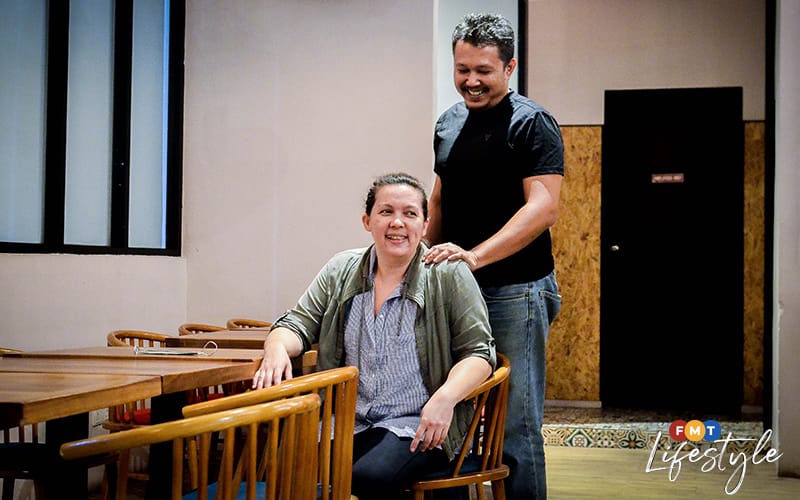
Lo and Sazly – who are the co-founders of Doggy Bag, a company that produces homecooked pet food – eventually found an approximately 745 sq m plot in Kayangan Heights in Shah Alam, Selangor.
The couple were about to embark on their project when Covid-19 struck. They have since obtained the necessary approvals and are waiting for construction to begin.
“Since everything is assembled offsite, it will only take a few days to complete the build,” says Sazly, also 44.
Lo and Sazly are guided by four main principles towards an eco-friendly home for themselves and their 10 rescue dogs.
The first is its design, which has to have minimal impact on the surroundings.
“The land is located on a hill, and instead of bulldozing the area to ‘master’ the slope, we decided to play along with nature and construct our home according to the gradient,” Sazly explains.

“That’s why we decided to call our new home ‘Jejari Hijau’, as the containers would look like fingers coming out of the forest once the project is completed,” Lo adds.
The second principle pertains to the use of materials that have a low carbon footprint. The couple have elected to use older shipping containers instead of single-trip ones, as they are more sustainable.
The third principle revolves around sustainable use of electricity and water. They will install solar panels to generate power, and build a water catchment system that will enable them to use rainwater to flush their toilets.
They will also include a system that allows the heat from air-conditioner compressors to be used to warm up the water tank in their bathroom.

The couple’s fourth guiding principle is attaining self-sufficiency.
“Growing up in a kampung, my family grew about 30% of their food, consisting of tapioca and bananas among others,” Sazly says. They would like to follow suit.
Initially, the biggest challenge they faced was identifying someone with the expertise to construct their home. Fortunately, they managed to find an architect “of the same wavelength who was extremely accommodating of our budget and requirements”, says Lo.
A second challenge presented itself when the price of shipping containers increased drastically due to a recent shortage. The couple had to reassess their initial building plan and, for now, have decided to build just the main rooms first.
“It’s not too hard to attach additional containers later on,” Sazly points out.

All in, the project is the culmination of five years of research, from watching YouTube videos to talking to contractors overseas.
“There are a lot of little things that you have to consider, from the functionality of the design and rust prevention to the optimal air-conditioner temperature,” Sazly adds.
For those who are thinking of building their own container homes, they suggest first staying at a container hotel to get a feel of what it is like.
“It’s a different kind of vibe and it is rather small; it might not be for everyone,” says Lo.
That said, they believe more people will opt for alternative living solutions given that the current brick-and-mortar method “costs too much, takes too long, and leaves behind a huge carbon footprint”.
Follow Sazly and Lo’s eco-home adventures via their Facebook page. You can also get more information on Doggy Bag via Facebook and Instagram.