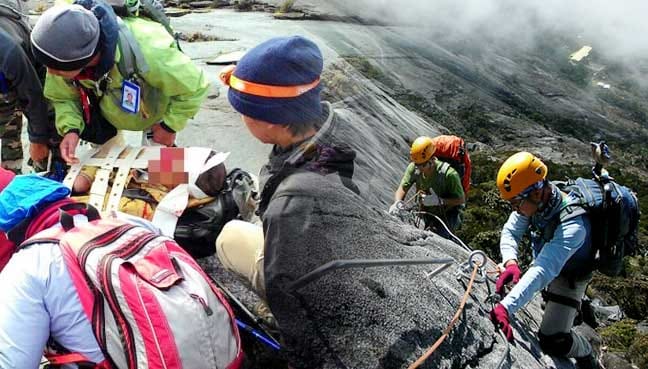
The department’s chief, Jimmy Lagung, said mountain search and rescue (Mosar) records showed 47 incidents last year.
So far this year, there have been 36 cases of serious problems experienced by climbers.
“Since January, there has been one case of death due to a fall on the mountain.
“There were also other cases, including acute mountain sickness (eight cases); hand and foot injuries such as sprains (24 cases); other injuries such as abdominal pain, vomiting and excessive tiredness (three cases),” he said.
He added that the smoothness of a climb is mostly determined by weather and the climbers’ physical condition.
The Kinabalu Mountain Guide Association’s former chairman Richard Soibi said the weather could prove to be unpredictable.
“During the rainy season, we find injury cases like this happen more often,” he said.
“This may be due to the fact that during the rainy season, temperatures are likely to fall to the lower levels, causing climbers to experience extremely cold weather while on Mount Kinabalu.
“The rain also causes the track surface to become slippery and creates muddy paths.
“This poses a risk to climbers. Any wrong step and they can slip while making their climb.”
Climbing was suspended after the magnitude-6 earthquake which occurred on June 5, 2015.
https://www.freemalaysiatoday.com/category/nation/sabahsarawak/2015/07/01/kinabalu-may-have-lost-height-after-earthquake/