
Motorcyclist G Achu Nair, 60, decided to retire because the ferry service has been unreliable over the past year and with no more regular ferry service, he chose not to accept any extension to his contract.
He said he was fed up with the unreliable ferry services over the past few years and the eventual reduction in services to just one vessel from Jan 1.
“My boss asked me to stay, I said no. I have had it with the long wait for the ferry, delays and other hiccups. Part of the reason I’m choosing to leave is the ferry,” he said when met by FMT.
Using the bridge is not an option because that “is a one-way ticket to death,” according to Nair.
He has been taking the ferry to work at Weld Quay daily, without fail, for the past 40 years.
He first rides his motorcycle from his home in Kulim to Butterworth, some 30 minutes away, before boarding the ferry. The ferry ride takes another 20 minutes and from the jetty at Weld Quay, his workplace is just a short hop away.
Taking either of the bridges is not an option, Nair said, as it would entail an additional distance of about 15km and there were crosswinds which were dangerous for those riding smaller engine motorcycles.
He said when the ferry ramps in George Town failed in October, he was forced to use the Penang Bridge to get to work.
“Many think the crosswind problem is caused by strong winds. What the authorities fail to understand is that when you share a three-lane bridge with cars zooming past you at 90km/h, you can be thrown off.

“This is particularly so as motorcycles are forced to shift two lanes from the left to take the fork towards George Town. That is when we are faced with very strong winds.
“When it rains, you pull over to wear your raincoat, but the wind is so strong, you can’t even pull your arms through the sleeves of your coat.
“Frankly, the bridge is a one-way ticket to death,” he said, adding that other issues motorcyclists had to face include stones and other flying debris.
When asked about one old ferry being made available for motorcycles, Nair said the wait time would be too much. He also said that many failed to understand that driving a car was too costly.
He said that if he were to drive a car from Kulim, he would have to pay three tolls, including for the bridge amounting to RM11.60 daily and fuel costs.
“On the Butterworth-Kulim Expressway, motorcyclists don’t have to pay any toll and we have a separate lane, which is safe. On the ferry, I pay RM2. I refuel my bike with RM4 worth of fuel every two days. It is still much cheaper.”
Nair said his concern was about the poultry traders at Chowrasta Market in George Town, who travel from Butterworth using the ferry daily. He said the chickens and ducks are kept in carriages, attached to the motorcycles.
“These are small-time traders who bring free-range chicken and ducks every morning. I recently asked them about their fate after this, and they just answered ‘I don’t know.’
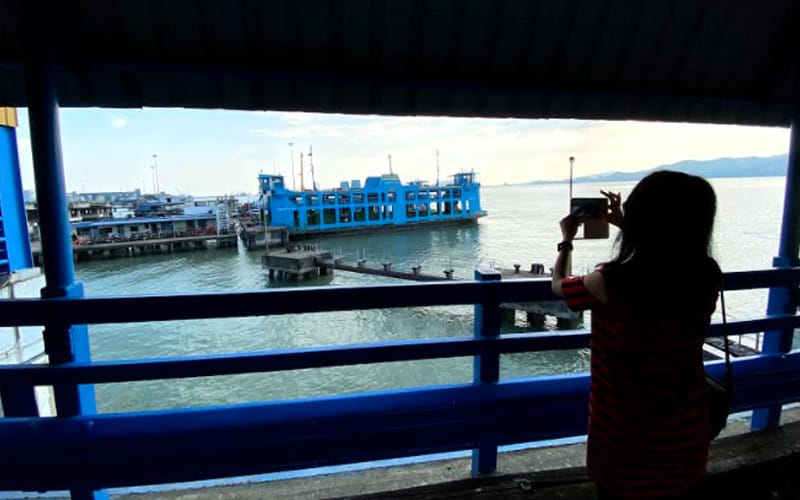
Lawyer K Simon Murali, 48, reminisced about the good times on the ferry when it was the only mode of transport between the mainland and the island as he was growing up.
He said one of the unforgettable moments was in 1988 when the ferry bridge gave way and collapsed, killing and injuring scores of people. The incident was blamed on overcrowding.
He was returning with his family after attending the annual St Anne’s Feast in Bukit Mertajam.
“My friends and I managed to get into a sardine-packed ferry just 15 minutes before the collapse,” he said.
Thirty-two people died and 1,634 were injured in the July 31, 1988 incident. With St Anne’s Feast and the Kwan Yin’s birthday event on the same day, an estimated 10,000 people were on the ferry ramp at the time of the incident.
Simon said not all aspects of the old ferry was great – the toilets were filthy, the lower deck was filled with fumes from diesel engines.
“Life goes on,” he said when asked about the decommissioning of the ferries.
The last ferry carrying four-wheeled vehicles leaves the island at 12.30am. Then, it’s over to the bridge.