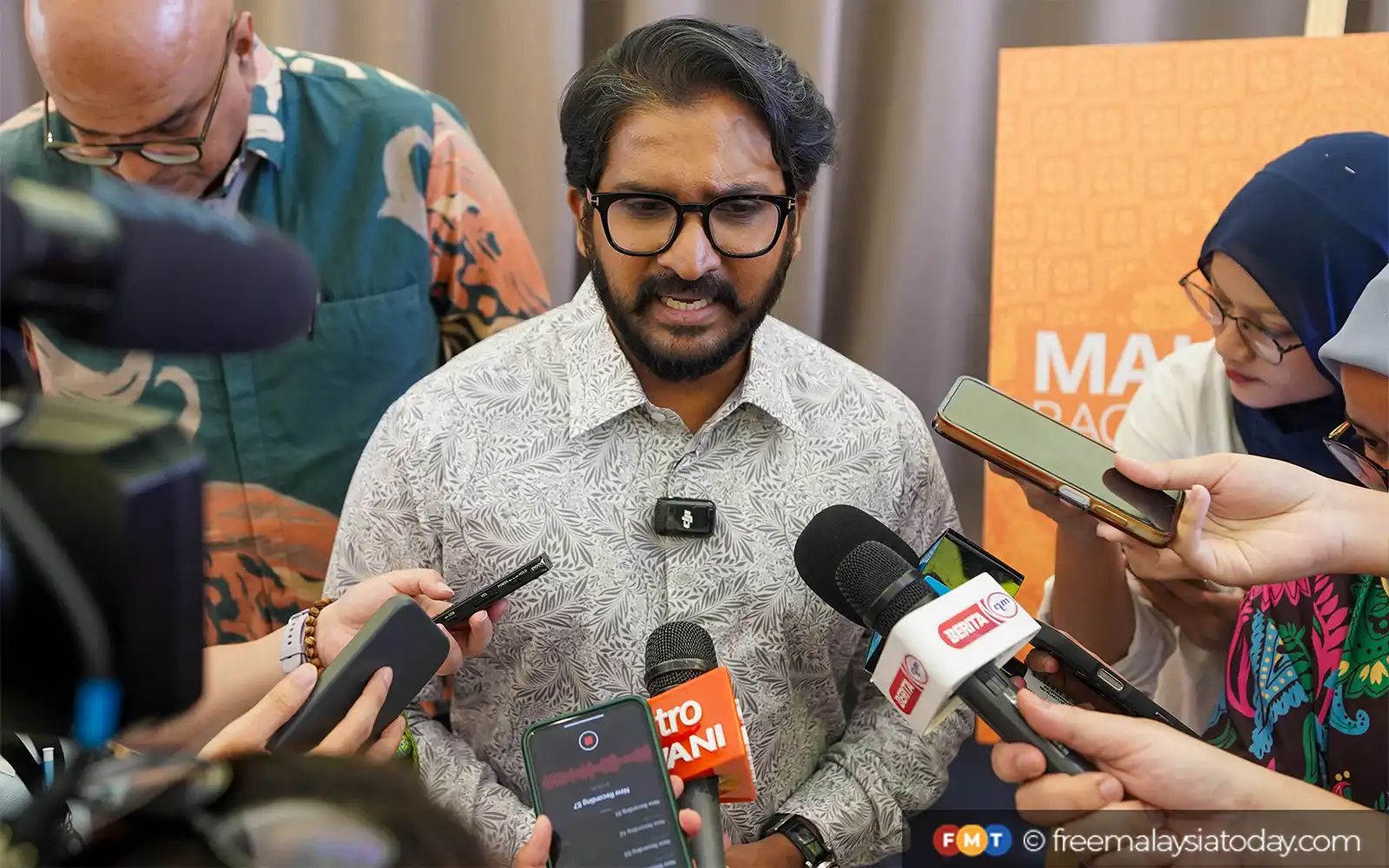
Yuneswaran said the ministry would take responsibility for addressing the issue, including by raising the matter with the Cabinet and engaging the Dewan Rakyat speaker.
“These statements are recorded in the Hansard as official documents and kept for years as a reference for the public.
“I will bring this matter to the Cabinet and we will present a report. As a ministry, we will take responsibility,” he told reporters on the sidelines of the launch of Pusat Komas’s Malaysia Racism Report 2025 here.
In the report, 43 instances of racism were recorded during parliamentary sittings last year. The report also found that racial majoritarianism and debates linked to Article 153 of the Federal Constitution were the biggest contributors, with 18 incidents.
Article 153 ensures that the Malays and natives of East Malaysia have access to “such proportion” of positions in the public service, scholarships, as well as permits and licences for the operation of any trade or business, as the Yang di-Pertuan Agong may deem reasonable.
On the matter of online hate speech, Yuneswaran said much of it was driven by artificial intelligence (AI) and fake accounts.
“About 70% is AI-generated. Many of these comments come from fake accounts with bad intention to incite racial and religious issues,” he said.
He added that unusually high engagement on social media posts pointed to coordinated or politically motivated activity.
He urged the public not to be influenced by racial narratives online, especially in cases unrelated to race.
National Harmony Act in the works
Separately, Yuneswaran said the proposed National Harmony Act was still in the early stage.
“It is still under discussion, but there is a need to strengthen the legal framework so we can better address issues of unity and harmony,” he said, adding that the ministry did not have enforcement powers, but played a mediating role.
National Harmony Commission
Pusat Komas director Jerald Joseph meanwhile reiterated the group’s call for a National Harmony Commission, saying it should be independent and empowered to handle sensitive race- and religion-related matters.
He said the proposed body should be modelled after institutions such as the Human Rights Commission, with commissioners appointed independently and given legal authority to investigate complaints, mediate disputes and de-escalate tensions before they worsen.
Beyond enforcement, he said the body should play an advisory role to the government on systemic reforms, including emerging challenges such as online content and AI.
Joseph said the 2025 report would be shared with key stakeholders, including the Dewan Rakyat speaker, home ministry and communications ministry.