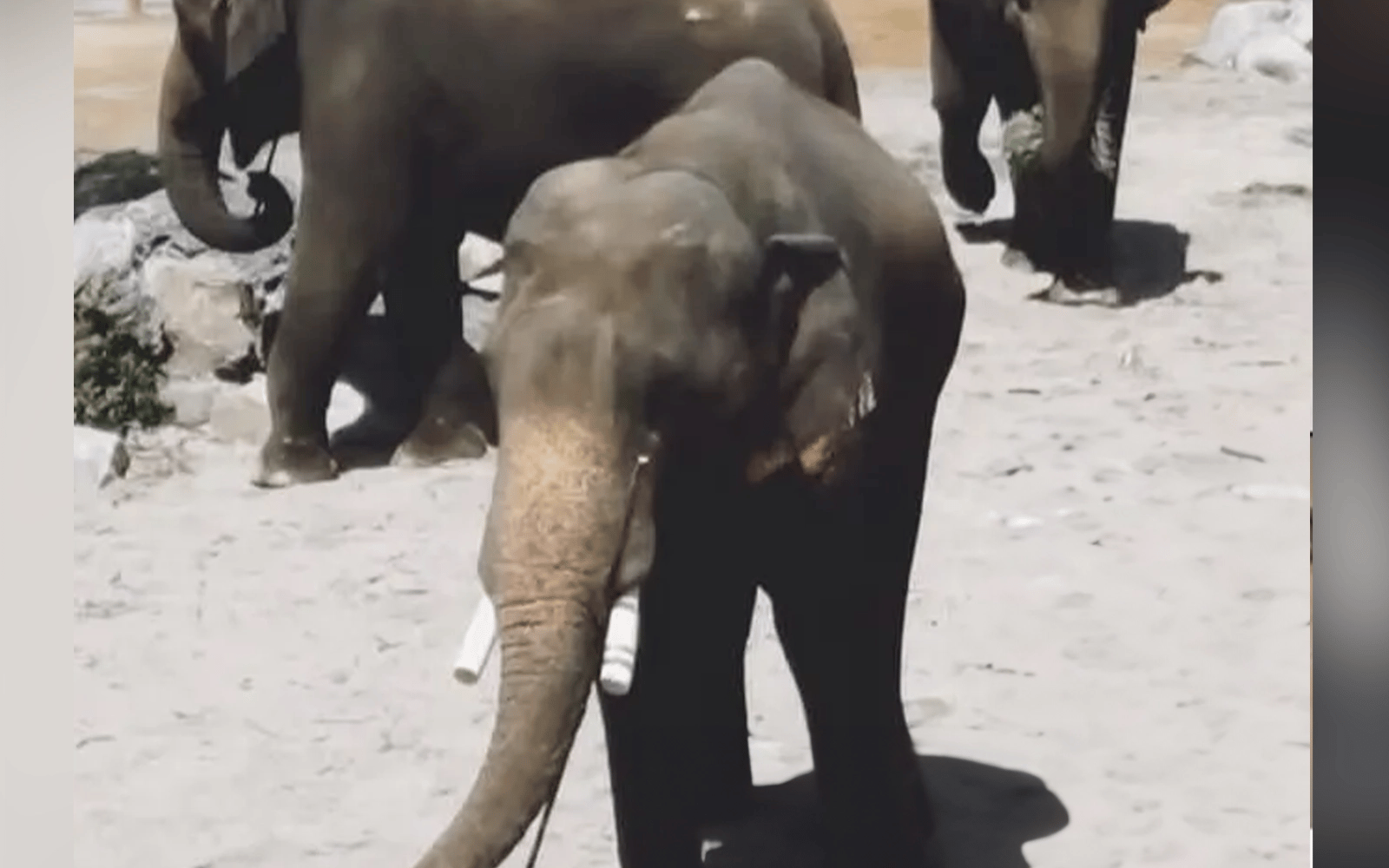
Perhilitan said the tusk treatment was part of a veterinary management protocol carried out based on clinical assessment and conservation management by experts, with priority given to the elephant’s welfare.
It said Kelat suffered damage to its left tusk, and its right tusk was subsequently trimmed to prevent structural imbalance that could place strain on the elephant’s head and jaw.
“Such imbalance could potentially cause discomfort, increase the risk of injury, and affect natural behaviour such as movement, feeding and social interaction.
“As such, these treatment and preventive measures were undertaken to ensure Kelat’s long-term well-being and quality of life,” it said in a statement.
Kelat was one of three Asian elephants transferred from Taiping Zoo to Tennoji Zoo on March 11 as part of a Malaysia-Japan collaboration under the Malaysian Elephant Conservation Programme, aimed at breeding and research. The other two elephants are Dara and Amoi.
A TikTok user had questioned why Kelat’s tusks were cut, raising concerns over the welfare of the elephant and whether it followed standard operating procedures in zoos.
Several netizens previously raised concerns over the collaboration programme, saying the animals belong in the wild instead of a zoo. A petition calling for the animals’ return to Malaysia has garnered more than 87,500 signatures.
Perhilitan said the tusk-trimming procedure was conducted in a controlled manner using approaches that minimise physiological stress on the animal.
“Continuous monitoring is also being carried out to ensure optimal recovery and the elephant’s long-term welfare,” it said.
It said it is working closely with Taiping Zoo and Tennoji Zoo to monitor the condition of the three elephants.