Two business groups FMT spoke to said that various industries, particularly those in the agricultural, transport and logistics sectors, are already feeling the pinch.
For instance, SME Association of Malaysia president Chin Chee Seong pointed out that the impact is especially severe for those in the agricultural sector, where diesel vehicles are used to transport produce to the market.
Similarly, the travel business has also been hit badly, Federation of Malaysian Business Associations (FMBA) deputy secretary-general Sri Ganesh Michiel said.
He said the right incentives could encourage travel industry players to switch from diesel-powered vans and buses to electric vehicles (EVs) to ferry tourists around.
The ongoing conflict in West Asia and the Gulf has disrupted the flow of oil around the world, leading to an increase in the prices of crude oil.
Businesses have complained that the higher prices of fuel, coupled with the uncertainty surrounding the supply chain, are already biting into their profits.
In Malaysia, the price of diesel at the pump rose from RM2.80 to RM6.72 within six weeks, before being reduced to RM5.97 today.
Chin said these uncertainties have also affected business decisions. “The cost of diesel is very high now, but we still don’t know if it will increase further,” he said.
Citing the example of the agricultural sector, he said farmers still rely on pick-up trucks to ferry their produce, such as durians, to the market.
“The rough terrain in the farms makes pick-up trucks essential. This has accounted for the high demand for these trucks,” he said.
Chin said businesses are keen to make the transition to green vehicles if there are incentives in store for them.
Nonetheless, he said, the current uncertainty around the world is likely to push people to start considering green vehicles anyway. “We don’t know how long this war will last, or if another conflict that will disrupt supply chains will flare up somewhere else,” he added.
For Chin and Ganesh, the main obstacle to a widespread adoption of EVs is the high cost of the vehicles, but incentives such as temporary exemption of road tax and a reduction or even exemption from import duty could boost demand.
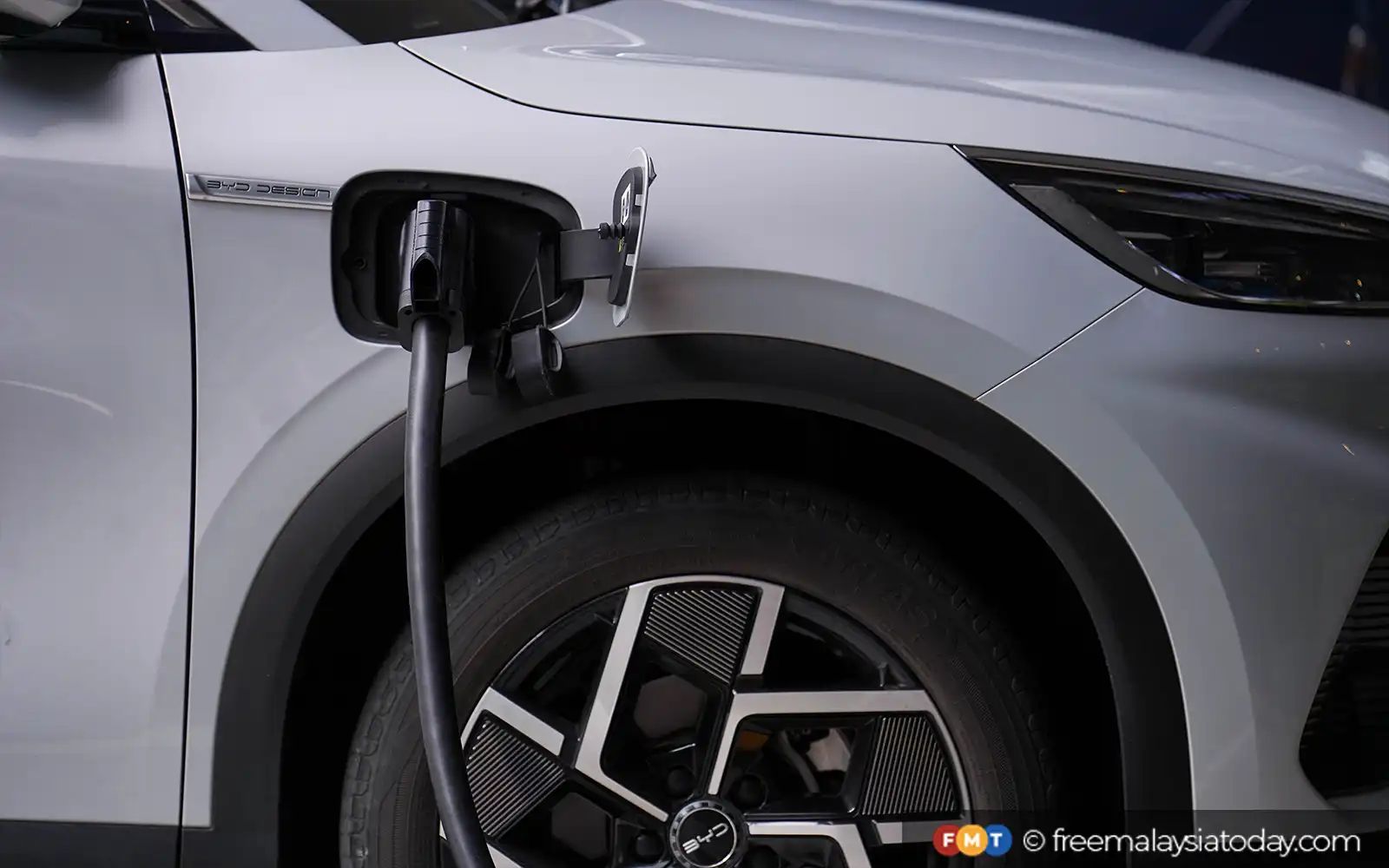
Another factor that continues to keep interest in EVs low is the still inadequate infrastructure. Chin pointed out that installing more charging stations around the country would give the much-needed impetus for the adoption of EVs.
Ganesh agrees that while diesel vehicles cannot be phased out entirely, the right incentives could push businesses to switch to EVs.
“There are no viable green alternatives yet for tractors, lorries and certain heavy-duty vehicles, but businesses such as travel agencies using vans, buses and pick-up trucks may consider making the transition,” he said.
He said uncertainty over global developments is weighing on business decisions.
“Businesses don’t know what will happen next or how long the US-Iran conflict will last. While the government is not to blame, it needs to act quickly, including providing targeted subsidies for diesel vehicle users,” he said.
Ganesh said that apart from offering a diesel subsidy, the government must also accelerate the shift to green alternatives. One way, he said, is to make EVs more affordable.
“Right now, EVs are still expensive, with vans costing about RM300,000 each,” he said.
“The government should look at temporarily exempting road tax and other taxes to bring prices down and encourage the switch to green vehicles,” Ganesh added.
Federation of Motor and Credit Companies Association of Malaysia president Tony Khor told FMT that concerns over rising diesel costs, subsidy uncertainty, long-term operating expenses, and low resale value of pick-up trucks are changing consumer behaviour.
“However, in the longer term, we expect gradual diversification towards fuel-efficient petrol vehicles, hybrids, and eventually electric vehicles, depending on infrastructure readiness and policy direction,” he said.
He added that the transition would be gradual rather than immediate.