A three-member bench chaired by Justice Noorin Badaruddin said the prosecution had failed to prove its case beyond a reasonable doubt against Shahril Abdul Rani, 54.
“The communication did not meet the legal threshold of offensive in Heidi Quah’s case, and the conviction of Shahril is, therefore, unsafe,” Noorin said in setting aside the decision of the High Court, which had affirmed the findings of the sessions court.
Noorin, who sat with Justices Hayatul Akmal Abdul Aziz and Radzi Abdul Hamid, also ordered the RM20,000 fine imposed on Shahril to be refunded.
Shahril had been charged with posting an offensive video on YouTube under the name “Raja Emel” against the police for failure to investigate a report lodged by the management commitee of Pangsapuri Anggun.
The offence was alleged to have been committed at the commercial crime division premises of the Kajang district police headquarters at about 9.10m on July 26, 2020.
He was charged under Section 233 of the Communications and Multimedia Act 1998 for transmitting offensive content with the intent to annoy.
Noorin said the bench was bound by appellate precedent in a similar case concerning Quah, the activist who was charged in July 2021 with an identical offence after highlighting the alleged mistreatment of refugees at immigration detention centres.
Section 233 of the CMA had made it an offence for anyone to make, create, solicit or initiate the online transmission of “obscene, indecent, false, menacing or offensive” comments with the intent to “annoy, abuse, threaten or harass another person”.
In February this year, a five-member apex court chaired by Chief Justice Wan Ahmad Farid Wan Salleh overturned a Court of Appeal decision that struck down as unconstitutional the words “offensive” and “annoy” in the previous iteration of Section 233.
However, the apex court affirmed the Court of Appeal’s decision that there was no basis to prosecute Quah on the grounds that a Facebook post she had made was “offensive” and communicated “with intent to annoy”.
In Shahril’s case, Noorin said, the video was merely a criticism of public authority, and his comments were not against free speech.
She said the sessions court did not make a distinction between the concept of falsity and offence.
“A communication does not become offensive merely because it is alleged to be inaccurate,” she said.
Noorin said the trial judge came to a decision based on conjecture and, as such, the appellant should be given the benefit of doubt.
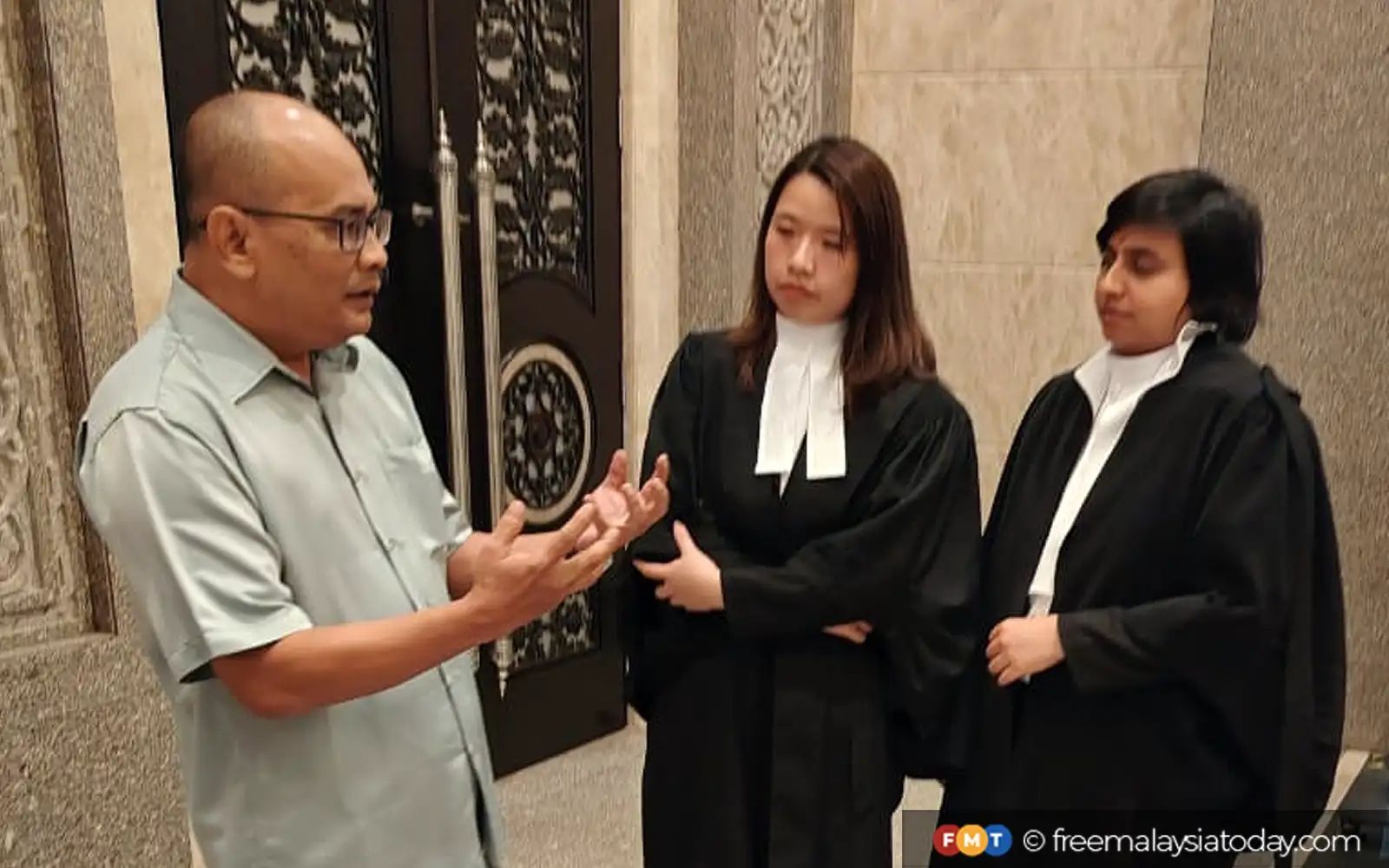
Lawyers Yu Ying Ying and Thiruna Jayshan represented Shahril, while deputy public prosecutor Abdul Malik Ayob appeared for the prosecution.