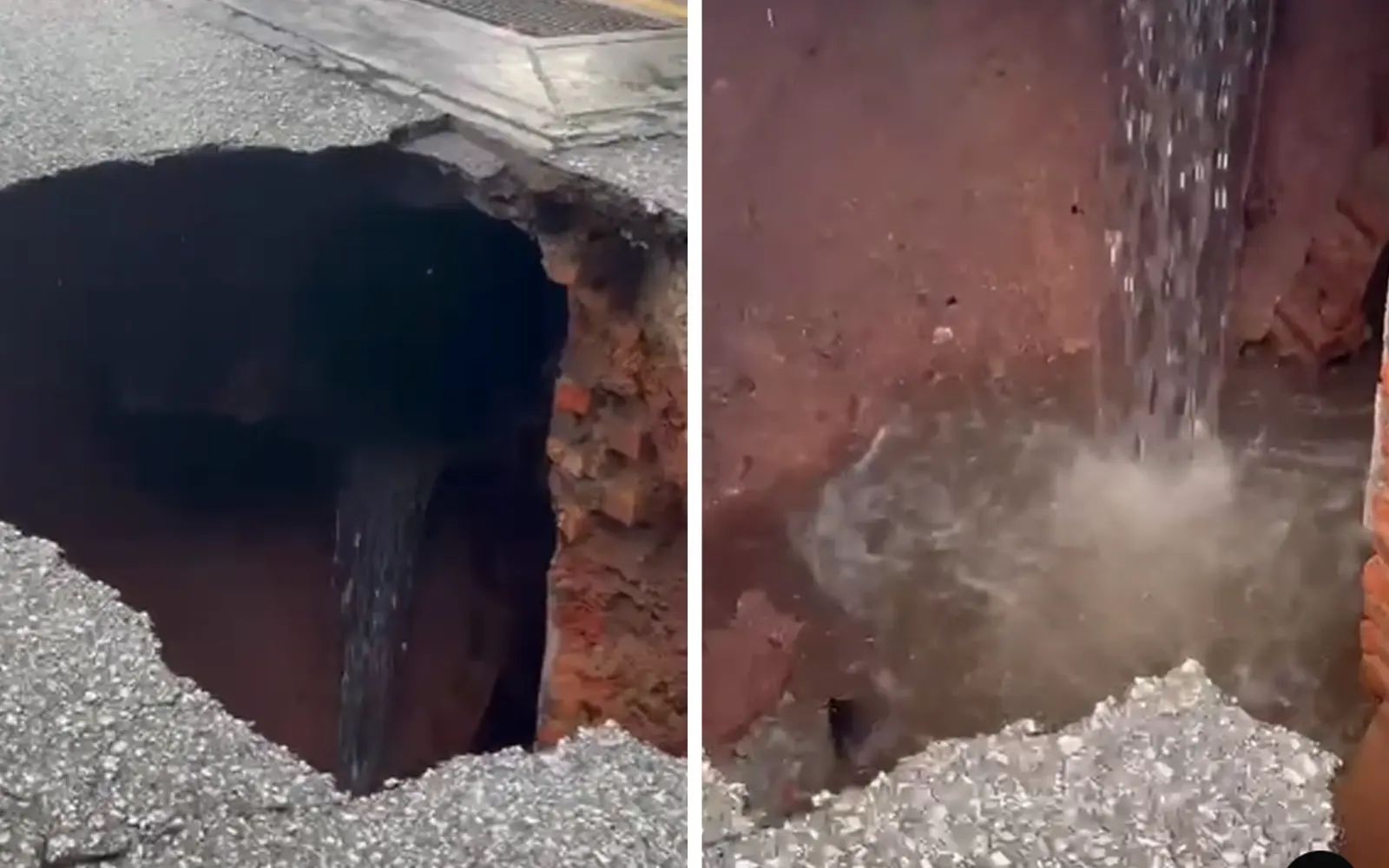
Mayor Fadlun Mak Ujud said investigations are ongoing to determine the exact cause of the incident, and that the affected area would be closed for two weeks for repair works.
The closed-off area measures about 4m in length, width, and depth.
Initial inspections found that a sump wall, or water retention structure, within the area’s main 1.5m drainage system had likely collapsed.
“We found that the sump wall had collapsed, but we could not locate where the structure fell. There are also utility lines beside the area, and it is possible that underground utility works may have struck the structure without any visible signs on the surface.
“There is a possibility that the work damaged the structure, causing it to crack and allowing drainage water to flow directly into the soil, eventually resulting in the sinkhole,” Fadlun told a press conference at DBKL’s headquarters today.
Also present were federal territories minister Hannah Yeoh and federal territories department director-general Azmi Zain.
Fadlun also confirmed that another smaller cave-in was reported yesterday near a bank along the pedestrian walkway on Jalan Tun Perak.
“The incident only involved a shallow hole about one foot deep and was not caused by utility issues,” he said.
Separately, the mayor said utility mapping works around Jalan Masjid India were nearly 90% complete, covering a 32km stretch, while repairs to pedestrian walkways in the area are expected to begin in October.
DBKL is set to install settlement markers at selected locations to monitor ground movement in real time.
“If any ground movement occurs, we will receive real-time readings so that immediate action can be taken in the Masjid India area,” Fadlun said.