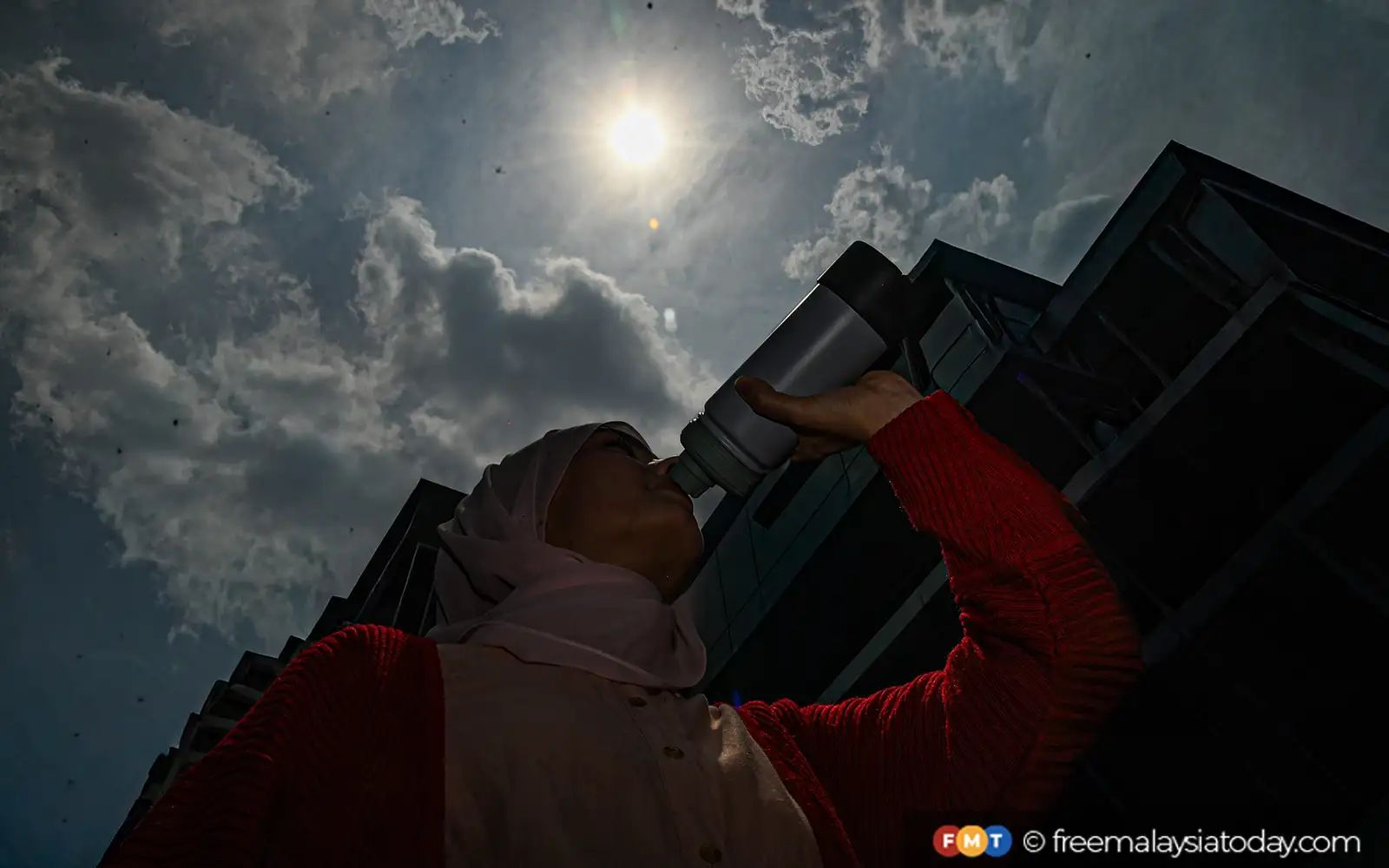
Chung said the Pacific Ocean’s Enso weather cycle is now in its cooler La Niña phase, but is showing signs of transitioning to its neutral state before moving into the warmer El Niño phase, Harian Metro quoted him as saying.
The meteorological department has previously said the southwest monsoon is expected to last from May to September.
Chung, a researcher with Universiti Malaysia Terengganu’s science and marine environment faculty, said the risk of extreme dry weather is low at the beginning of the monsoon, but could increase towards the middle of the year and the year end, depending on the strength of El Niño.
He said while El Niño is generally associated with hot, dry weather, it is not the sole factor behind extreme dry weather in Malaysia. “Temporary atmospheric disturbances can also cause extreme dry weather in Malaysia,” he said.
“The public cannot be careless, and should use water prudently, ensure sufficient water intake and avoid open burning,” he said.
Chung said the risk of haze will increase if El Niño coincides with the southwest monsoon, as the resulting prolonged dry conditions will reduce the likelihood of rainfall dispersing haze particles in the atmosphere.
“During the monsoon, southwesterly winds generally carry cross-border haze towards the west coast of Peninsular Malaysia and Sarawak,” he said.
The Enso weather cycle, or El Niño-Southern Oscillation, is a recurring climate pattern involving changes in the temperature of waters in the central and eastern tropical Pacific Ocean. During periods ranging from about three to seven years, the surface waters of the ocean warm or cool by anywhere from 1°C to 3°C, compared to normal.
The cycle consists of three phases: the El Niño hot and dry phase, the La Niña cool and wet phase, and a neutral phase.