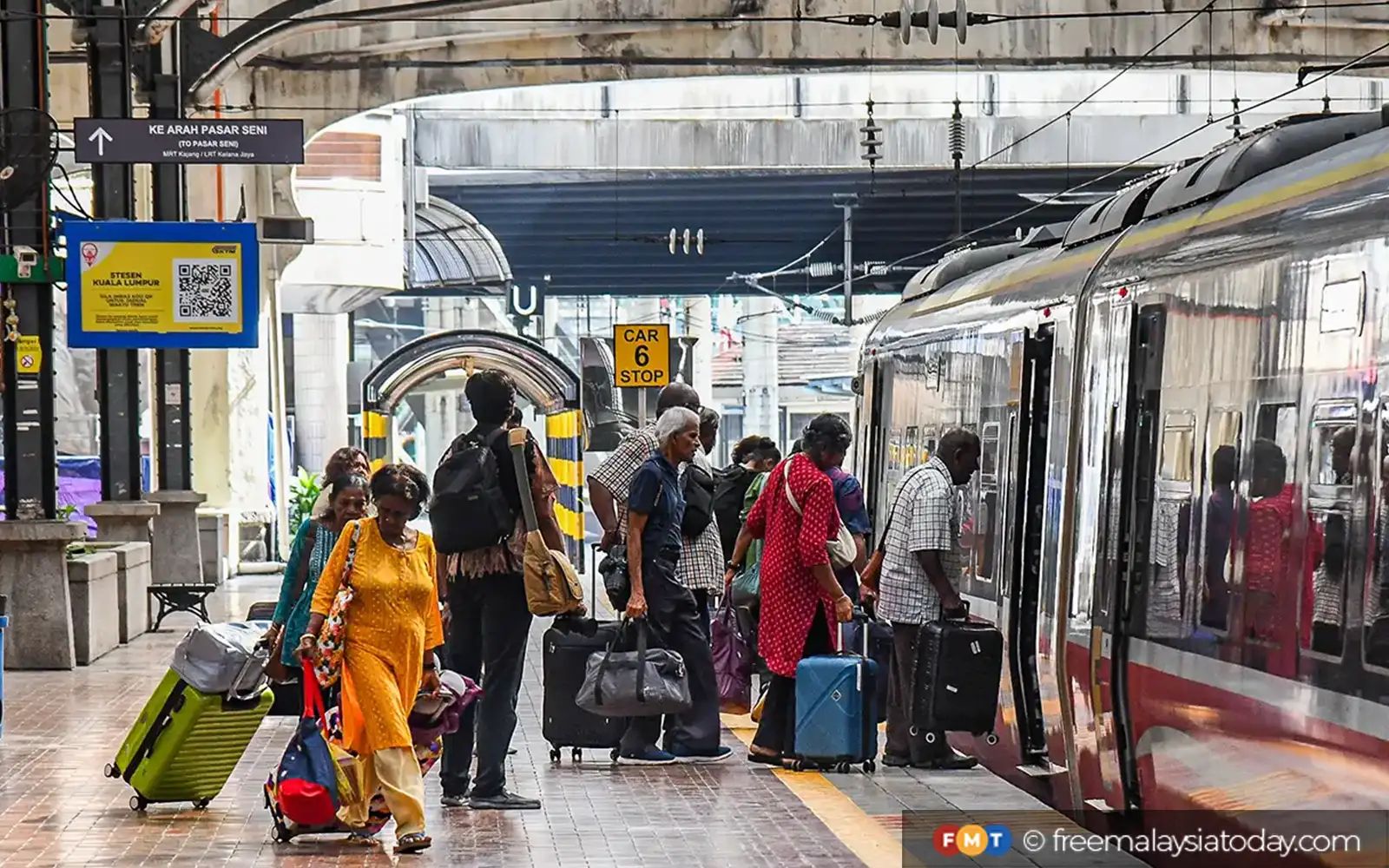
The 30-member entourage, organised by the Death Railway Interest Group Malaysia, comprised children, grandchildren and great-grandchildren of victims from Malaysia and Singapore.
Members of the group boarded the train this morning for the 24-hour journey retracing the route taken by labourers sent to build the railway during World War II.
The group’s head, P Chandrasekaran, said the entourage would also visit a cemetery in Kanchanaburi where they believe the remains of many Asian labourers were gathered and buried after the war.
Through discussions in Kanchanaburi, he said the group had discovered that the remains of Asian workers had allegedly been transferred to a Chinese cemetery located next to the Allied prisoner of war cemetery.
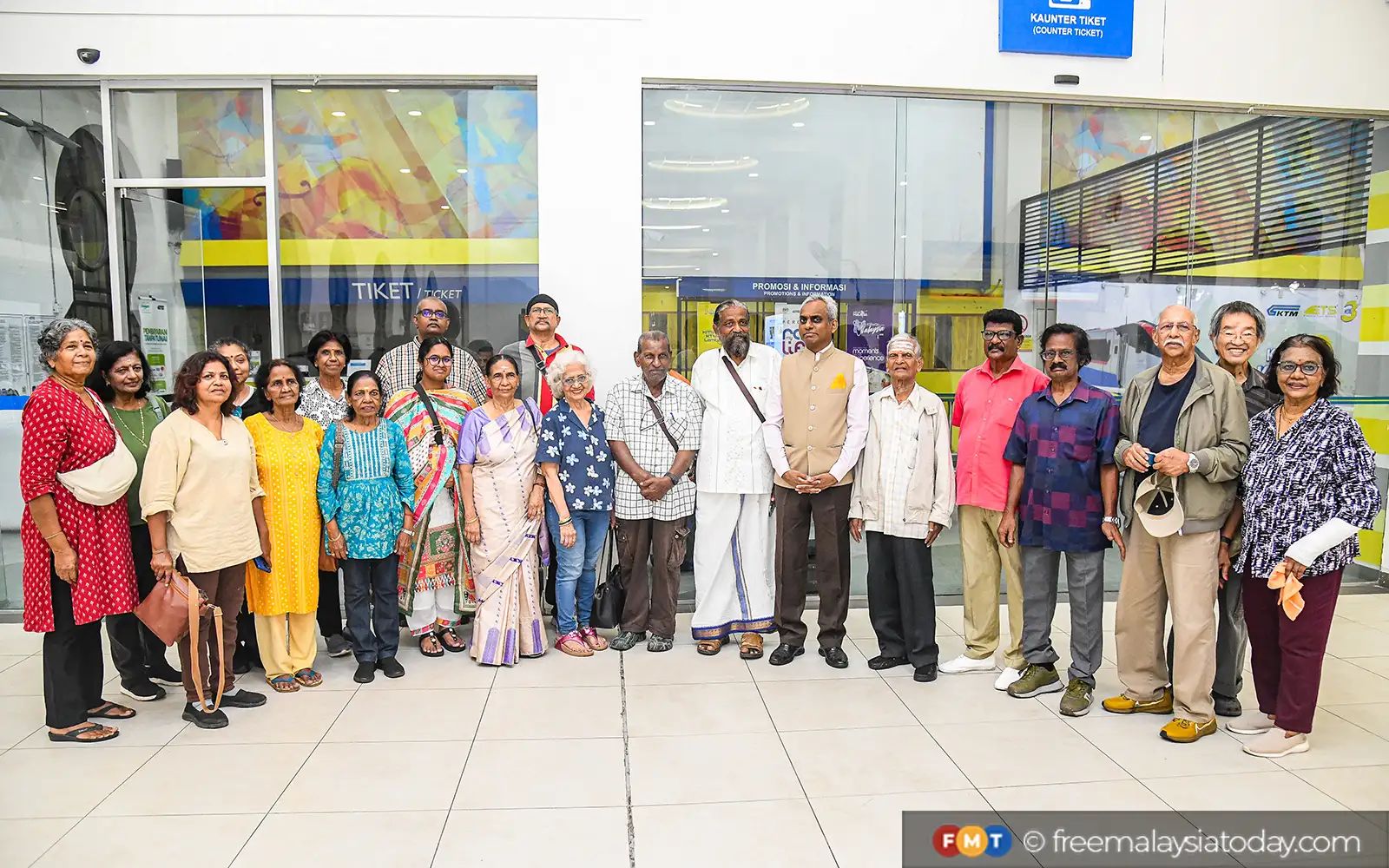
“After the war, thousands of bodies surfaced. So they collected them and buried them in a cemetery. They put up a pagoda over it to pay respects once a year to these souls,” he said at the send-off today.
Among those making the journey today was S Govindasamy, 86, whose father was taken by the Japanese shortly after his birth in 1941 and never returned.
“I never saw my father’s face,” he said, adding that he was orphaned at a young age and later raised by relatives.
Govindasamy added that participating in annual remembrance prayers in Thailand helped him feel closer to the father he never knew.
The Death Railway Interest Group Malaysia has organised annual remembrance visits since 2018, except during the Covid-19 lockdowns, and previously submitted an open letter to the Malaysian and Indian prime ministers calling for formal recognition of the victims.
Chandrasekaran said the annual journey aimed to keep alive the memory of Asian labourers whose suffering and deaths remained largely undocumented and forgotten.
“People know about the Allied prisoners of war because there are memorials, cemeteries and annual remembrance ceremonies every year.
“And we are not complaining because that is the right thing to do. But where are our people? Where are the Asians? We all know more than 100,000 people died, but nobody knows where they are,” he said.
Chandrasekaran said estimates suggested up to 300,000 Asian labourers may have been taken to work on the railway, though exact figures remain disputed due to the lack of official records.
The group called on the Malaysian, Indian and Thai governments to establish a monument and information centre dedicated to Asian victims, similar to memorial sites built for Western prisoners of war.