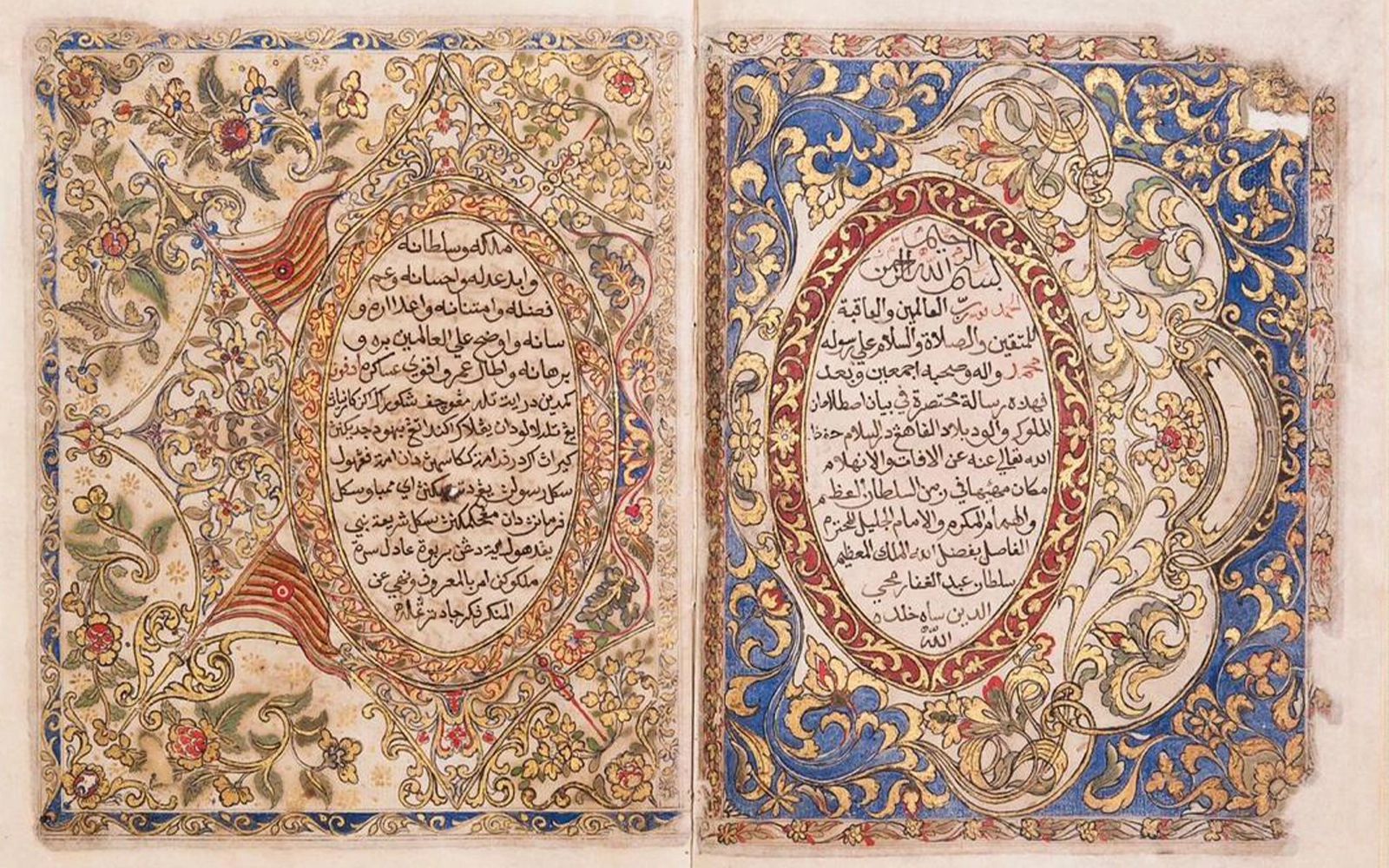
From the Tengku Ampuan of Pahang, Tunku Azizah Aminah Maimunah Iskandariah
Most Malaysians believe that constitutional governance arrived with colonial rule, and that our modern constitutional monarchy began in the mid-20th century. Yet buried in our own history is a truth that challenges this assumption entirely.
More than four centuries ago, Pahang already had a written constitution.
It was called the Hukum Kanun Pahang.
Compiled and codified during the reign of Sultan Abdul Ghaffar Muhyiddin Shah (1592-1614), the Hukum Kanun Pahang was not merely a collection of laws. It was a comprehensive legal code that governed the state, regulated trade, defined justice, and set limits on royal authority. In modern terms, it functioned as a constitution, one rooted in Islamic law, Malay custom, and moral accountability.
What makes the Hukum Kanun Pahang even more remarkable is that it did not emerge in isolation. It represents the continuation and maturation of earlier Malay legal traditions, particularly the Hukum Kanun Melaka and the Undang-Undang Laut Melaka.
When Melaka fell in 1511, its laws did not disappear. They migrated, were preserved, and were refined in Pahang. The Hukum Kanun Pahang absorbed both the constitutional principles of Melaka and its maritime legal wisdom, uniting land and sea into a single, coherent legal order. In this sense, Pahang did not merely inherit Melaka’s legacy, it completed and perfected it.
Long before Western constitutional theory emerged, the Malay world had already articulated a system of governance grounded in law rather than conquest.
A kingdom of law, not the sword
Pahang’s strength did not lie in empire-building or military expansion. It lay in something far more enduring: law and trust.
Situated along the eastern seaboard of the Malay Peninsula, Pahang was a maritime kingdom connected to the Laut Melayu and the wider Indian Ocean world. Its rivers linked inland resources to international trade routes, while its ports welcomed merchants from the Arab world, Persia, China, and the archipelago. What drew traders to Pahang was not force, but security – the assurance that contracts would be honoured, disputes settled fairly, and piracy punished.
The Hukum Kanun Pahang made this possible. It regulated taxation, port administration, maritime conduct, commercial honesty, and criminal justice. It protected merchants, sailors, and vulnerable members of society. Piracy was treated not only as a crime against the state, but as a moral offence. Trade itself was framed as an ethical activity, governed by responsibility and faith.
In this system, the sea was not a lawless frontier. It was a governed space.
The Sultan was not above the law
One of the most striking features of the Hukum Kanun Pahang is that it did not place the Sultan above the law.
Although enacted under royal authority, the code bound the Sultan himself to divine law, justice, and established legal norms. Power was understood as a trust, an ‘amanah’, not an absolute personal right. This idea sits at the heart of Islamic political thought and stands in sharp contrast to the stereotype of the Malay ruler as an unchecked autocrat.
In effect, Pahang functioned as a constitutional monarchy centuries before the term existed.
Why was this forgotten?
The Hukum Kanun Pahang was rediscovered only in 1993 when an antique dealer brought the manuscript to Pekan and it was acquired by the Pahang State Museum. Illuminated in gold and preserved intact written by the Malays, in the Malay language, in Malay Jawi, for the Malay Sultanate, it is one of the oldest and most complete Malay legal manuscripts in existence.
Yet for generations, our historical narratives focused elsewhere: on colonial administration, imported legal systems, and European models of governance. Indigenous constitutional traditions were sidelined, treated as customary or pre-modern, rather than recognised as sophisticated systems in their own right.
As a result, the Hukum Kanun Pahang remained largely unknown to the public, despite its significance.
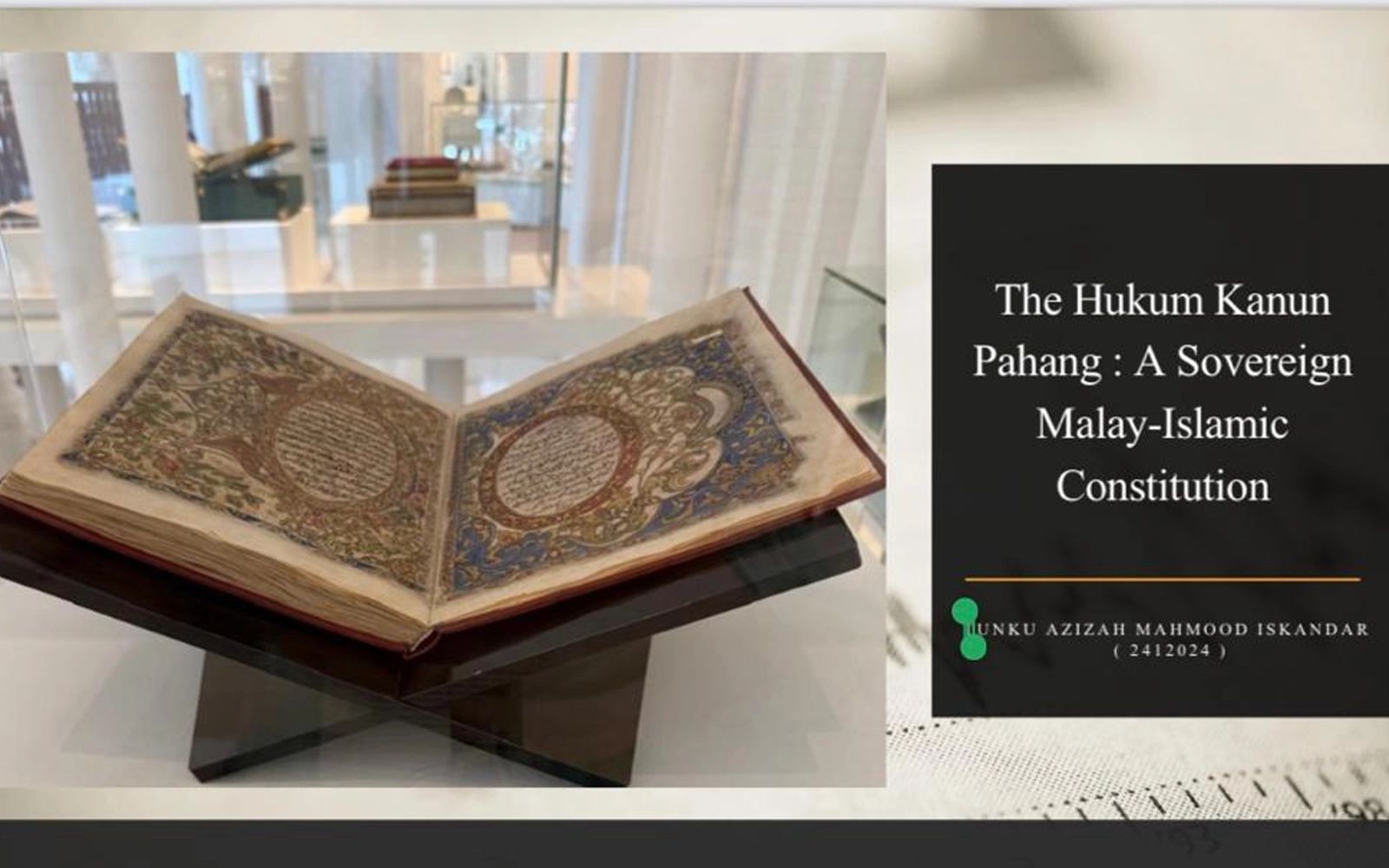
A constitution of civilisation
To understand the importance of the Hukum Kanun Pahang, we must see Pahang not merely as a historical state, but as a sovereign civilisation, one with its own legal philosophy, constitutional consciousness, and moral order.
This was a civilisation that governed land and sea through written law. A civilisation that believed justice mattered more than power. A civilisation where faith, governance, and daily life were inseparable.
When Islam came to the Malay world, it did not merely shape rituals and personal piety. It reshaped the architecture of the state. The Hukum Kanun Pahang reflects this transformation clearly, embedding Islamic principles into governance, administration, and maritime regulation.
Why this matters today
Understanding the Hukum Kanun Pahang changes how we see ourselves.
It reminds us that constitutional governance in the Malay world was not borrowed wholesale from colonial powers. It was indigenous, principled, and deeply rooted in our own history.
It also invites a broader national conversation, about identity, sovereignty, and the values that once guided governance in this land. In a time when trust in institutions is often questioned, revisiting a tradition that placed law above power offers more than historical insight, it offers perspective.
The Hukum Kanun Pahang is not merely a manuscript from the past. It is evidence that the Malay world once governed itself through law, conscience, and faith.
Perhaps it is time we remembered that.
The Tengku Ampuan of Pahang, Tunku Azizah Aminah Maimunah Iskandariah, is a master’s candidate at the International Institute of Islamic Thought and Civilisation (ISTAC), International Islamic University Malaysia.