From the Tengku Ampuan of Pahang, Tunku Azizah Aminah Maimunah Iskandariah
In contemporary understanding, fardu kifayah is often narrowly confined to professional roles, becoming doctors, lawyers, engineers or nurses. As long as a segment of society fulfils these roles, the obligation is considered discharged. Yet this interpretation is far too limited and does not reflect the breadth of the concept within the Islamic intellectual tradition. A closer reading of history, particularly through the Hukum Kanun Pahang (HKP), reveals that fardu kifayah extends far beyond professions; it encompasses the very structure of governance and societal order.
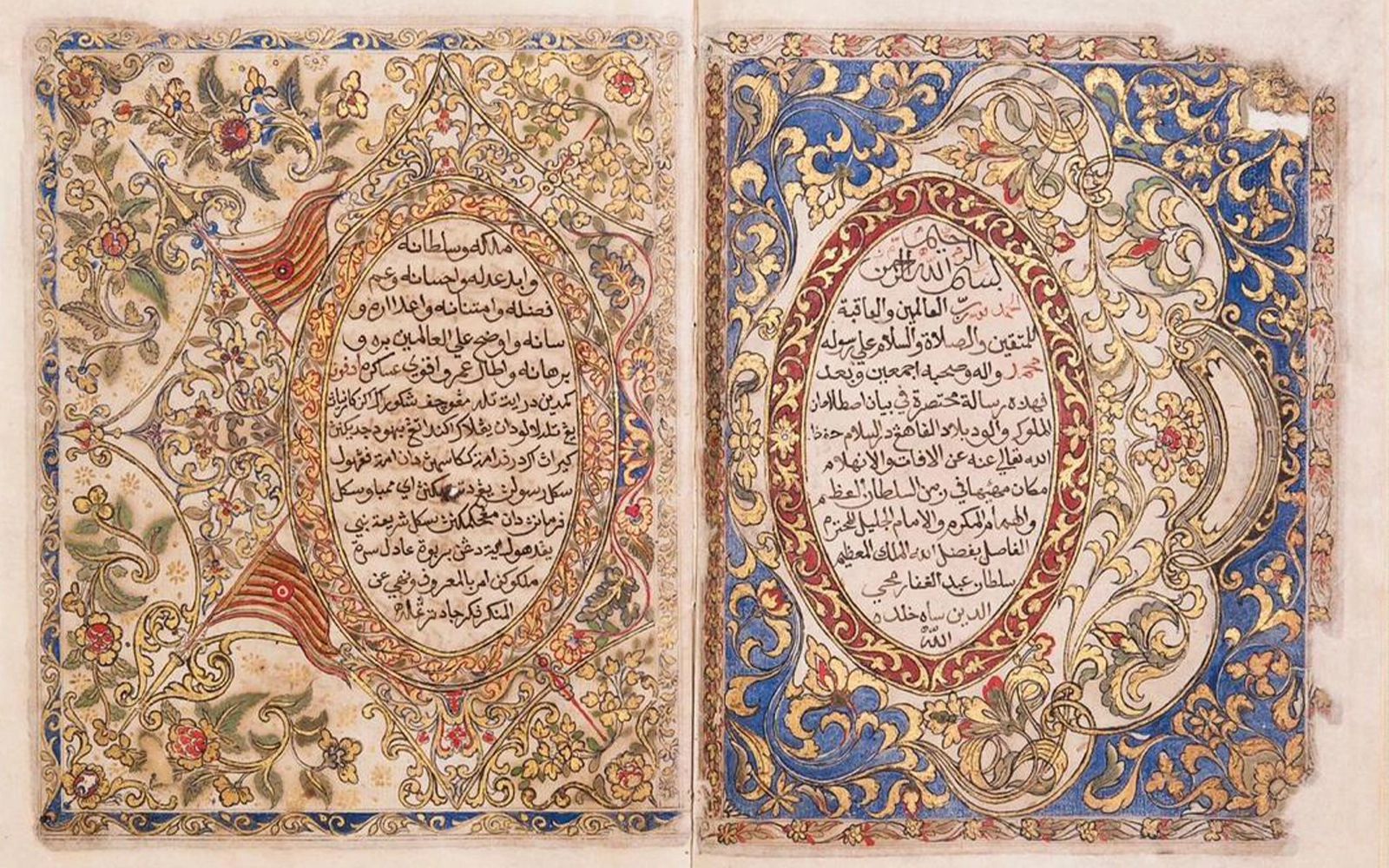
The HKP is not merely an old legal text. It represents a model of governance rooted in a tawḥīdic worldview, where religion, law, and statecraft are not separated, but integrated. Within this framework, fardu ‘ain governs individual responsibility, while fardu kifayah structures collective responsibility. Together, they form the foundation of a balanced and functioning civilisation.
The HKP, compiled and developed during the reign of Sultan Abdul Ghaffar Muhyiddin Shah, reflects not only the intellectual and political vision of a ruler, but a legacy that extended beyond the boundaries of Pahang itself. Through dynastic marriages and political alliances with other Malay Sultanates such as Johor, Aceh, Perak, Brunei and Patani, the principles embodied in the HKP were disseminated and adapted across the region. In this sense, the HKP is not merely a state legal code, but a manifestation of Sultan Abdul Ghaffar’s enduring legacy in shaping the continuity of Malay-Islamic governance.
What modern discourse often categorises as “worldly” or “secular” domains – administration, trade, security, justice – are, in fact, part of fardu kifayah. The HKP regulates these areas in a structured and deliberate manner. The roles of the Bendahara, Temenggung, Shahbandar and Hulubalang are not merely administrative offices; they represent institutionalised responsibilities to uphold justice, maintain order, and ensure the well-being of society. Governance, in this sense, is not a neutral or secular activity, it is an amanah, a trust that carries moral and religious weight.
At the apex of this structure stands the Sultan, whose role may be understood within the Islamic tradition as a khalifah, a vicegerent entrusted with the responsibility of upholding justice, safeguarding the dignity of human life, and ensuring the proper functioning of society. His authority is therefore inseparable from accountability. The HKP reflects this principle by positioning rulership not as an instrument of absolute power, but as a moral and legal trust. The Sultan governs not for himself, but on behalf of the community, bearing the ultimate responsibility to ensure that fardu ‘ain and fardu kifayah are fulfilled. In this sense, sovereignty itself is reframed as amanah, rather than privilege.
A major flaw in modern thinking lies in the artificial separation between religion and worldly affairs, leading to the assumption that governance operates outside the domain of Islam. In the Malay-Islamic tradition, this divide did not exist. What is labelled “secular” today is, in reality, fardu kifayah structured through law and institutions. The HKP demonstrates that managing the affairs of society is itself an act of religious duty.
Equally significant is how the HKP addresses a plural society. From the time of Melaka, the Malay world was already multi-ethnic and multi-religious, shaped by trade and interaction across regions. This diversity was not viewed as a problem to be solved, but as a reality to be governed. The principles embedded within the HKP emphasise justice, responsibility, and the protection of human dignity and life – values that are universal, yet firmly grounded in an Islamic worldview.
Herein lies the true strength of the HKP. It reflects a synthesis of Islam and Malay civilisation that is not rigid or exclusionary, but open and adaptive. Rooted in tawḥīd, it is capable of accommodating change while preserving its moral foundations. This is what gives the HKP its resilience and enduring relevance.
If one considers the aims of the Islamisation of Knowledge (IOK), to integrate the Islamic worldview into disciplines, to instil ethics and values in education, and to translate virtue into lived practice, then the HKP stands as a historical example of this ideal in action. It is not a theoretical framework, but a lived system in which knowledge, ethics, and governance were unified.
It is therefore necessary to rethink our understanding of fardu kifayah. It is not limited to fulfilling professional needs, but extends to ensuring that the entire structure of society – its laws, institutions, and governance – operates justly and ethically. Without this broader understanding, the true spirit of fardu kifayah remains unfulfilled.
The HKP reminds us that the responsibility of building a just society does not lie with individuals alone, but within the systems we collectively uphold. It teaches that governance is not merely a worldly function, but part of a divine trust carried by the ruler as khalifah and shared across society as amanah. And perhaps most importantly, it challenges us to recognise that what we have come to call “secular” may in fact be a dimension of religion that we have long forgotten.
The Tengku Ampuan of Pahang, Tunku Azizah Aminah Maimunah Iskandariah, is a master’s candidate at the International Institute of Islamic Thought and Civilisation (ISTAC), International Islamic University Malaysia.