From Syed Naqiz Shahabuddin
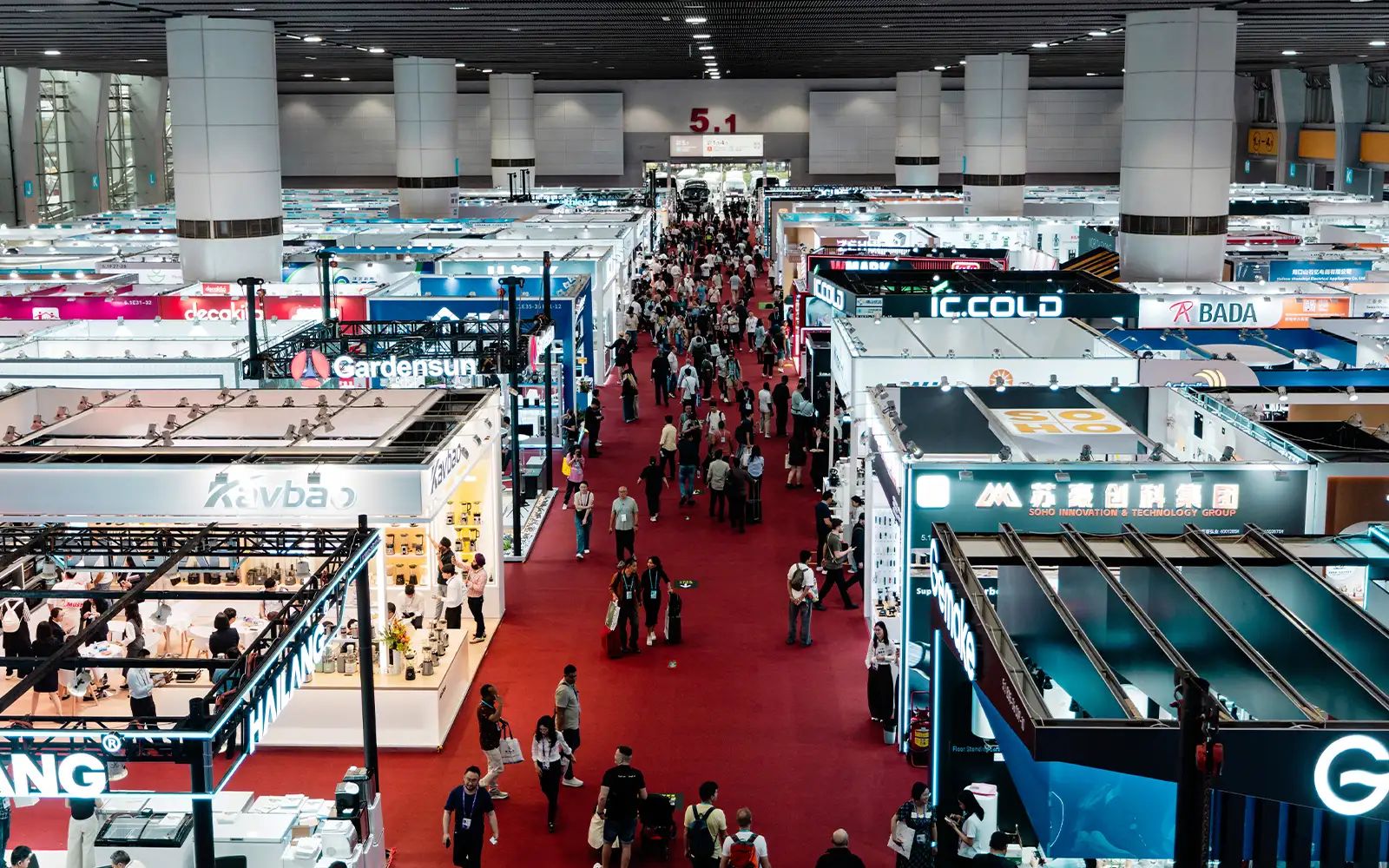
I am writing this article from the Canton Fair in Guangzhou, one of the largest trade exhibitions in the world.
Walking through the endless halls filled with manufacturers, technology providers, AI-driven commerce systems, robotics, smart retail solutions, and highly integrated supply chain ecosystems, one cannot help but feel both impressed and concerned at the same time.
Impressed because the scale, efficiency, innovation, and speed of execution are extraordinary.
Concerned because many Malaysian SMEs and retailers are increasingly finding themselves competing not merely against individual businesses anymore, but against entire ecosystems.
This is not an anti-China article. Nor is it a call for protectionism.
Malaysia has long benefited from open trade, foreign investment and international partnerships. Many Malaysian businesses themselves import from China, source from Chinese factories, and rely on global supply chains to remain competitive. Consumers too benefit from lower prices, greater convenience, and wider product choices.
However, there is now a growing structural concern that deserves serious national discussion.
Traditionally, the retail value chain consisted of multiple layers of local economic participation. A product would move from the factory to the importer, then to the distributor, retailer and finally to the consumer. Along the way, local businesses created jobs, built warehousing and logistics capabilities, financed inventory, marketed products, and developed homegrown entrepreneurial capacity.
Today, that chain is collapsing into a direct manufacturer-to-consumer model.
With the rise of global e-commerce ecosystems, cross-border platforms, vertically integrated retail chains, AI-powered pricing systems, livestream commerce and ultra-efficient logistics networks, many local businesses are being disintermediated altogether.
The concern among SMEs today is therefore not simply competition. Competition is healthy and necessary.
The deeper concern is whether Malaysian businesses will continue to have meaningful participation in the value chain itself.
If manufacturers, platforms, payment ecosystems, logistics providers, fulfillment systems, data infrastructure, and retail channels all become consolidated into foreign-controlled ecosystems operating directly into the Malaysian market, then eventually many local SMEs may find themselves reduced to mere end-market participants or worse, eliminated altogether.
This issue extends far beyond retail alone.
It affects local entrepreneurship, employment, innovation, brand creation and, ultimately, Malaysia’s long-term economic resilience. A country cannot build sustainable prosperity if its domestic businesses are progressively removed from ownership, distribution, technology, branding, and market access.
At the same time, we must also be honest with ourselves.
Not every struggle faced by Malaysian SMEs is caused by foreign competition.
Some local businesses have been slow to adapt. Many still lag behind in technology adoption, digitalization, customer experience, branding, automation, and operational efficiency. Consumers cannot reasonably be expected to support inefficiency indefinitely simply out of patriotism.
The solution therefore cannot be blind protectionism. Malaysia cannot isolate itself from globalization, nor should it attempt to.
But neither should we allow ourselves to become merely a consumer market while local enterprise capability steadily weakens over time.
The real question before us is this: how do we remain open to global trade while still preserving and strengthening domestic entrepreneurial capacity?
This requires a balanced national approach.
Firstly, competition must remain fair and properly regulated. Issues relating to counterfeit products, intellectual property infringement, predatory pricing, regulatory arbitrage, tax leakage and product safety standards cannot simply be ignored in the name of free trade. Openness must still operate within a framework of fairness and accountability.
Secondly, Malaysian SMEs urgently need support to evolve. The competitive landscape today is no longer purely about having a shopfront or physical presence. Businesses are now competing through data, AI, automation, logistics efficiency, digital marketing, and ecosystem integration. If local SMEs are to survive and grow, they must be empowered to modernize and scale.
Thirdly, Malaysia must focus seriously on building stronger local brands capable of competing regionally and globally. We cannot survive indefinitely by remaining fragmented and domestically confined while competing purely on price against industrial ecosystems operating at enormous scale.
Price wars against highly integrated global supply chains are often unwinnable.
Instead, Malaysian businesses must increasingly compete through trust, localisation, cultural understanding, halal assurance, customer relationships, creativity and authentic brand experiences. These remain areas where local enterprises still possess meaningful advantages if properly nurtured and developed.
I believe this issue deserves calm, mature, and constructive national dialogue involving policymakers, SMEs, retailers, technology players, investors, educators, and consumers themselves.
The objective is not to reject globalisation. It is to ensure that Malaysians continue to participate meaningfully in the economic future being created around us.
Because in the long run, no nation can thrive sustainably if it only consumes what others produce, markets what others own, and depends entirely on ecosystems built elsewhere.
Malaysia must continue to trade globally. But Malaysia must also continue building Malaysians.
Syed Naqiz Shahabuddin is the president of the Bumiputra Retailers Organisation.
The views expressed are those of the writer and do not necessarily reflect those of FMT.