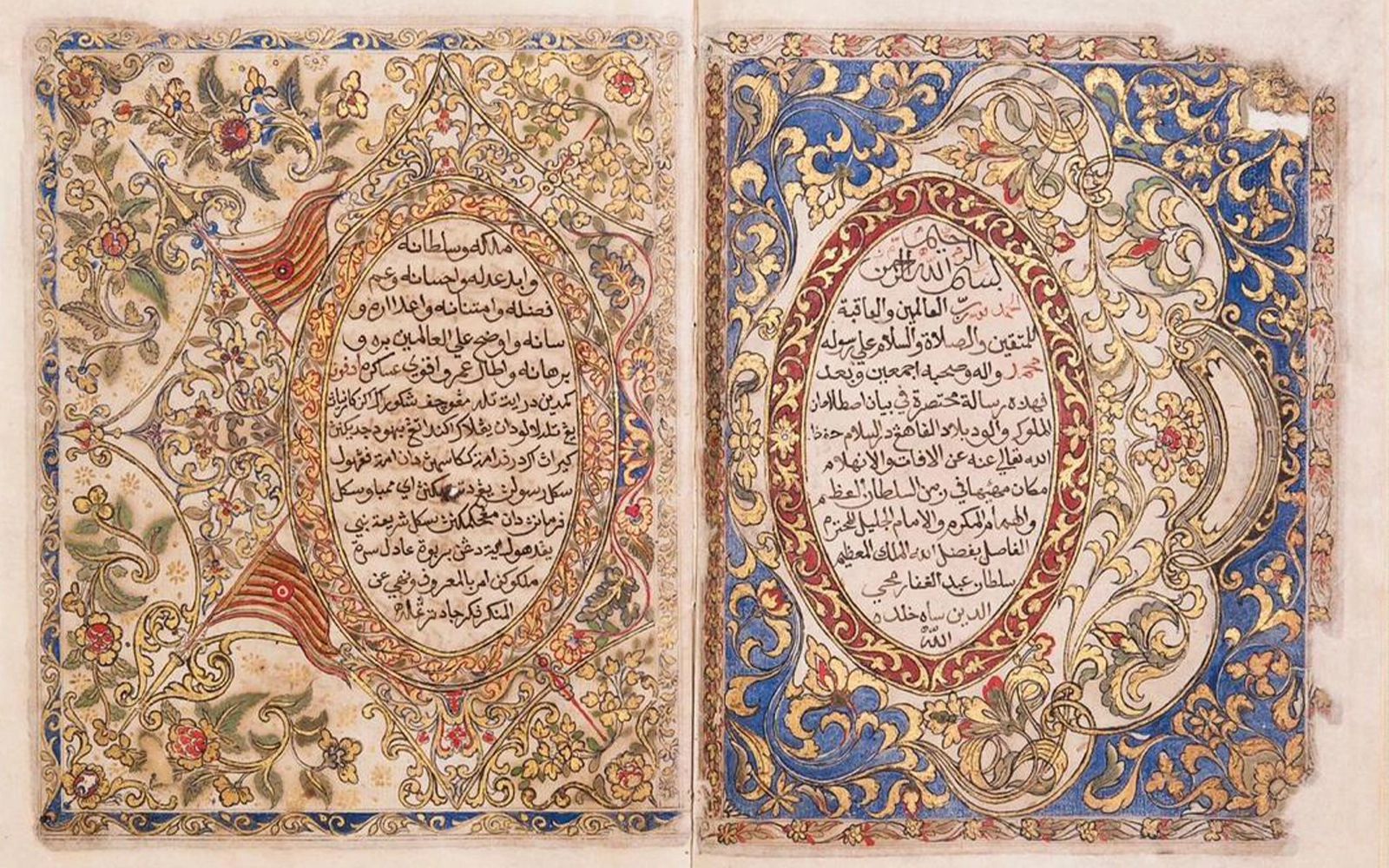
For far too long, the history of Malay governance has been viewed through colonial eyes. We have been taught to believe that constitutions, ethical governance, and the rule of law only emerged with colonial administration and the modern nation-state. Yet centuries before colonial intervention, the Malay world had already developed its own sophisticated constitutional tradition rooted in Islam, justice, morality, and governance.
The proof lies within the Hukum Kanun Melaka, the Hukum Kanun Pahang, and the wider corpus of Malay political literature such as Taj al-Salatin, Bustan al-Salatin, and Raja Ali Haji’s writings on ketatanegaraan and governance.
Written in Tanah Melayu by Malays, in the Malay language, in Jawi Melayu script, these works reveal something extraordinary: the Malays were already discussing constitutional ethics, statecraft, justice, accountability, and moral leadership more than 500 years ago.
The Hukum Kanun Melaka and Hukum Kanun Pahang were never merely collections of punishments or royal decrees. They were comprehensive legal and constitutional frameworks regulating governance, trade, maritime affairs, taxation, judicial procedure, family matters, diplomacy, and public ethics. More importantly, they constantly reminded rulers and officials that power was an “amanah” bestowed by Allah.
Across these manuscripts, one message appears repeatedly, a sultan as khalifah is answerable before Allah.
The sultan was never portrayed as a tyrant free to act according to personal desire. Instead, he was bound by divine law, shariah, and moral responsibility. Justice was not optional, it was an obligation. The sultan was reminded to govern fairly, to avoid oppression, to protect the people, to uphold religion, he was the custodian. Likewise, the bendahara, temenggung, shahbandar, hulubalang, and orang besar were not simply palace officials. They formed part of a governing system with defined duties and ethical responsibilities.
Even more remarkable is the moral dimension embedded within these texts. The sultan advised his ministers, the ministers advised the sultan. Kingship was understood as a sacred trust rather than inherited privilege alone. The manuscripts repeatedly emphasised the qualities required for governance: sincerity, wisdom, patience, trustworthiness, courage, justice, and obedience to religion.
This is what makes these manuscripts extraordinary. They reveal not only a legal system, but a civilisation deeply concerned with constitutional ethics and moral governance.
Importantly, these kanuns were not laws for kings alone. From the palace to the people, the Malay world understood that good governance and justice were not merely political duties, but sacred royal obligations.
They governed the relationship between ruler and rakyat, between ministers and state, between commerce and morality, between justice and society. They regulated ports and trade routes, taxation and maritime conduct, criminal law and family matters. They governed Muslims and non-Muslims living within the government. In essence, they formed the constitutional framework of the Malay polity itself.
This is why it is no longer sufficient to describe the Hukum Kanun Melaka and Hukum Kanun Pahang merely as “old laws” or “traditional legal texts”. They were constitutional documents of a functioning Malay-Islamic civilisation.
Around the same period, works such as Taj al-Salatin and Bustan al-Salatin expanded these ideas further by discussing the ethics of kingship, justice, and governance. Later, Raja Ali Haji continued this intellectual tradition in Johor-Riau through his writings on statecraft and ketatanegaraan. Together, these texts form a continuous intellectual tradition stretching across centuries of Malay history.
What does this tell us today?
It tells us that the Malays were never a people without systems, laws, or political thought. They were not primitive societies waiting for Europe to teach them governance. They possessed their own constitutional tradition rooted in Islam and adapted to the realities of a plural maritime world.
More than 500 years ago, the Malays had already envisioned governance as a moral responsibility tied to faith. Islam was not separated from governance, ethics, or law. It was the very foundation that bound them together. The government was understood not merely as political authority, but as an amanah answerable before Allah.
Perhaps the greatest tragedy is not that these manuscripts were forgotten, but that the wisdom within them was forgotten.
For centuries, our forefathers left behind reminders on how a government should be governed: with justice, amanah, wisdom, restraint, and accountability before Allah. They reminded sultans not to oppress, ministers not to betray trust, judges not to abandon justice, and society not to abandon morality. These were not empty court writings meant for ceremonial prestige. They were living guides for governance and civilisation.
Today, as society struggles with corruption, abuse of power, division, and the erosion of ethics in public life, perhaps the answers we seek are not entirely new. Perhaps some were already written centuries ago by our own forefathers.
The foundations of governance they laid more than 500 years ago have not become obsolete. Justice does not become outdated. Moral leadership does not expire with time. Amanah does not lose relevance. The principles of ketatanegaraan embedded within the Hukum Kanun Melaka, Hukum Kanun Pahang, Taj al-Salatin, Bustan al-Salatin, and the writings of Raja Ali Haji remain deeply relevant today because human nature itself has not changed.
It is time we return to these roots, not merely to admire them as historical artefacts, but to learn from them. These manuscripts should not remain hidden within museums or academic shelves. They should be studied in universities, introduced within schools, discussed in legal and governance institutions, and recognised as part of the intellectual foundation of this nation.
For these manuscripts are more than relics of the past. They are reminders of who we once were, and perhaps, who we are capable of becoming again.
From Melaka to Pahang, from Johor-Riau to Aceh, Patani, Sambas and Brunei, the Malay world had already developed a sophisticated discourse on constitutional ethics long before Merdeka. The Portuguese, Dutch and British may have disrupted the government and weakened parts of our intellectual continuity, but it did not erase the wisdom left behind by our forefathers.
Perhaps now is the time for Malaysians, especially the younger generation, to rediscover this forgotten heritage. For within these manuscripts lies proof that the Malay world once possessed not only political sovereignty, but intellectual sovereignty as well.
And perhaps, in remembering them, we may once again remember ourselves.
The Tengku Ampuan of Pahang, Tunku Azizah Aminah Maimunah Iskandariah, is a master’s candidate at the International Institute of Islamic Thought and Civilisation, International Islamic University Malaysia.