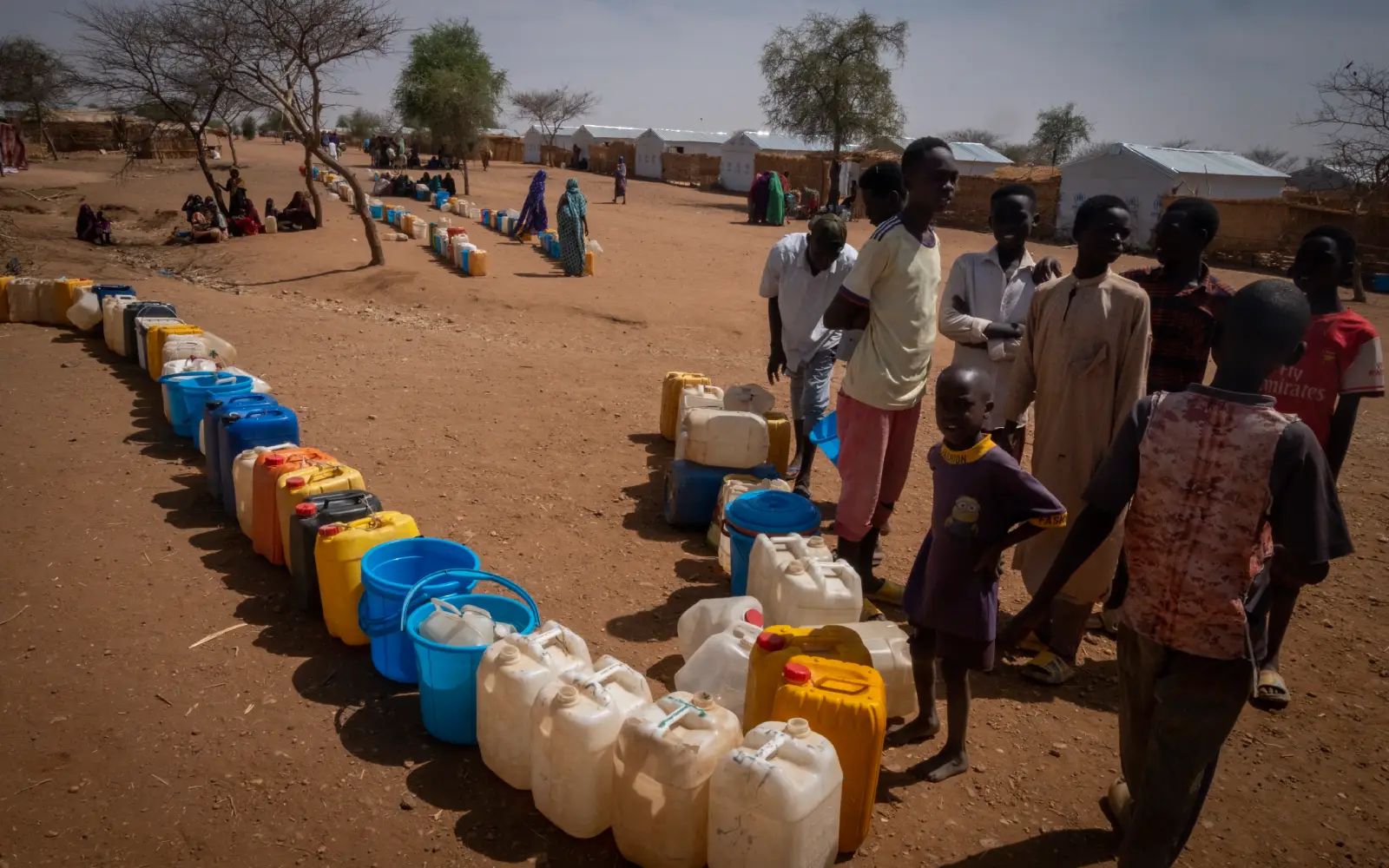
Top World Food Programme official Carl Skau, who is also at the summit, hopes that AI can help save cash to stop millions dying of hunger as funding for the world’s largest food aid agency collapses.
“We are struggling everywhere,” Skau, WFP’s deputy executive director, told AFP, describing a widening gap between record global food insecurity and a funding pipeline that has been slashed.
“Not enough attention really is given to the global food security crisis and to how those of us trying to address it are struggling at the moment.”
Conflict and climate-fuelled disasters are accelerating crises, with 318 million people facing acute levels of hunger this year in 68 countries, roughly triple the levels seen just five years ago, according to the WFP.
The surge reflects overlapping shocks: wars disrupting supply chains, fertiliser and fuel costs rising, and harvests failing in climate-vulnerable regions.
Far from the fast jets and banquet feasts at the summit, Skau said a WFP contractor had been killed in South Sudan on Tuesday, shot dead in a grinding conflict in the world’s youngest nation.
Aid work is becoming “more and more dangerous” as conflicts intensify and access shrinks, he said.
On top of that is a financial squeeze.
WFP funding fell by about 40 percent in 2025, forcing what Skau calls “brutal prioritisation”.
In Afghanistan, its funding for food aid has been halved.
“We know that people will be dying through this winter,” he said. “We have had to cut off widowed mothers with many children.”
Similar ration cuts have been reported in Sudan, where a nearly three-year civil war has killed tens of thousands, displaced 11 million and triggered what the UN calls one of the world’s worst humanitarian crises, including pockets of famine.
US President Donald Trump slashed foreign aid after taking office last year, dealing a heavy blow to humanitarian operations worldwide.
Skau said he hoped that AI could help stretch diminishing resources by optimising delivery routes, predicting crop failures and identifying communities most at risk.
WFP’s data chief Magan Naidoo said AI tools were helping how aid was delivered, number crunching data and complex logistics to ensure “greater efficiency” over distribution systems and improve targeting.
“This is critical at a time when funding is plummeting,” he said, suggesting AI can improve WFP operational efficiency and predictive accuracy by as much as 30 to 50 percent.
Other UN food agencies, such as the International Fund for Agricultural Development (IFAD), are also developing AI to help smallholder farmers boost production.
That includes piloting AI-driven apps to guide best practices, to become a “central driver of agricultural transformation”, IFAD’s Brenda Gunde told AFP, highlighting test projects in Nigeria and Kenya.