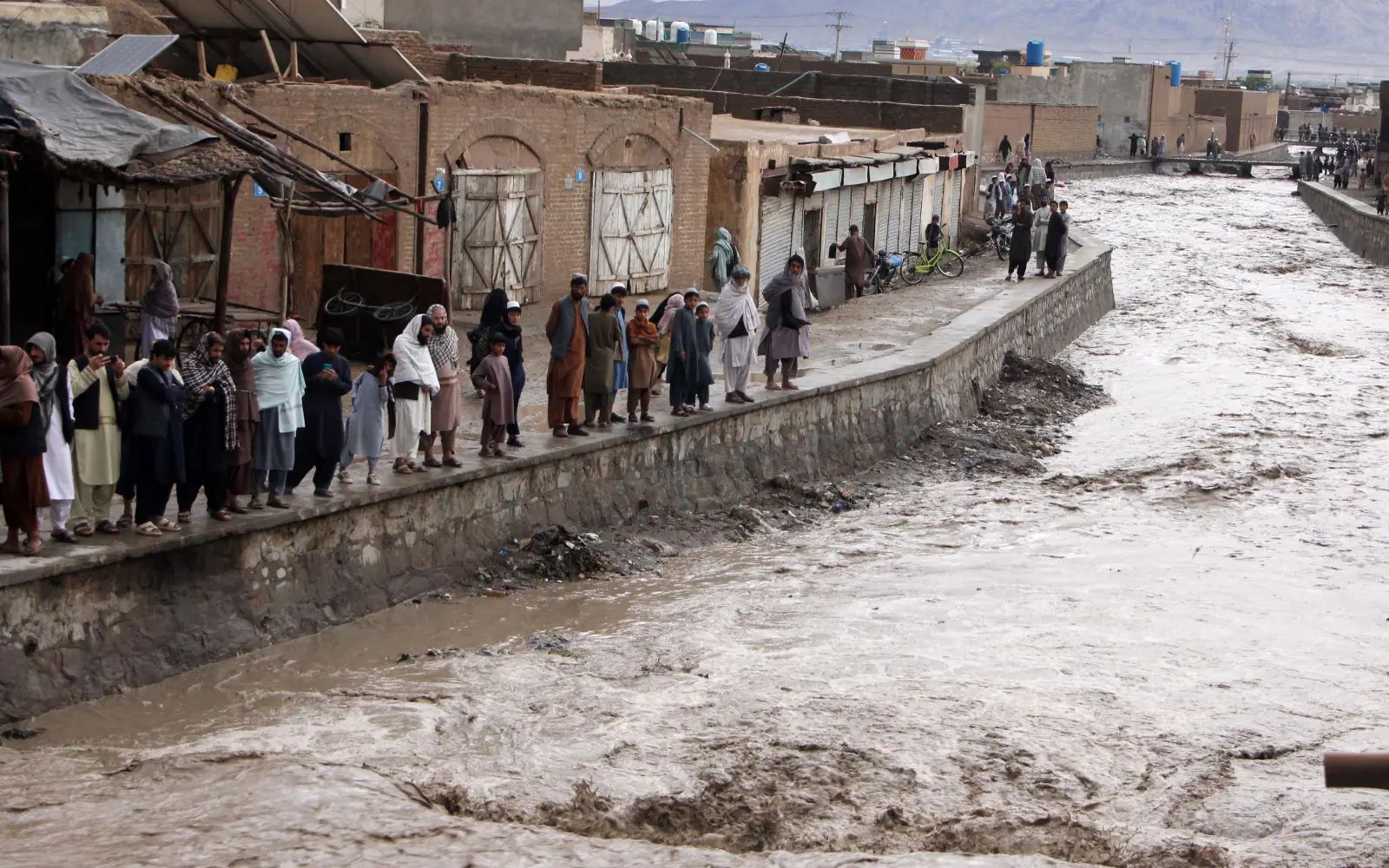
In Afghanistan, which already faces a severe humanitarian crisis, rain, floods, landslides and lightning strikes killed 123 people since March 26, the spokesman of the national disaster management authority, Mohammad Yousuf Hammad, told AFP.
Between Sunday and Tuesday alone, 46 people died across several provinces, he said.
In Ghazni province, a newborn baby died when the family’s car plunged into a submerged ditch on the way back from the maternity ward on Monday, according to the provincial governor’s office. The parents survived.
A mother and her child died in Parwan province after the roof of their house collapsed under rain and then snowfall, provincial disaster official Malawi Abdul Aleem Afzali told AFP.
Eight others died in Nangarhar province, including the capital, Jalalabad, when the roofs of their houses collapsed overnight into Tuesday, local authorities said.
In northern Pakistan, the death toll has risen in recent days, reaching 47 people, including 27 children, since March 25, the Khyber Pakhtunkhwa provincial disaster management agency told AFP.
And in southwestern Balochistan, at least 18 people have died since March 20, according to the latest figures from local authorities.
The severe weather has also caused widespread damage and blocked major roads.
Afghanistan frequently experiences deadly floods, landslides and storms, particularly in remote areas with fragile infrastructure.
Among the poorest countries in the world after decades of war, Afghanistan is particularly exposed to the effects of climate change, which scientists say is spurring extreme weather.
In Pakistan, at least 652 houses have been damaged, including about 100 that were reduced to rubble in Khyber Pakhtunkhwa.
Floods have also blocked a road in Afghanistan leading to the Iranian border since Monday.
Truck drivers using that road “are forced to wait here in the desert, even if we get hungry and thirsty, and even if it lasts two or three days”, said one of them, Khalil Ahmad Qaderi.
He told AFP that the cost of fuel means turning back would be too expensive.
The Afghan military has deployed helicopters to rescue some people, according to images shared by the defence ministry and authorities in Nangarhar.
The World Food Programme, meanwhile, distributed food aid across several Afghan provinces.