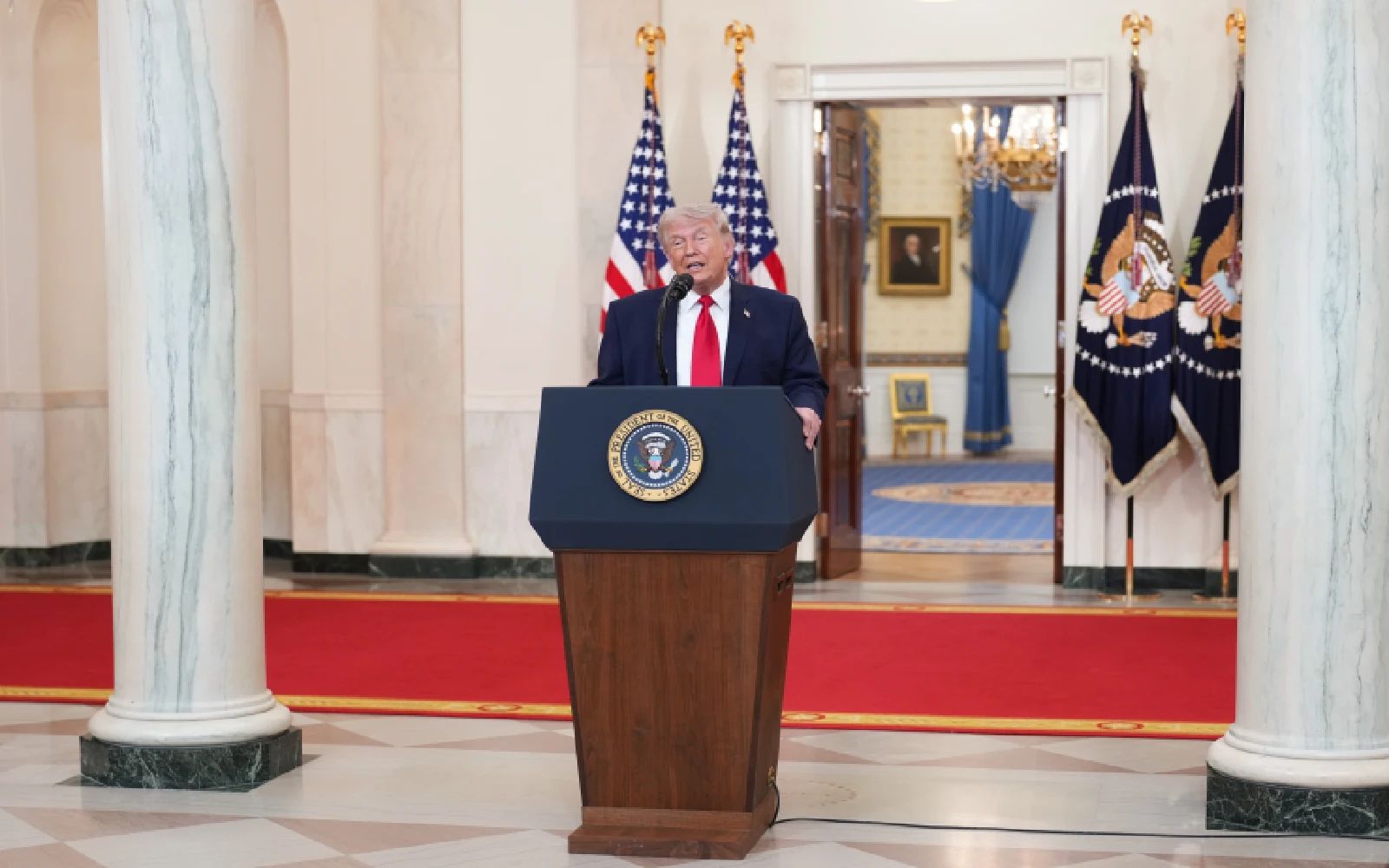
“We’ve done a great job, and we’ll get it closed out, and everybody’s going to be happy,” Trump said during a phone interview with a conservative radio host.
The comments came just hours after Iranian Parliament speaker Mohammad Bagher Ghalibaf said Tehran rejects negotiations with the US “under the shadow of threats”.
Ghalibaf, who has played a key role in the talks, roundly criticised Trump for his decision to impose a blockade on the Strait of Hormuz, which Tehran has maintained is a violation of an already-fragile ceasefire.
The parliament speaker said on the social media platform X that Trump has sought to use the threats to turn the talks “into a table of surrender or to justify renewed warmongering”. He said Iran has prepared new military options should a Pakistan-brokered two-week ceasefire lapse this week.
Asked about Iran’s opposition to the talks, Trump said, “They’re going to negotiate, and if they don’t, they’re going to see problems like they’ve never seen before.”
“And hopefully they’ll make a fair deal, and they’ll build their country back up, but when they do it, they will not have a nuclear weapon,” he said. “They will have no access to, no chance of having a nuclear weapon.”
Trump announced Sunday that US representatives would fly to Islamabad for negotiations, though Tehran has yet to officially confirm its participation and demanded the lifting of the blockade.
The comments came as the US has maintained a naval blockade on ships entering and leaving Iranian ports since last week. Tehran has described the blockade as a violation of the ongoing ceasefire.
Trump also warned Sunday that the US would target Iran’s infrastructure if Tehran failed to accept US terms to end the conflict, adding to market unease as the ceasefire is set to expire Tuesday evening Washington time.
Shipping concerns intensified after Iran, which had declared on Friday that the Strait of Hormuz was reopened to maritime traffic, reversed course on Saturday and again restricted vessel movements through the strategic waterway, with state media saying the US had not met its obligations.
Pakistan hosted the first direct high-level US-Iran engagement in Islamabad on April 11-12, the first such contact since the two countries severed diplomatic ties in 1979, but the talks ended without a breakthrough.