But that success came at a cost: the billionaire politician and his family were despised by Thailand’s powerful elites and a conservative establishment who saw his rule as corrupt, authoritarian and socially destabilising.
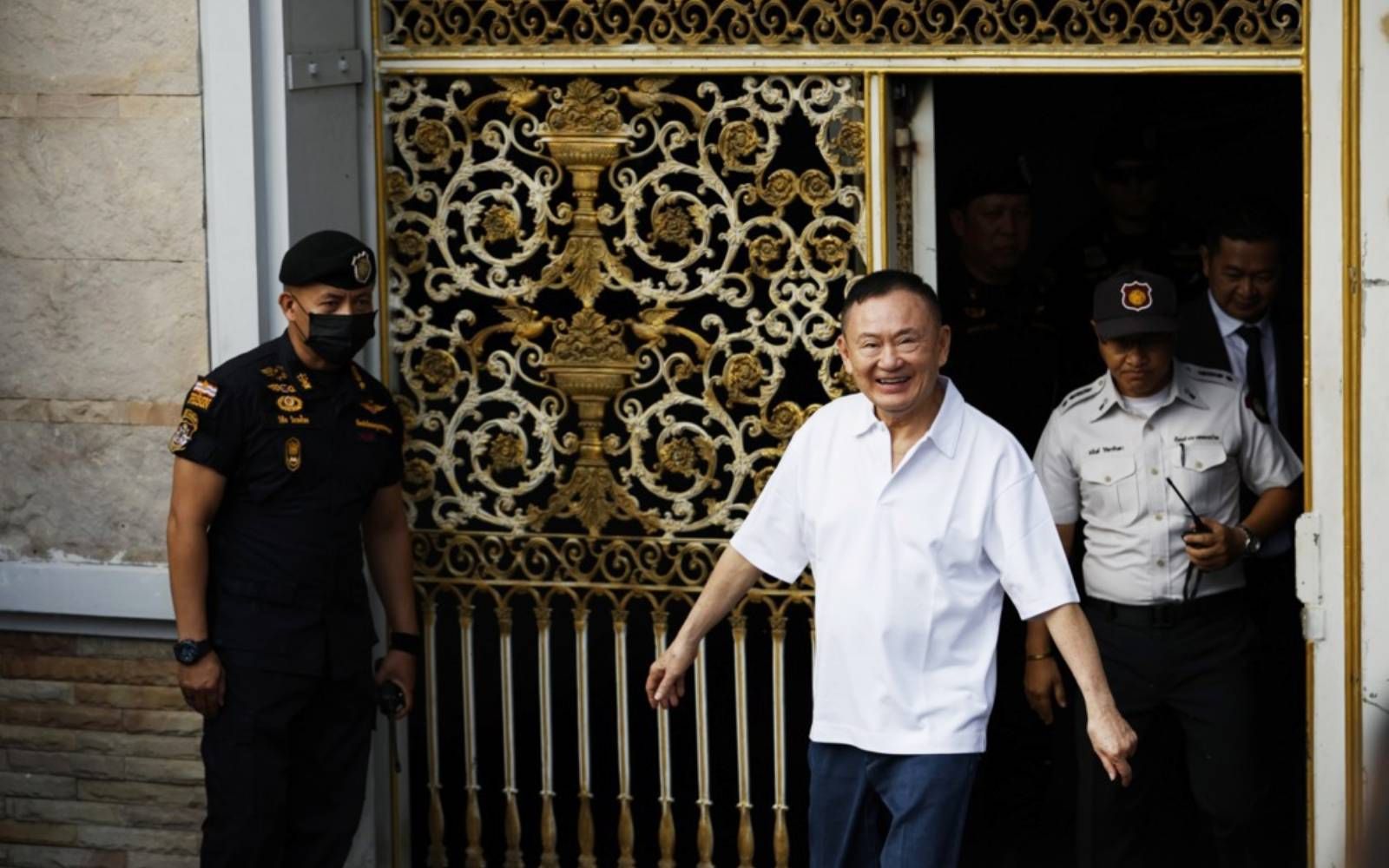
The ex-premier was released on parole on Monday after serving eight months of a one-year sentence for corruption during his time in office.
His political and legal travails – from being ousted by a coup to facing multiple convictions – could have ended his dynasty’s hold over Thai politics at any point in the last two decades.
But analysts say Thaksin remains the puppet master behind his Pheu Thai party, which suffered record losses at the polls this year but managed to join the new ruling coalition and land Thaksin’s nephew a cabinet position.
After his release, “Thaksin will take a more hands-on approach over Pheu Thai”, Southeast Asian politics expert Paul Chambers said.
But the 76-year-old is “too old to make a political comeback” as the formal party leader and would leave it to his family’s younger generation to be Pheu Thai’s public face, Chambers said.
Elected prime minister in 2001 and again in 2005, Thaksin was ousted by the army in 2006 and took himself into exile two years later, but never stopped commenting on national affairs.
He pledged repeatedly to return, despite being convicted on graft and abuse-of-power charges in his absence.
Thaksin finally made good on his vow in August 2023, touching down in Bangkok to a hero’s welcome from his supporters on the day that Pheu Thai returned to office.
He was immediately arrested and sentenced to eight years in jail, but was brought to a police hospital within hours on health grounds.
Within days, King Maha Vajiralongkorn cut his term to one year, and Thaksin returned to his Bangkok home in February 2024, having seemingly not seen the inside of a jail cell.
But the Supreme Court ruled in September that he had not properly served his sentence, and ordered him behind bars for a year.
Telecoms fortune
Thaksin was born in 1949 into one of the most prominent ethnic Chinese families in northern Chiang Mai province.
He worked as a police officer before amassing a vast fortune founding a series of data networking and mobile telephone firms that would become telecoms giant Shin Corp.
He launched his political party, Thai Rak Thai, in 1998, and became the first premier to serve a full term after being elected in 2001.
With the economy in a deep recession during the Asian financial crisis, Thaksin – one of Thailand’s richest people – promised to use his business savvy to lift rural villagers out of poverty.
His “war on drugs”, which Human Rights Watch says resulted in around 2,800 extrajudicial killings, brought international condemnation.
He was re-elected in a landslide victory in 2005, thanks to huge support from rural voters grateful for cash injections and debt relief.
The following year he was dogged by corruption allegations and mired in controversy over the tax-free sale of Shin Corp shares.
Months of mass protests culminated in the nullification of elections, and in September 2006, army tanks rolled into Bangkok and toppled Thaksin’s government while he was at the United Nations in New York.
Despite his Thai assets being frozen in 2007, he purchased the Manchester City football club and later sold it for a sizeable profit to an Abu Dhabi-backed group.
Family business
Thai Rak Thai was dissolved by court order after the 2006 coup, but eventually evolved into Pheu Thai, which brought Thaksin’s sister Yingluck to the premiership in 2011.
Thaksin is seen by many as the true master of Pheu Thai, which came second in the 2023 general election but third in the last vote in February.
His decision to return to Thailand came after Pheu Thai made what many saw as a Faustian bargain to go into coalition with military-backed parties – including the ex-army chief who ousted Yingluck in 2014.
Thaksin’s daughter Paetongtarn, who took up the Pheu Thai mantle, became prime minister in 2024, but was dismissed by the Constitutional Court after about a year in office over her handling of a border row with Cambodia.
Anutin Charnvirakul of the conservative Bhumjaithai party succeeded her as prime minister and was re-elected in February, with some speculating that a political deal was made between Anutin’s party and Thaksin’s that saw them unite, with Thaksin’s release assured.
According to Chambers, Thaksin ceded his role as the “main enemy of Thailand’s vested elites” to the progressive People’s Party and its earlier variants, which have called for reforms to the monarchy and the military – especially after Pheu Thai showed its willingness to accommodate arch-royalists in its 2023-2025 coalition government.
“The aging Thaksin”, Chambers said, is now “a weakened force who represents a possible obstacle to the elites, but not the major challenge to them that he once was”.