Iraq has long walked a tightrope between the competing influences of its allies, neighbouring Iran and the US.
Iraq’s parliament voted in favour of Zaidi’s government and programme just a few weeks after he was designated following months of political deadlock.
Zaidi’s programme includes “reforming the security apparatus by restricting weapons to state control and strengthening the capabilities of the security forces”, state news agency INA quoted the parliament media office as saying.
In Iraq, a government wins a confidence vote when parliament approves half plus one of its ministries.
Only 14 ministerial nominations out of 23 posts were approved on Thursday, as key political parties continue to negotiate several portfolios.
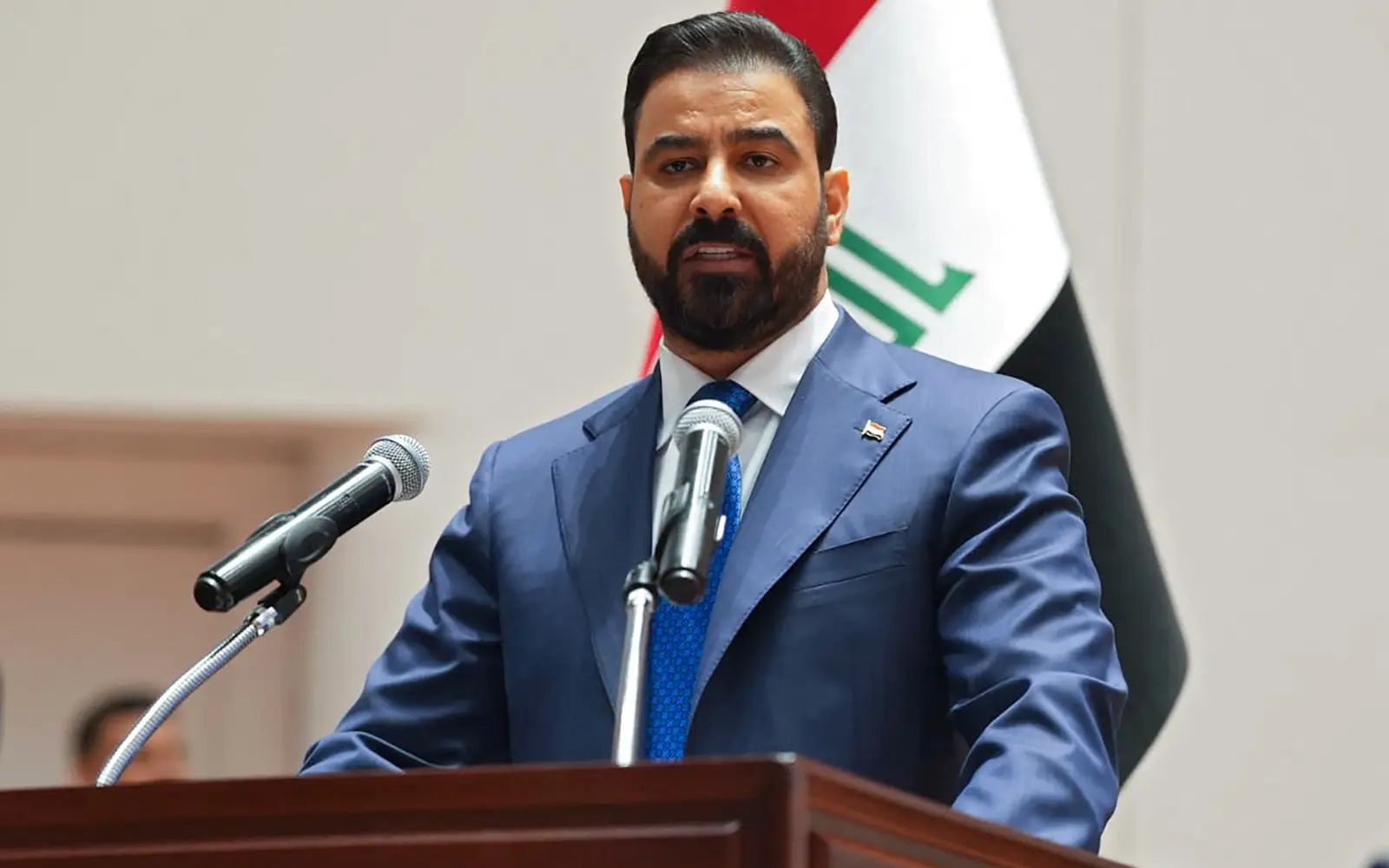
Zaidi, Iraq’s youngest prime minister at the age of 40, was chosen to form the new government late last month.
His nomination followed months of political wrangling after the US vetoed the previous frontrunner, former premier Nouri al-Maliki.
He is backed by the Coordination Framework, a ruling alliance of powerful Shia groups with varying ties to Iran.
Divisions?
In an apparent nod of approval, Iran’s foreign minister Abbas Araghchi congratulated Iraq’s new government following the approval from parliament.
“Strengthening the friendly and brotherly relations between Tehran and Baghdad has always been at the top of the priorities of our foreign policy,” he wrote on X.
Senior US diplomat Tom Barrack, meanwhile, said his government was ready to work with Zaidi “to advance our shared goals of prosperity for the Iraqi people and the elimination of terrorism, which is always an impediment to the people’s progress”.
Following the 2003 invasion of Iraq that overthrew former ruler Saddam Hussein, the US has held major sway in Iraq.
But the invasion also paved the way for Iran to build its influence and to see its Shia allies installed in Baghdad’s halls of power.
Since then, Iraq’s leaders have struggled to balance relations between the two foes.
The US has recently piled pressure on Baghdad to disarm Iran-backed groups, which it designates as terrorist organisations.
After the US and Israel attacked Iran on Feb 28, those groups intervened in support of Tehran and hit US facilities in Iraq more than 600 times before a ceasefire was announced, according to a US official.
Washington also struck their positions and bases, killing dozens of fighters.
Challenges
Recently, several powerful Iraqi politicians have also called for a state monopoly on weapons, revealing divisions over the sensitive issue.
While some armed groups showed readiness to cooperate, others remain adamant that the issue should not be discussed under US pressure.
Hussein Mounes, the head of a parliamentary bloc close to the powerful Kataeb Hezbollah group, criticised the “clear and direct American interference in shaping the political scene”.
He told journalists that the question of the state’s monopoly on arms cannot be achieved through “pressure”.
The new premier faces other daunting tasks.
His government will also need to repair Iraq’s relations with Gulf countries, which have protested attacks by Tehran-backed groups on their territory during the war.
His programme has also set economic reforms as a main priority, with an emphasis on diversification and investment, in a country where almost the entire economy relies on oil.
Iraq has lost significant income due to the disruption in the Strait of Hormuz, given that oil exports make up about 90% of the country’s budget revenues.