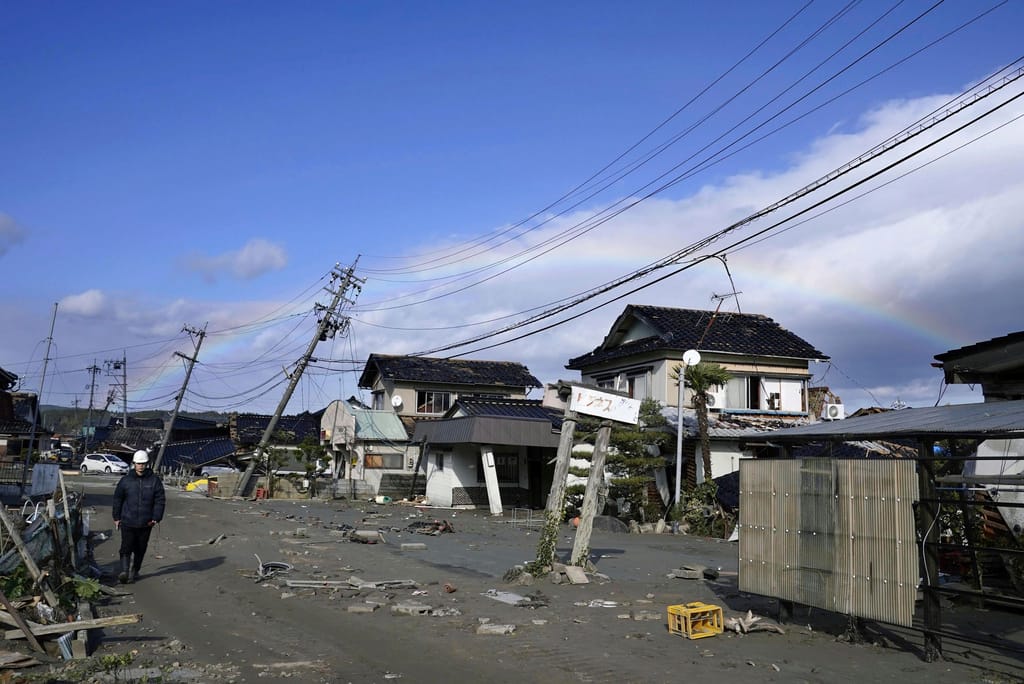
About 80% of 200 companies with plants in the quake-hit areas, including makers of machines, semiconductors and textiles, have resumed production or would resume soon following the quake, industry minister Ken Saito said today.
But the government cannot picture a clear timeline for the recovery of the region’s power supply, Saito added.
Roughly 24,000 buildings in Ishikawa, the hardest-hit prefecture where the quake’s epicentre is located, are still out of electricity, according to Hokuriku Electric Power.
Electronic parts supplier Murata Manufacturing today said it was examining the damage at five plants in Ishikawa and neighbouring Toyama, while eight other plants in the region have resumed production or would do so by Tuesday.
Carmaker Toyota Motor was looking into how its production might be affected after its suppliers Aisin and Sumitomo Electric Industries suffered some damage from the earthquake, president Koji Sato said.
Display makers Japan Display and EIZO, as well as chipmakers Kokusai Electric, Sanken Electric and Toshiba Electronic Devices & Storage, have said they were checking and repairing damaged factory facilities.
The economic loss from the earthquake could amount to less than 0.01% of Japan’s gross domestic product, Nomura Securities’ chief economist Kyohei Morita estimated yesterday.
The impact on wider supply chains would be milder than that from the 2016 Kumamoto earthquakes which hit auto and semiconductor industrial hubs, Morita wrote in a note to clients.
Unlike the 2011 East Japan earthquake and tsunami, which triggered nuclear plant meltdowns in Fukushima and led to a nationwide power crunch, the quake’s impact on electricity supply remained regional, although it could affect Japan’s push to bring its nuclear capacity back online.
While manufacturers are the pillar of the local economies of the quake-hit Ishikawa and Toyama, accounting for a third of corporate revenues, services companies, such as builders and hotels, provide the most jobs there, according to market research firm Teikoku Databank.
The quake and a fire it set off have knocked Ishikawa’s major tourist centre Wajima, known for fisheries, lacquerware, and markets, just as tourism was making a comeback from the Covid-19 crisis.
“The damages to infrastructure and reputation of Ishikawa’s tourism sector could linger for a long time – possibly more than a decade”, said Teikoku Databank analyst Daisuke Iijima.