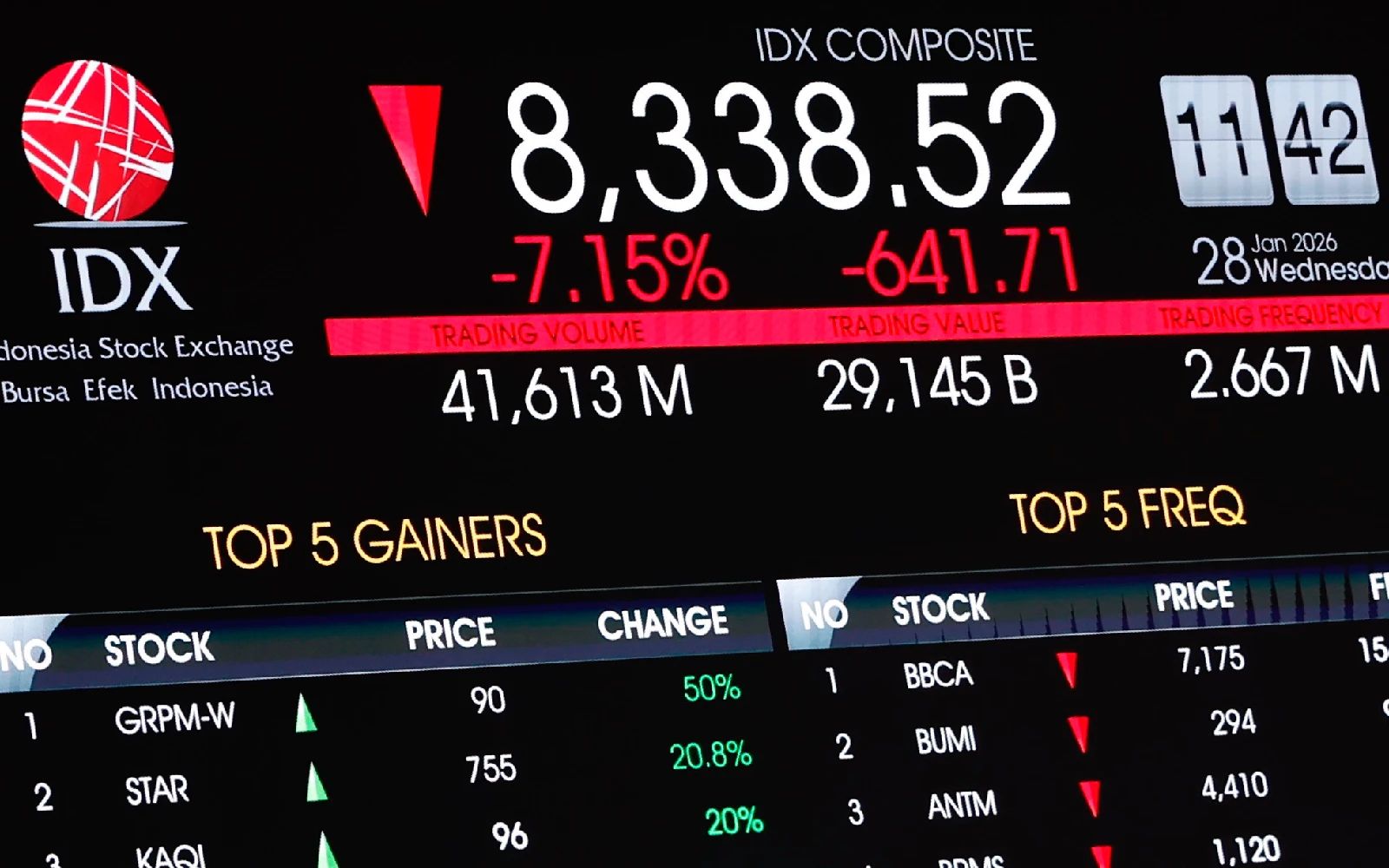
Stocks tumbled as much as 2.7%, while 10-year bond yields jumped 11 basis points to a four-month high. The rupiah weakened toward the key psychological level of 17,000 per dollar.
Credit risk indicators also deteriorated. The cost of insuring Indonesian sovereign debt rose about 4.3 basis points to around 80 basis points earlier, the biggest increase among Asian sovereigns, according to a trader. If sustained, the move would mark the sharpest widening since late September, Bloomberg-compiled data show.
“I expect Indonesian policymakers to be sensitive to foreign perception of the domestic situation and to react accordingly,” said Rajeev De Mello, global macro portfolio manager at Gama Asset Management SA.
“However, the market stress could continue until investors see concrete measures. Global investors will be looking for supportive policy statements and measures before returning to the Indonesian bond and equity markets.”
The selloff underscores growing pressure on Indonesian assets as investors reassess the country’s investability, fiscal trajectory and policy direction under President Prabowo Subianto.
The Moody’s move comes a week after MSCI Inc warned Indonesia’s equity market could be downgraded to frontier status, citing concerns over liquidity and transparency.
Indonesia’s equities are the worst performers in the world this year, while bonds and the currency are among the biggest losers in emerging markets.
While Moody’s reaffirmed Indonesia’s investment grade at Baa2 on Thursday, it said the rating may be downgraded if there is a lack of measures to fix issues on fiscal health, foreign reserves and debt of state-owned firms.
Still, some investors see the nation’s assets becoming more attractive after the selloff.
“The negative newsflow is allowing value to emerge,” said Philip McNicholas, Asia sovereign strategist at Robeco Group in Singapore. Longer-tenor local bonds are becoming more appealing due to the higher yields, while the nation’s credit spreads are also offering better value now, he said.