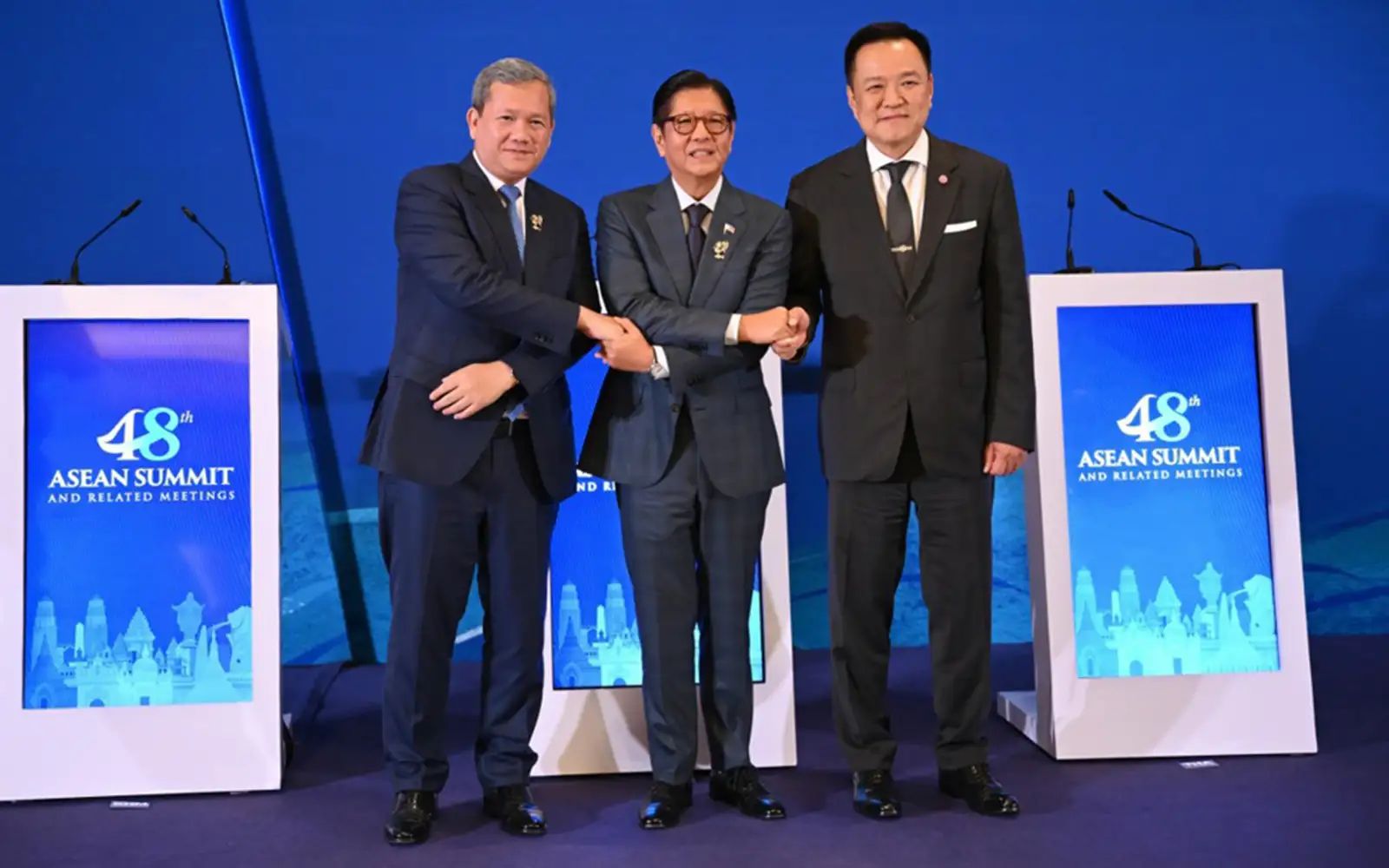
The Philippines, which is hosting Asean meetings on the island of Cebu, arranged the talks between Cambodian prime minister Hun Manet and Thai counterpart Anutin Charnvirakul after months without engagement.
Marcos said the meeting today affirmed the importance of the AOT’s continuing role, composed of representatives from Asean member states, to observe, verify, and report the implementation of all agreements between the two countries.
“We also welcome the extension of the AOT’s mandate for another three months, which will last until July of this year,” he said at a press conference after the meeting here.
Both Hun Manet and Anutin were also present at the press conference.
The observer team, led by Malaysia, was deployed to monitor a ceasefire between Thailand and Cambodia as part of the Kuala Lumpur Accord signed in October.
Marcos also said the meeting today discussed many things, adding “some agreements have been reached and ways forward have been discussed”.
“They have both reaffirmed the importance of maintaining open communication, exercising restraint, avoiding actions that may escalate tensions, and continuing efforts towards peaceful dialogue and constructive engagement,” he said.
Marcos added that the Philippines commits to continue offering its good offices to enable both countries to engage in sustained dialogue and cooperation, especially towards upholding the commitments and principles agreed upon by the two parties.
“We express our confidence in the ability of both Cambodia and Thailand to resolve the matter amicably and to manage their border differences peacefully in the spirit of Asean solidarity and unity,” he added.
Thailand has historically refused to take part in Cambodian efforts to settle border disputes using international mechanisms, including the International Court of Justice, insisting the disputes should be negotiated bilaterally.
A ceasefire has been in place between Thailand and Cambodia since late December after two eruptions of fighting along large stretches of their 817km border, the first of which ended after intervention by US president Donald Trump.
Each side blames the other for triggering both rounds of clashes, which killed close to 150 people and displaced hundreds of thousands.