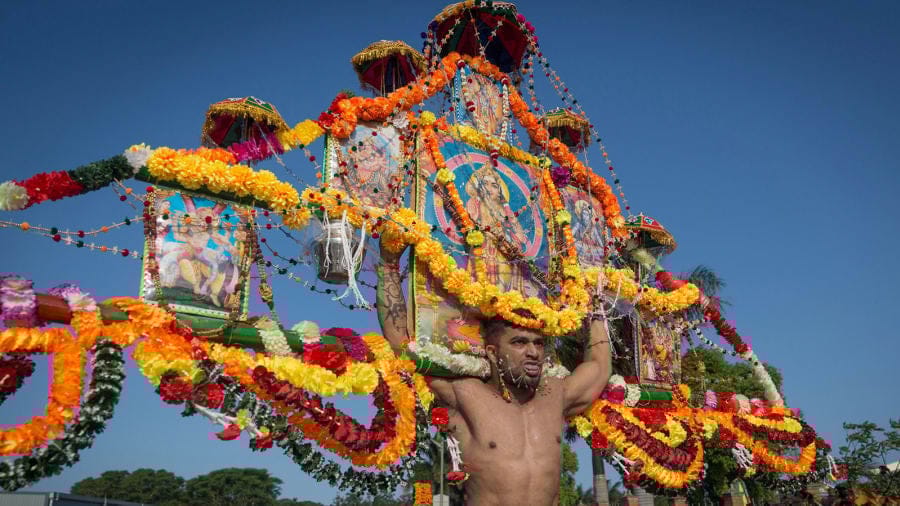
The religious holiday of Thaipusam is synonymous with the image of men, both young and old, bearing large, elaborate structures on their shoulders, often with body piercings attached to them.
These structures, called kavadi, are beautifully decorated and carry an important cultural and religious significance to their bearers.
The typical kavadi consists of two circular pieces of wood or steel which are bent into a shape that allows a devotee to balance the structure on their shoulders.
Decorations often include flowers and peacock feathers, which are believed to be the sacred vehicle of the Hindu deity, Lord Murugan.
While some of these kavadis can be rather lightweight, others literally rest heavily on their bearer’s shoulders – with some weighing a whopping 30kg.
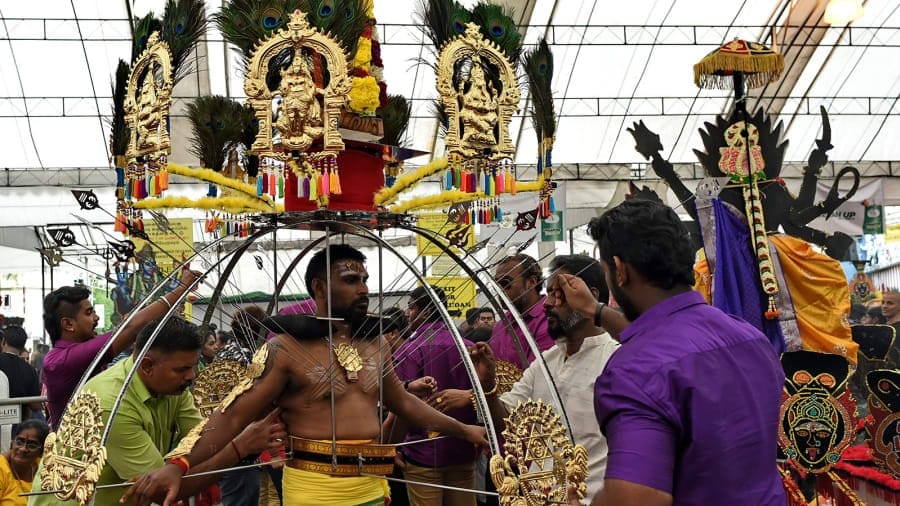
Larger kavadis are also often supported with a waistband and shoulder rests, with metal spikes providing the structure with support.
But where did this tradition of displaying one’s devotion come from?
In the Dindigul district of Tamil Nadu, India, is a small town called Palani where Thaipusam is a highlight of the year.
Thaipusam is the portmanteau of the Tamil month of Thai, which begins on Jan 15 and ends on Feb 15, and the Pushya star cluster called Pusam.
Pusam is at its most prominent point during the night of the festival, shining down brightly on celebrants.
The festival is celebrated to commemorate the moment when the Hindu goddess, Parvati, gave her son, Murugan, a powerful spear to defeat the demonic Surapadman.
So how does Palani come into the picture?
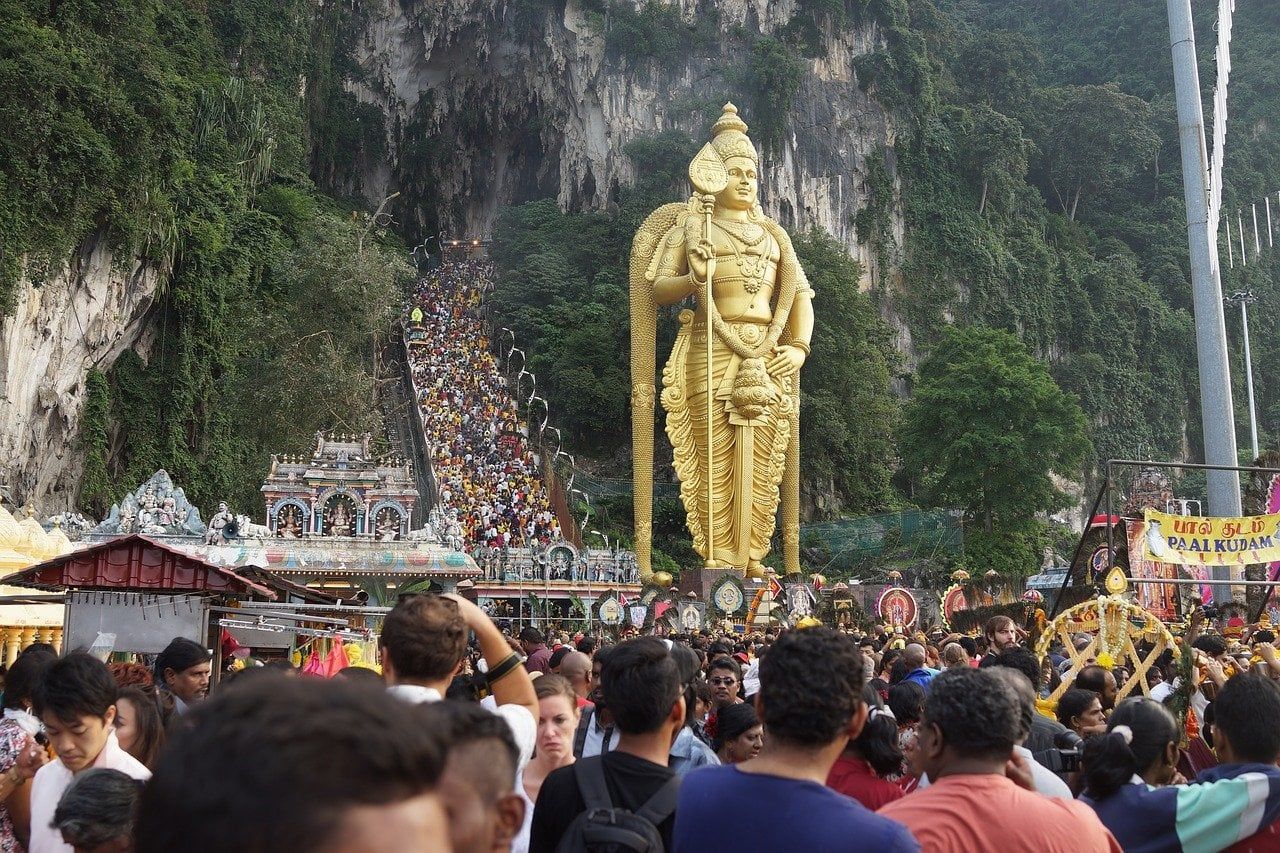
Palani happens to be a sacred site of religious significance to the devotees of Lord Murugan and it is from here that the traditions of Thaipusam spread, particularly that of kavadi-bearing.
On Thaipusam, kavadi-bearers go about with baskets begging for offerings before sacrificing it to Lord Murugan, and they will then walk barefooted from their homes to the shrines or temples of Lord Murugan.
At the same time, they also collect donations from fellow devotees, who will be blessed as well.
Unbeknownst to most people, there are many types of kavadis of various shapes and sizes, with different meanings attached to them.
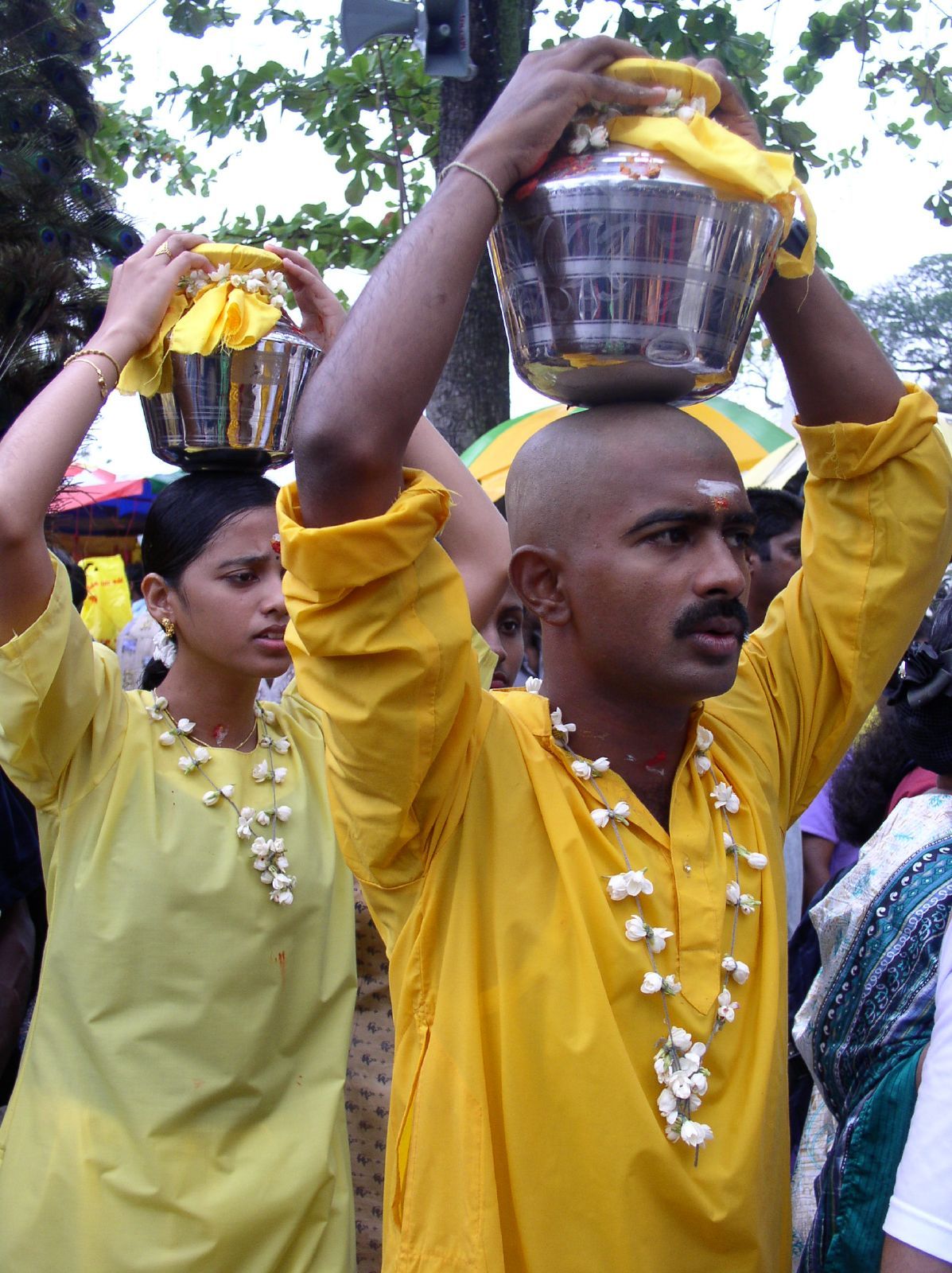
The Paal Kavadi, for one, is usually filled with fresh cow’s milk which is then carried on the devotee’s heads up the temple steps. Once the bearer reaches the destination, the milk will be used for prayers.
The same goes for Theertha or Panneer Kavadi, where instead of milk, bearers carry sanctified water or rose water, which will also be used for prayers.
In some cases, one might catch sight of Karambu Kavadi, which is usually performed by parents who have been blessed with a child and will carry him or her with sugar cane poles to express their gratitude.
There are also kavadis decorated with flowers, called the Pushpa Kavadi, as the word “Pushpa” means “flower”. This type of kavadi, often carried on shoulders, will be offered to Lord Murugan by bearers.
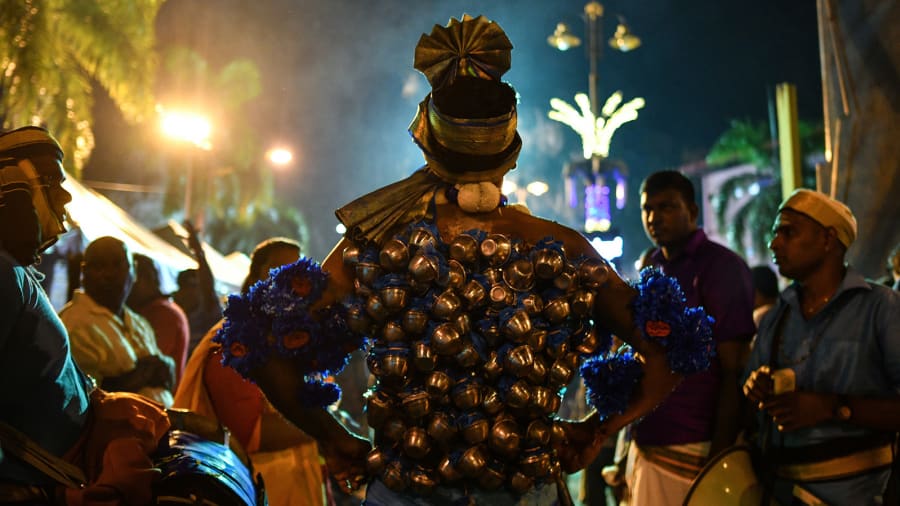
On the other hand, the Thol Kavadi, also carried on one’s shoulders, features a semi-circular top and decorated with peacock feathers, glitter and flowers.
On the day of Thaipusam, a small brass pot filled with blessed milk is attached to the kavadi.
There is also the Alavu Kavadi, which involves the tongue or cheek being pierced with a miniature spear.
Apparently, this kavadi is meant to keep the individual from talking and instead, refocus their thoughts and energy on their worship of Lord Murugan.
Another kavadi that involves body piercings is the Koodam Mulle Kavadi, which has devotees attaching hooks to small pots of milk or fruits before attaching those hooks to themselves.
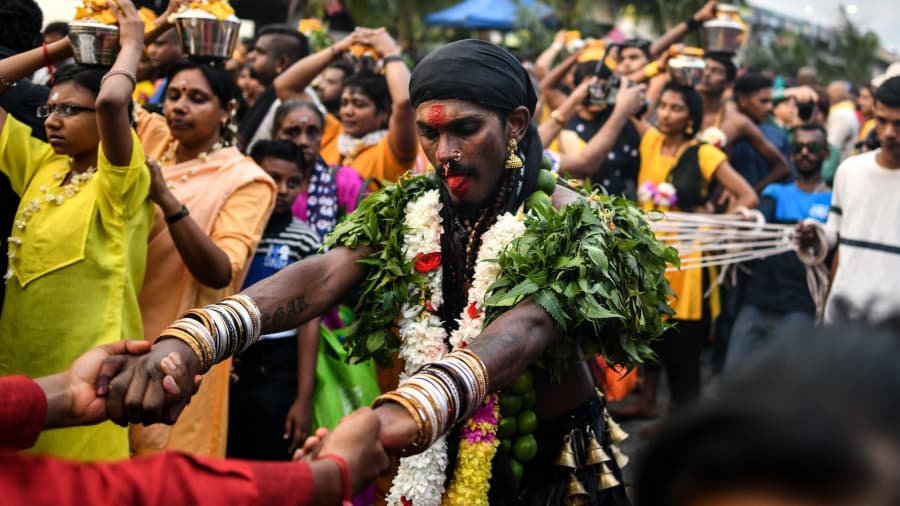
One particularly breathtaking kavadi is the Vette Mulle, where devotees have to pull a chariot using ropes that are embedded in their bodies with hooks.
However, the kavadi Malaysians are most familiar with and have most likely seen in pictures of Thaipusam celebrations in Batu Caves is the Mayil Kavadi.
The frame of the kavadi is often lightweight but can get as tall as two metres. Filled with peacock feathers, Lord Murugan’s statue and other decorations, the large frames of kavadis are usually attached to the devotees’ bodies with hooks and chains, pierced right through their skin.
Ultimately, no matter what kavadi the bearer chooses, it is used as a form of test for the devotee and allows them to show their dedication to their act of faith.
Though celebrants, tourists and locals who usually involve themselves in Thaipusam celebrations can no longer take part this year, here’s hoping that we may all bear witness to the splendour of the festivity again one day.