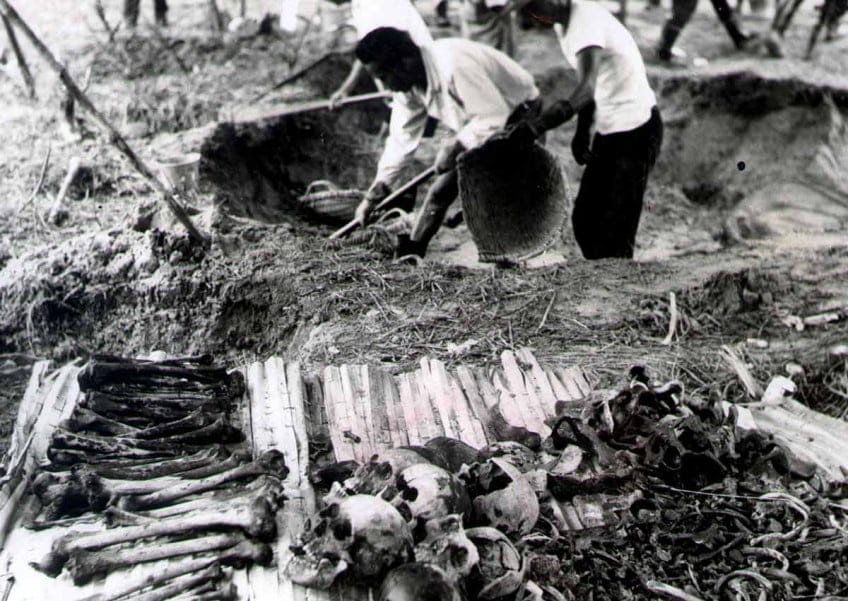
However, during the nearly four years the Japanese were here, millions of innocent people suffered unspeakable atrocities. Yet, Malaysian history textbooks do not mention a particular tragedy known as the Sook Ching massacre.
This is why local historian, Gary Lit Ying Loong, believes that more must be done to memorialise the victims.
Lit told FMT that the massacre was a purge deliberately targeted at the local population.
“In Chinese, ‘Sook Ching’ translates to ‘cleansing purge’. It refers to the cleansing of the anti-Japanese elements from among the population,” he said.
During the Second Sino-Japanese War, many Chinese Malayans supported China by raising funds to be sent over or by sending volunteers to help in the war effort there.
However, even before the Japanese invasion of Malaya, spies here had started listing the names of those who supported these efforts.
Then in the first few weeks of occupation in 1942, the Japanese secret police, the Kempeitai, were ordered to begin the Sook Ching throughout Malaya and Singapore.

“That period was known as the living hell. There were daily tortures and executions by the Japanese forces,” said Lit.
According to him, one famous individual who had a narrow escape was the late Lee Kuan Yew, former prime minister of Singapore. But others were not so lucky.
Lit said that around one million people were killed during the purge, mostly ethnic Chinese civilians. “The Japanese would take whole towns and parade them out onto a field. There, hooded men awaited.”
These were Japanese spies and with each nod of their heads, entire families would be doomed to die.
Many people were subjected to heinous forms of torture before being killed in the end.
“You wonder why they spent so much time torturing their victims, instead of killing them right away,” said Lit. “There was a darker side to the Japanese soldiers. They derived joy from torturing innocent victims, to see how they suffered.”

In Penang, said Lit, some victims were tied to weights, then dumped into the sea to drown.
No one was safe then; bespectacled folks were targeted as they were perceived to be intellectuals, possible threats to Japanese rule.
People with tattoos, perceived to be secret society members, were also rounded up as were those with English names.
High on the list of Japanese priorities, however, were those who had supported the war effort in China. Lit shared how a school in Penang had helped raised funds for the war effort, in the months before the Japanese invasion.
Once the Japanese got hold of the list containing the donors’ names, they began hunting them down. “Many of the teachers and students were exterminated,” said Lit, adding that these atrocities fuelled anti-Japanese sentiments even further.

During his research, Lit found that the infamous Unit 731, the Japanese bioweapon research unit, had a laboratory operating in Singapore.
The unit, he said, was responsible for developing biological weapons in the form of deadly plagues, with the sole intention of killing millions.
One misconception fuelled by online resources, said Lit, is the idea that the massacre was limited to Singapore.
“It’s not accurate at all. Today, almost every town in Malaysia has a memorial commemorating the victims of Sook Ching and the war. There is a well in Melaka in which the Japanese buried hundreds of its victims alive”, Lit shared.
“Entire villages were burned down and their residents massacred. These were not just isolated incidents. Even our doyen, Tan Sri Robert Kuok, shared how his classmates were raped and brutally killed.
Lit said he was disconcerted by how current Malaysian school textbooks did not accurately represent the scale of the massacre. “How many chapters, pages or paragraphs cover it? Do Malaysian children even know about this tragedy?”
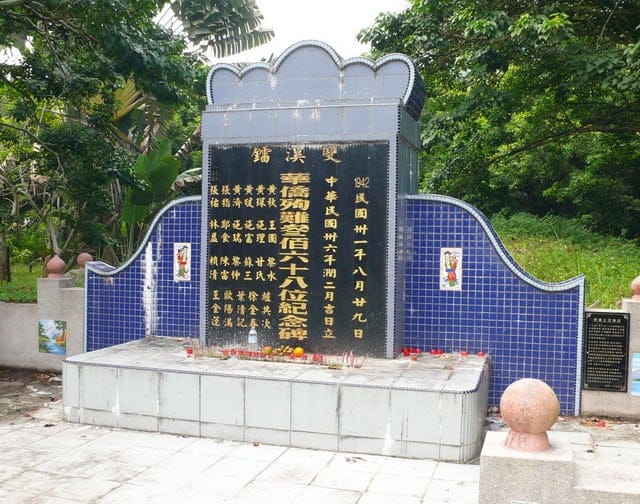
“We’re talking about an estimated one million Malayan victims here. Their souls are no doubt crying out for justice,” Lit added.
“Sadly, until today, there is neither apology nor compensation by them… But the majority of Japanese are good and honest people. It’s the Japanese government that was responsible.”
Lit proposed five steps the Japanese government should take as reparation for their historical wrongs.
“The Japanese government should first issue a formal, sincere apology. Two, they must issue compensation. Three, they should correct their textbooks to reflect the facts.
“Four, they must build a memorial to honour the victims. And fifth, they must raise awareness about the massacre so that this horror will not be repeated by anyone and not just the Japanese.”
Lit urged Japan to follow Germany’s example in admitting its historical wrongs and committing to memorialising them.
“They can and must do more,” he said. “Otherwise, there will be no sense of proper closure.”