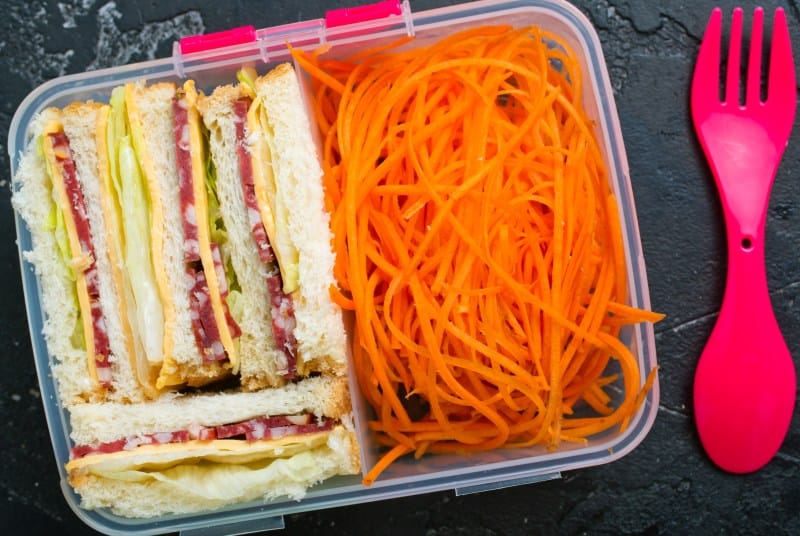
A hard-boiled egg, a simple slice of ham or lettuce eaten as is… these examples of on-the-go lunches, which may seem ordinary to many in North America and Europe, are causing a stir among Chinese social media users.
A simple sandwich made up of slices of sandwich bread and thin slices of ham and cheese, a few carrots and a handful of nuts – for many westerners, such a lunch is simple, basic and unexciting, but it’s standard fare in an employee’s or student’s lunch bag.
However, on microblogging site Weibo and social network Xiaohongshu, such lunches are referred to as “white people food”. Having studied in North America or Europe, these internet users are having fun posting a variety of “dishes”, accompanied by the hashtag #whitepeoplefood.
Followers of this trend don’t hesitate to film or photograph examples of meals they find curious, for instance as seen in a video that has been making the rounds since it was posted at the end of May.
Filmed during a train journey to Zurich, Switzerland, it shows a woman opening a bag of lettuce to eat a few leaves along with cold cuts.
So what defines “white people food”? On TikTok, content creator Lee Twodog explains in concrete terms why these videos have gone so viral with the Chinese community, and describes what this concept refers to.
It’s about eating plain, cold, unseasoned food, especially without spices. In her opinion, this equates to food that has been prepared without feeling, food that’s not meant to be enjoyable. These kinds of lunches are just meant to provide nutrition and energy in order to be able to get through your job or studies in the afternoon.
It’s worth noting that we’re mainly talking about meals eaten on the run at work or university. On Weibo, one blogger points out that these efficient meals let a person know what it feels like to be dead! For many Chinese internet users, such a meal even constitutes “a lunch of suffering.”
Beyond poking fun at these bland and simple, often raw meals with the potentially offensive expression “white people food”, these exchanges demonstrate in particular how deeply food is enmeshed with cultural heritage.

The implied contrast to this basic food that is being posted about with incredulity are dishes that are created with multiple ingredients, complex seasonings and sauces that are chopped, cooked and plated.
However, while some Chinese students are posting images of basic meals in a mocking manner, others indicate they have adopted this way of eating while living in the west. University of British Columbia sociology professor Amy Hanser points out to the Canadian Press that this trend “symbolises a mindset shift among younger Chinese, and a counter to a life of long toil”.
Through these videos, students express befuddlement but some of them also express a kind of admiration, linked to a rejection of the traditional Chinese approach to work, nicknamed “996” to signify that people work from 9am to 9pm, six days a week.
If to that rhythm one also has to cook up a lunch for the following day’s meal, it adds further toil. With efficient, minimal western-style menus, Chinese students can free themselves from such constraints and minimise their efforts, an approach that also resonates with the “lying-flat” movement embraced by many young Chinese employees to protest overworking.
Meanwhile, Tammara Soma at Simon Fraser University offers a slightly different analysis of the trend. It’s a way of “reclaiming sarcasm” when it comes to the subject of food, since non-western food has often been labeled exotic or strange.
“Persistent stigma against Chinese food was closely linked to histories of anti-Chinese sentiment in the US,” Chinese-American TikTokker Lisa Li, an activist who co-founded a trade journal for Chinese restaurants in New York, told the “Washington Post”.