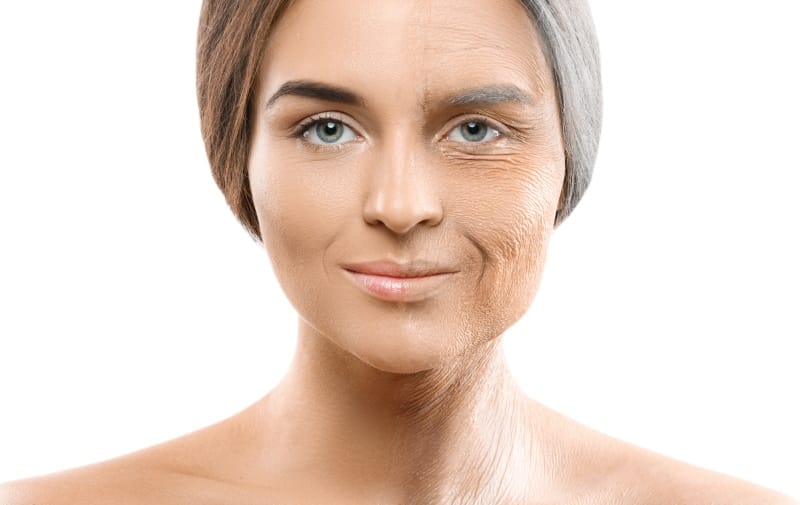
Growing old remains the subject of much debate. Societal pressures, and beauty standards in particular, no doubt play a role in advancing age being a burden for some people – especially women, who are more subject to these pressures and expectations.
This is supported by the findings of recent research polling over 2,000 Americans about their perceptions and experience of ageing. The survey reports that 70% of men have no problem with ageing, compared with only 57% of their female counterparts.
Overall, the findings show that men and women alike are generally accepting of the ageing process and the changes associated with it. Nearly two-thirds of respondents (63%) agree with this statement, and almost three-quarters (73%) even consider older people to be comparable in beauty to their younger counterparts.
Could this be a consequence of societal changes that have been taking place in recent years? At any rate, these shifts could continue, or even accelerate, thanks to future generations, since Gen Z is the most inclined to say that beauty has no age (84%), ahead of millennials (73%), Generation X (72%), and baby boomers (67%).
Here again, however, there are gender disparities, with 81% of women having no trouble equating old age with beauty, compared with only 65% of men.
Looking more closely at the changes that ageing brings, it seems, in theory at least, that respondents are all for a natural approach. More than half (54%) say they prefer authenticity to camouflaging the signs of ageing – as such, they’re giving up trying to hide their wrinkles and dark spots under makeup.

Baby boomers (68%) lead the way in embracing their natural skin, followed by Gen X (62%) and millennials (53%). Younger people, who nevertheless consider beauty to be ageless, are much less inclined to accept showing signs of age in the future (only 22% chose authenticity).
Here again, there’s a gulf between men and women: only 35% of female respondents are likely to keep things “au naturel” as they age, compared with 73% of men.
Going grey
If grey hair cannot be associated with age alone, it is undoubtedly one of its symbols, and this has repercussions on the behaviour of men – and more broadly, women. In the US, only two in five of those concerned say they accept going grey and forego colouring their hair to hide it.
But this is, yet again, more the case for men (54%) than for women (25%). The survey also reveals that one in five survey respondents would opt to change their hairstyle to look younger, including 24% of women and 17% of men.