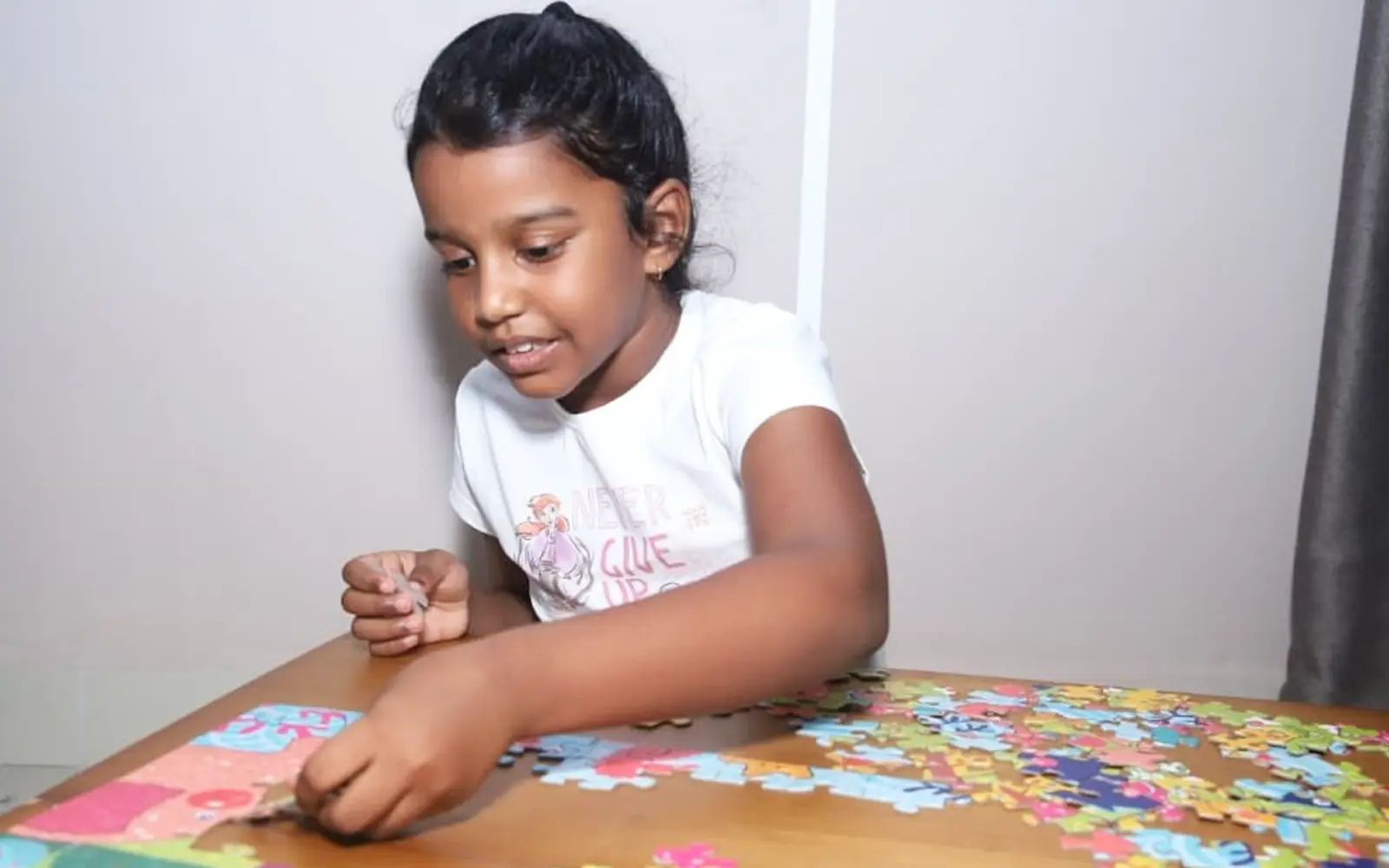
“He’s at school,” Naneecharam Muniandy replied. “Today is your big day. You are going to attempt this. So, calm yourself down, and once you are done, amma will give you these chocolates.”
Completing multiple sets of jigsaw puzzles is nothing new for Abhineya, who is on the autism spectrum. Once, during a competition, she completed a 150-piece puzzle in just 40 minutes, despite a two-hour time limit.
This time, however, she was hoping to earn a spot in the Malaysia Book of Records (MBR).
“I was so nervous and I even considered withdrawing because I wasn’t sure if she’d be able to do it.
“I didn’t want to bring her to the next level, only to see her fail. She has faced many rejections before,” Naneecharam, a single mother, shared with FMT Lifestyle.
“Then a thought struck me … the attempt is more important than succeeding.”

As she always does, Abhineya visualised the completed picture, mapping out in her head where each piece of the puzzle would go. Then, she launched into it, fixing two pieces on opposite ends at the same time. She complimented herself regularly – “that’s good” – and hummed a made-up song to soothe herself.
At 57 minutes, Abineya had completed an astonishing 643 puzzle pieces (10 sets), earning herself an MBR for most children’s jigsaw puzzle pieces solved in one hour by an autistic child. The initial record was set at 490 pieces but “she was enjoying it so much, we just let her continue”.
Naneecharam, who has a postgraduate diploma in autism and a certificate in ADHD from the Asian College of Teachers, remembered bursting into tears.
“I was holding back my tears during the attempt but after she succeeded, I just cried out loud and hugged her. My daughter wiped away my tears … that’s the best moment of my life,” Naneecharam said.
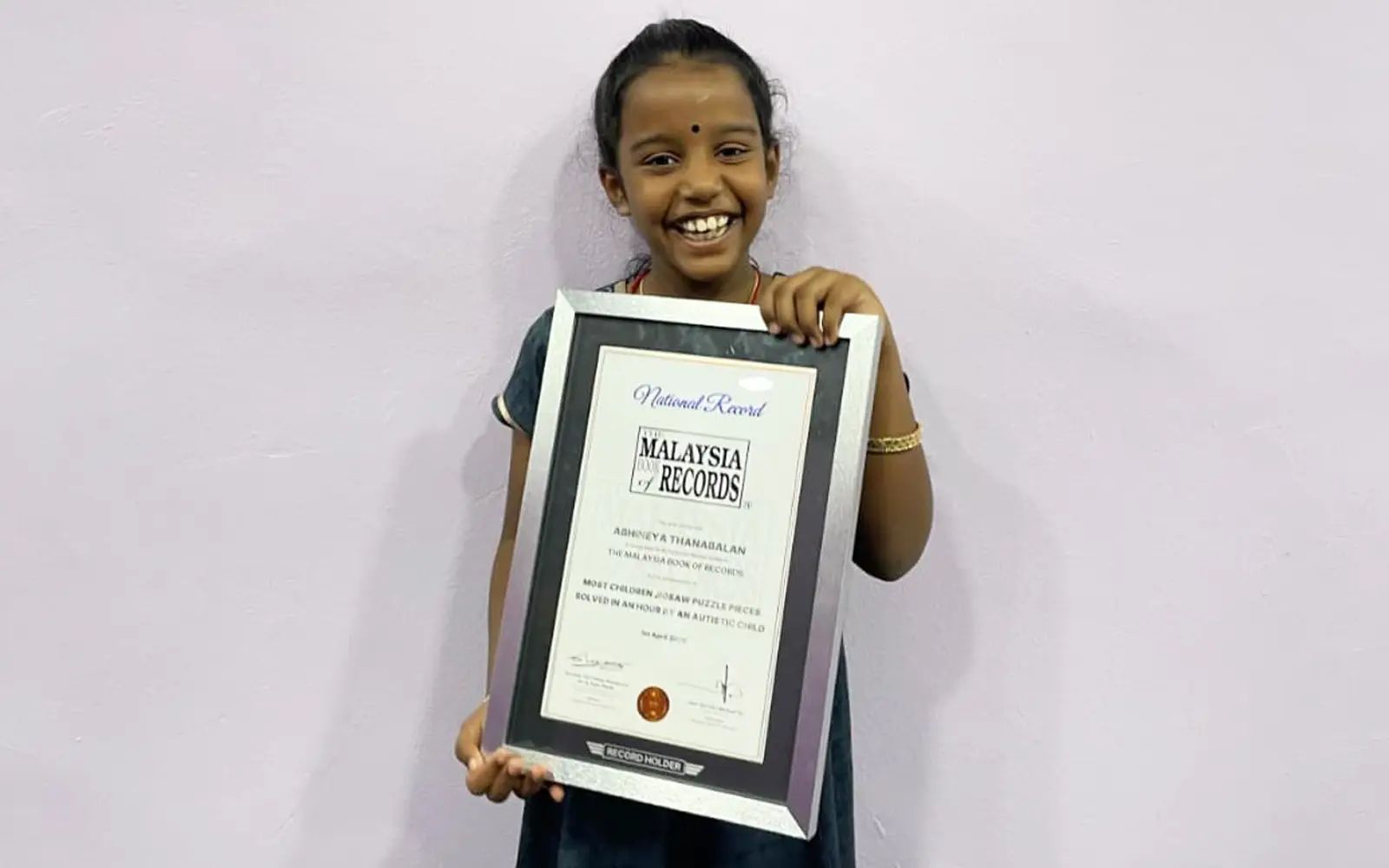
Abhineya’s interest in jigsaw puzzles began when a teacher at an art studio offered the young girl a set of jigsaw puzzles to play with while waiting for her art lesson to begin.
“That was the starting point. I’m very thankful to the teacher for giving my daughter the puzzles that day,” said Naneecharam.
Today, there are more than 50 sets of jigsaw puzzles in their home, and, unsurprisingly, it is a favourite activity for both her children.
“There are a lot of benefits for autistic children when they fix puzzles. Their mind is calmed and they are able to focus for a complete hour. This helps with their studies too,” Naneecharam shared.
However, Abhineya doesn’t pick puzzles at random. She follows a structured timetable, working through sets of varying difficulty. After finishing each one, she ticks it off. “She actually memorises the timetable. Even if I erase it, she still knows it.”
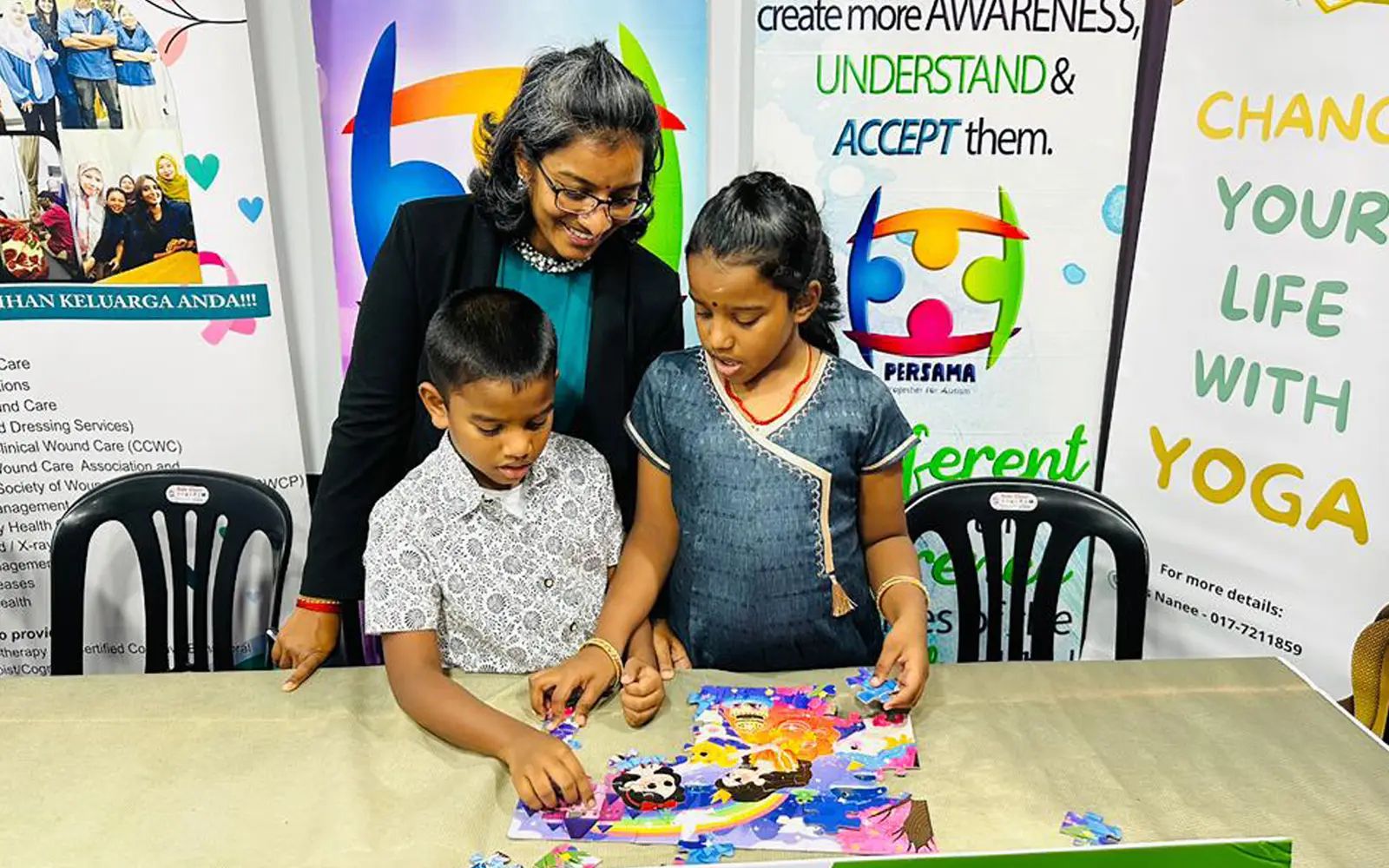
Initially, Abhineya took 90 minutes to complete 500 pieces of jigsaw puzzles. That was during her two weeks of training. “Which is why I initially had the fear. But as we kept training, she started doing it faster. And I always made sure to praise her, and hug her after she completed one set,” said Naneecharam.
To this end, the mother stressed that parents of autistic children must ever give up on them but believe in their kids’ ability to succeed at whatever they put their minds to.
She said there was no shortcut as real progress came from consistent effort at home.
Looking ahead, Naneecharam hopes to shift the focus from just training children to supporting parents.
That’s the reason behind the Holistic Wellness for Autism Parents programme she plans to launch with Pertubuhan Sayang Malaysia, an NGO supporting families of autistic individuals.
Through this, she hopes to build a community where parents can learn, care for their mental health, and support one another because when parents are well, their children thrive.