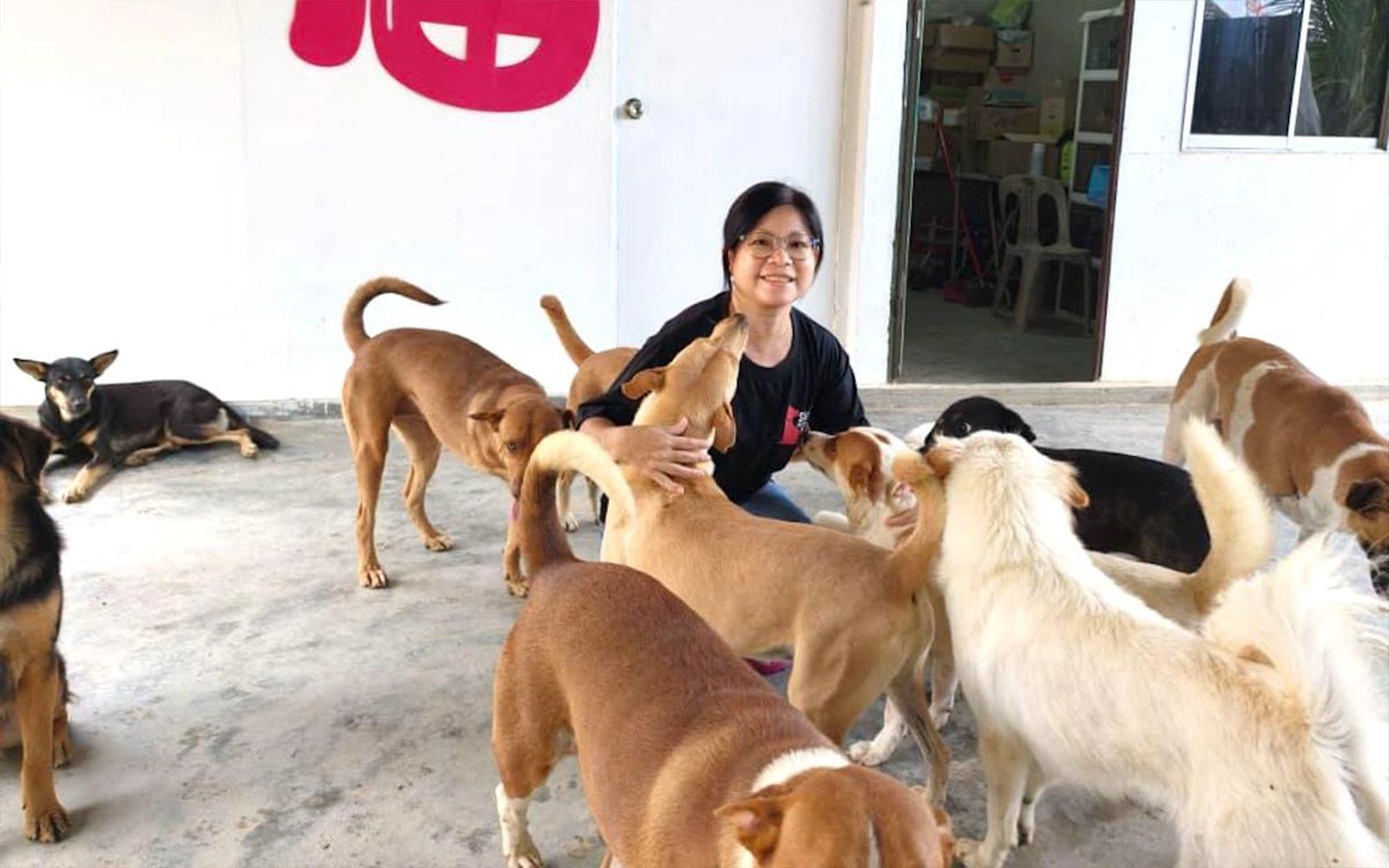
Liew, 44, did not hesitate. The founder of Save The Strays Team rushed Olivia to a vet and rallied support to cover medical costs.
Despite losing one of her legs, Olivia now thrives at the NGO’s shelter in Batu Pahat, Johor. And her story is just one of many that reflects the work carried out by the team.
Established in 2019, Save The Strays Team currently has 270 dogs and 120 cats in its care.
“Our mission is to help injured animals on the streets – those that cannot survive on their own and need a place to stay for the rest of their lives,” said Liew.

The dogs are housed on a 0.8-ha plot of land in Batu Pahat, while the cats are looked after across several locations in Batu Pahat and Selayang.
Liew added that they also bail animals out of a local council pound.
Running a shelter, of course, is challenging, and the reality is pressing: the NGO is now in urgent need of financial support.
“The kibble for our dogs will only last until the end of this month, while supplies for our cats might only stretch until the end of May,” Liew shared.
Monthly operational costs – covering food, rent, utilities, staff salaries, medication, vet bills and others – range from RM30,000 to RM35,000.
Some of the animals also suffer from serious conditions such as cancer and heart issues, adding the cost of their care.
The NGO survives solely on public donations. In a bid to become more self-sustaining, the team sells handicrafts such as keychains and pawprint canvases – with the shelter dogs as the “artists”.
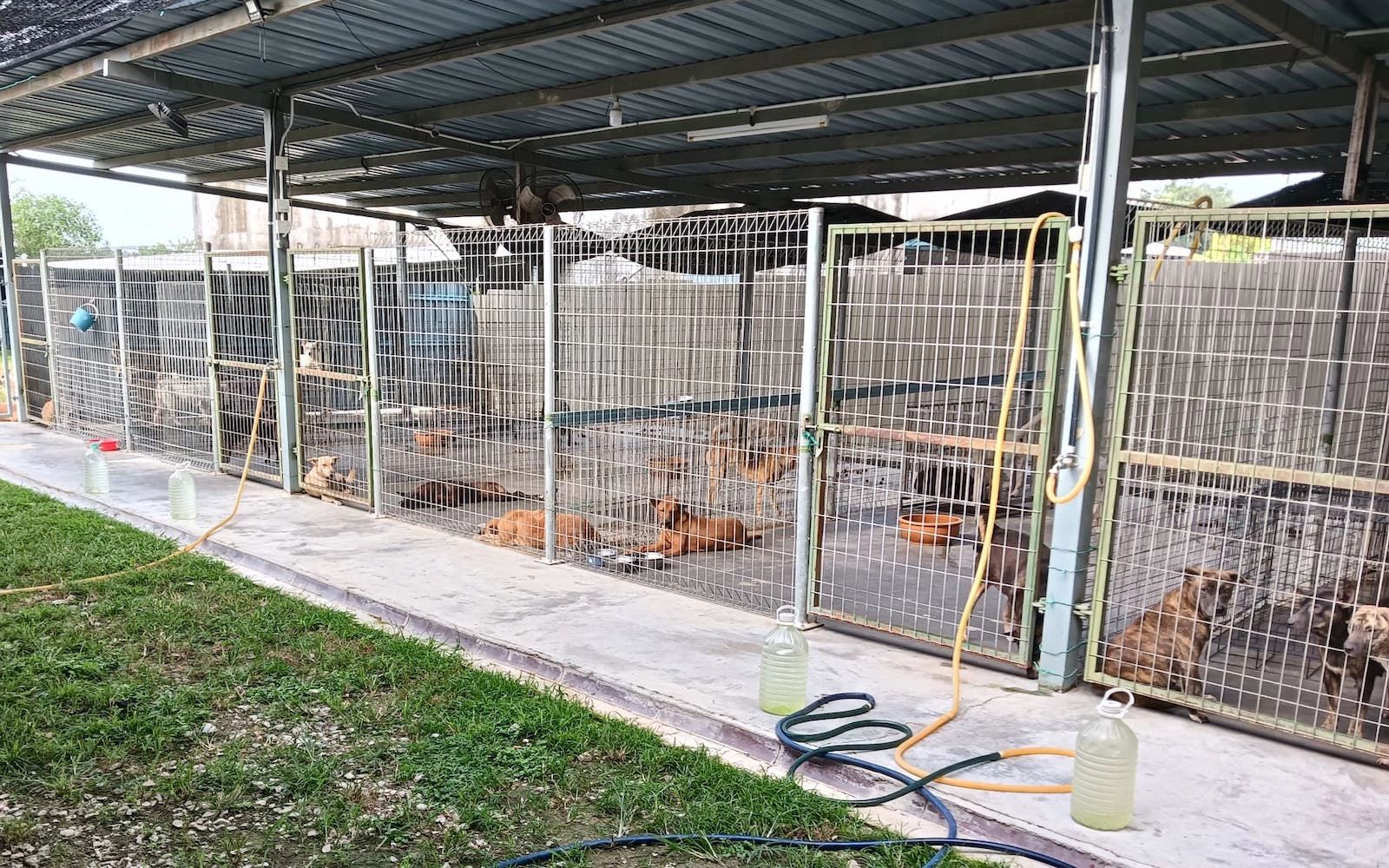
Still, much more help is needed. “We hope to get support from the public,” Liew said.
Another challenge? Finding the dogs and cats “furever” homes, as “most of them are mixed-breed strays, not pedigree dogs”.
While easily overlooked, these animals are offered hope and a second chance at life at the shelter. Among its furry residents is Choh Di.
Liew recounted having learnt of a woman who had rescued a dog with badly injured legs, believed to have been hit in an accident. Unable to afford the medical costs, the woman had reached out for help, and the NGO stepped in to raise funds.
Thankfully, none of Choh Di’s legs had to be amputated, and today, he is thriving at the shelter.

The team also carries out trap-neuter-release (TNR) efforts and daily street feeding in Batu Pahat.
“Some people think we should not feed strays and they will go away. But it won’t reduce the population – they will still look for trash to survive and reproduce in other areas,” Liew noted.
She stressed that Malaysia needs better public education on stray issues. “People need a better understanding of how to control the stray population, as well as how to protect themselves when faced with strays that may chase them.”
Culling, she opined, is not a solution. “Mass catching and culling makes them more afraid of humans. By instinct, they will hide from people, and some may migrate to other areas, causing the population there to grow out of control.”

As such, she believes TNR is a more sustainable approach, noting that in areas where the team has carried out such efforts, stray populations generally remain under control.
Ultimately, Liew has this message to share: “Even if you cannot rescue them, try to be kind to the animals. They don’t want to live on the streets or become strays – they are just trying to survive.”
If you wish to help, donations can be made to UOB Bank account 231 307 9920 (Pertubuhan Perlindungan Dan Penyelamat Haiwan Wawasan Batu Pahat, Johor).
To contribute kibble, canned food or other essentials, kindly contact 016-859 2923.
Learn more about Save The Strays Team via their website, Instagram and Facebook.