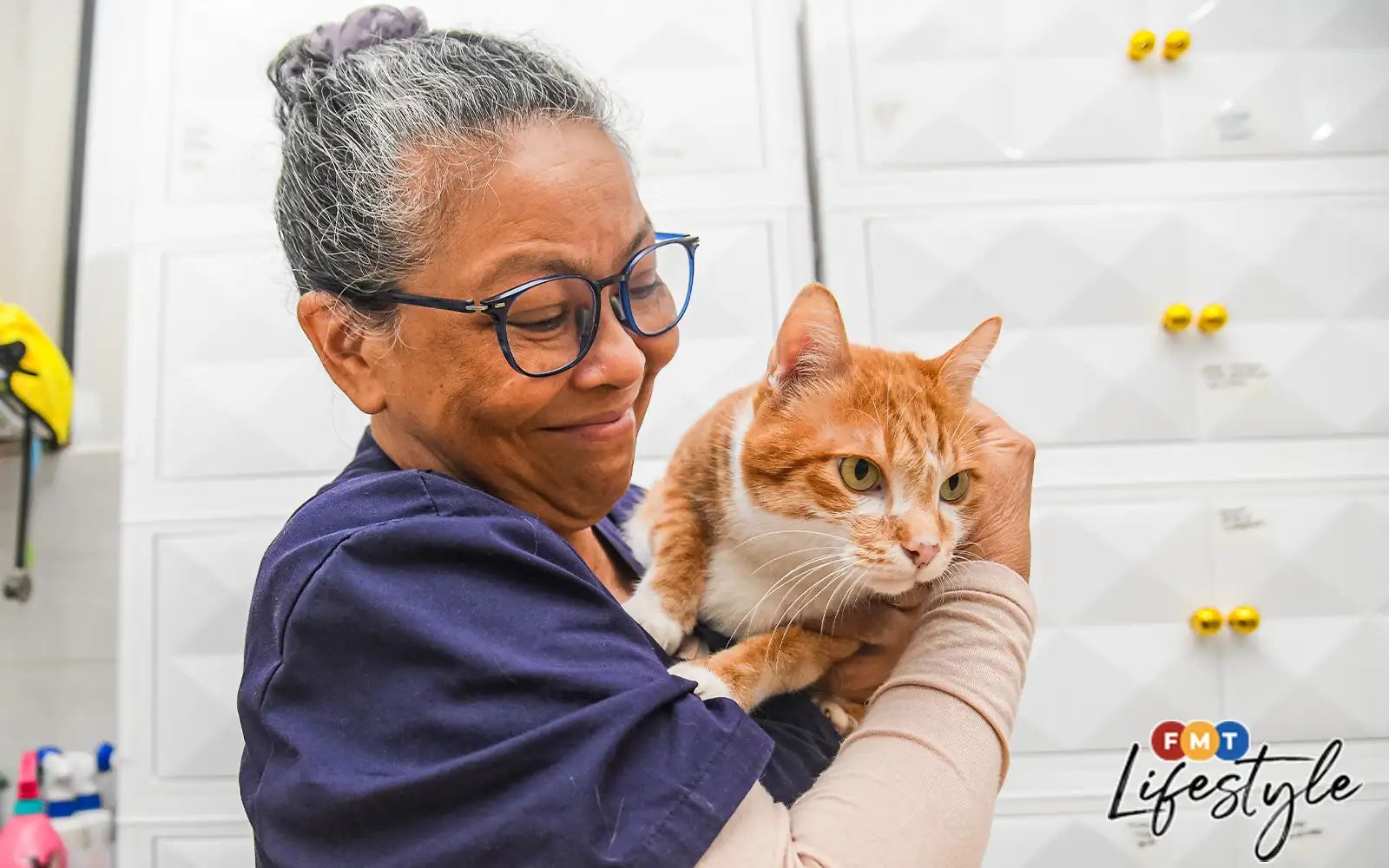
That is why, when a dog’s eye turns red or a cat begins squinting, it can leave pet owners unsettled.
For veterinary ophthalmologist Dr Nadzariah Cheng Abdullah, these changes can point towards something more serious. As a specialist in animal eye problems, she diagnoses and treats a range of conditions while guiding owners on how best to care for their pets.
In conjunction with World Veterinary Day, FMT Lifestyle speaks with Nadzariah about her work, and what pet owners should know about their animals’ eyes.
For Nadzariah, the path into the field began long before she stepped into a clinic. “I grew up with dogs of all ages, and they were a big part of my childhood. I remember how deeply it affected me when they fell ill or passed away,” she shared.
“At that time, access to veterinary care was limited, and I often felt helpless,” said Nadzariah, who practises at Animed Veterinary Center in Cheras.
“That experience stayed with me, and it inspired me to pursue veterinary medicine – simply because I wanted to help animals and ease their suffering.”
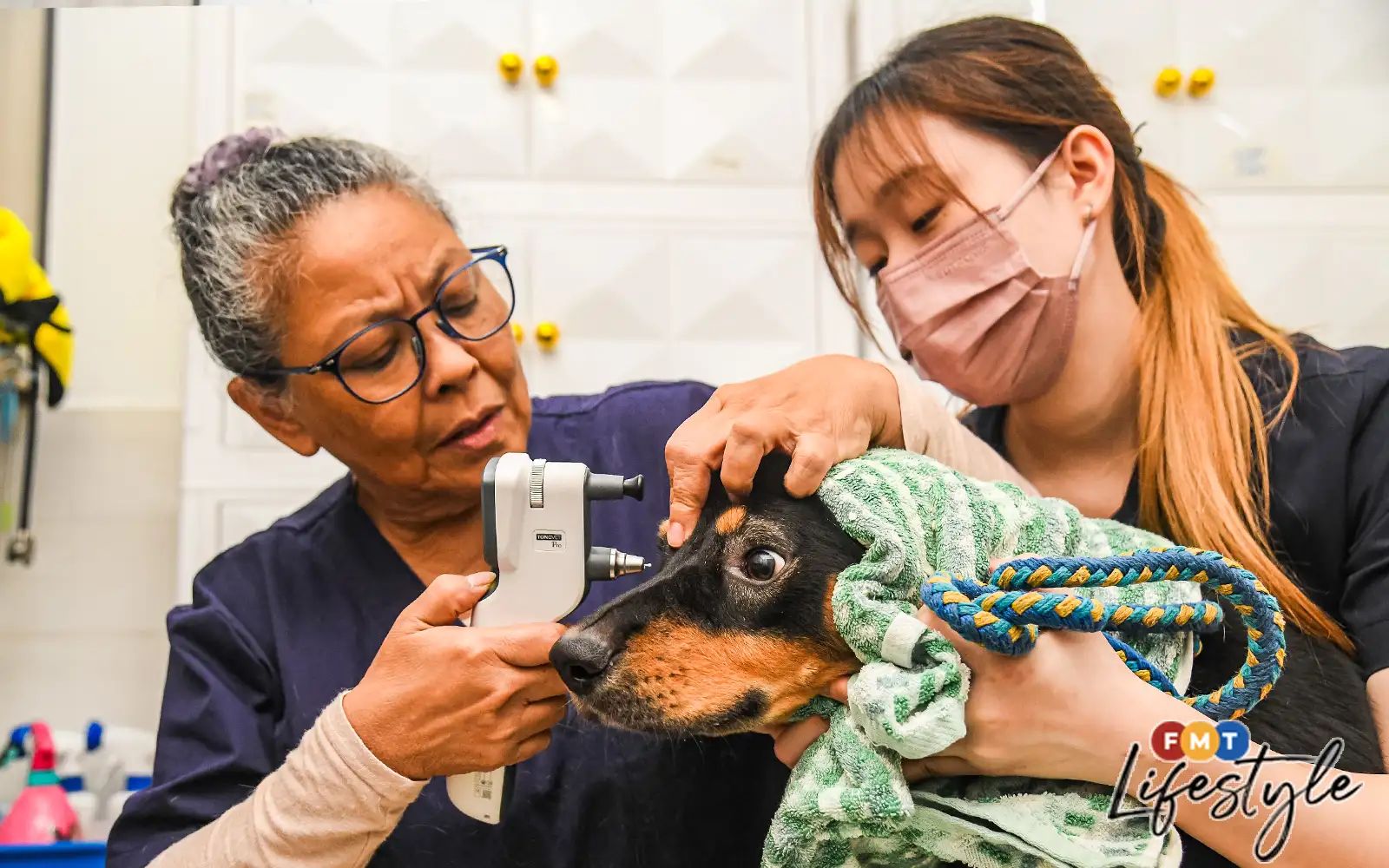
What drew her to ophthalmology, specifically, was the opportunity to make a meaningful difference. “Many eye conditions can be managed medically or surgically to preserve vision. That makes it a very rewarding field for me.”
Her compassion is evident when she is with an animal. Nadzariah approaches each one gently, taking time to put them at ease before her assessment. Soon, a diagnosis takes shape and uncertainty gives way to clarity.
“When I help to restore a pet’s vision, the feeling is amazing and very humbling. It makes me happy to see the owner happy,” she expressed.
Over the years, her work has taken her beyond pets – bringing her face-to-face Bornean sun bears, tigers, tapirs and more.
“I’ve done cataract surgeries on two tigers, which was pretty awesome,” she said warmly. “And the first Bornean sun bear I performed cataract surgery on was named Mamatai.
“Looking into the eyes of these animals is truly a remarkable experience – a reminder of the diversity and beauty of the animal world.”
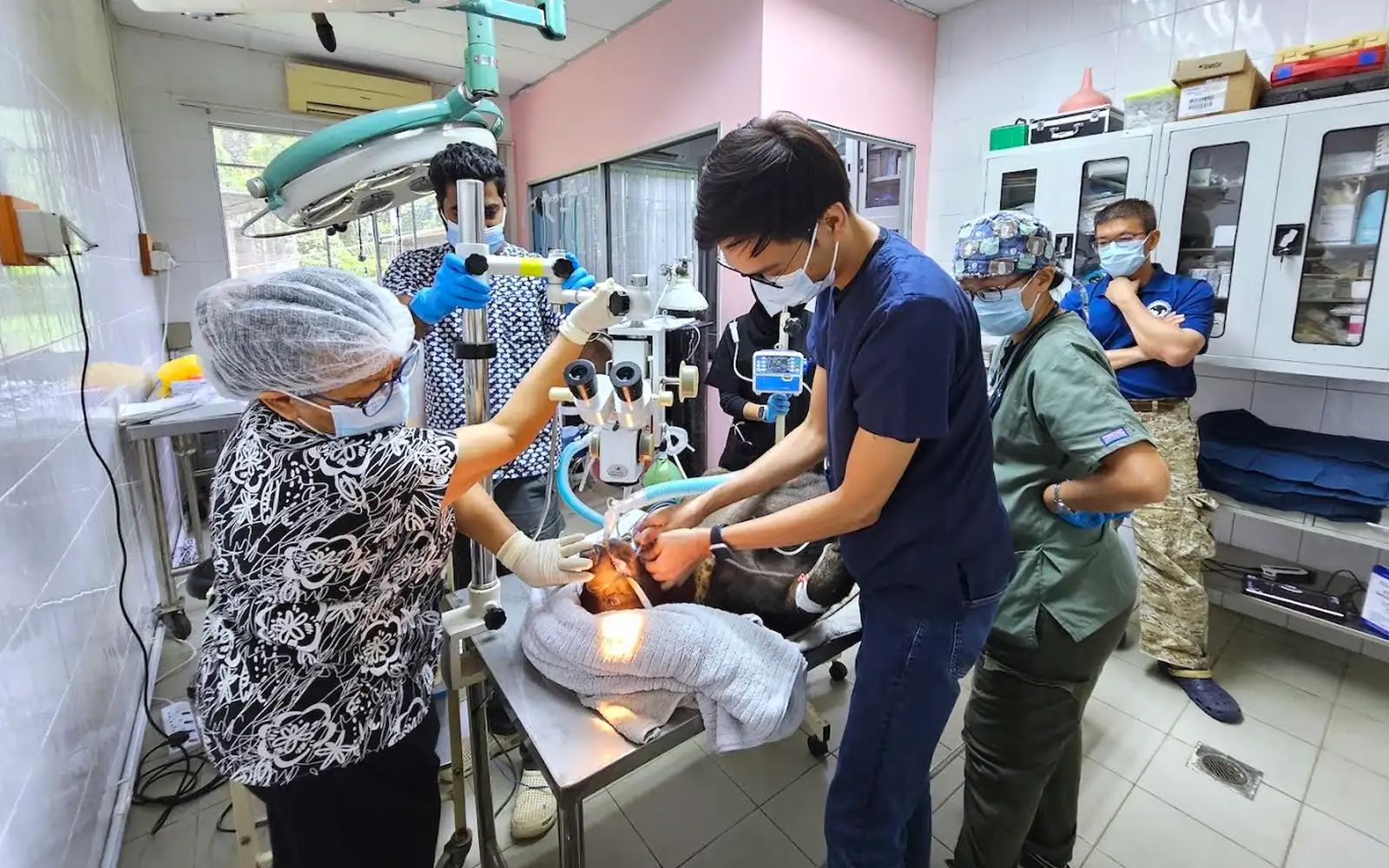
Believe it or not, she even operated on a vulture at Zoo Negara. “I couldn’t find much information about bird anatomy on the internet, so in the end, I bought a few chicken heads and dissected them!”
The effort paid off – the surgery was ultimately a success.
In her day-to-day practice, Nadzariah encounters a range of eye issues in pets. “In cats, we often see eye conditions related to previous infections, especially from viral diseases earlier in life. Some may also have structural issues, or occasionally, cataracts,” she explained.
“In dogs, eye trauma, dry eyes, cataracts and inherited retinal conditions are quite common. Certain physical traits – such as prominent eyes, excess facial skin or eye conformation – can also predispose them to eye problems.”
The good news? Many of these conditions can be managed, especially when detected early. Among the signs a pet owner should look out for are:
- squinting;
- redness;
- discharge;
- cloudiness;
- swelling;
- sudden changes in behaviour, such as bumping into objects, or becoming quieter or less interactive.
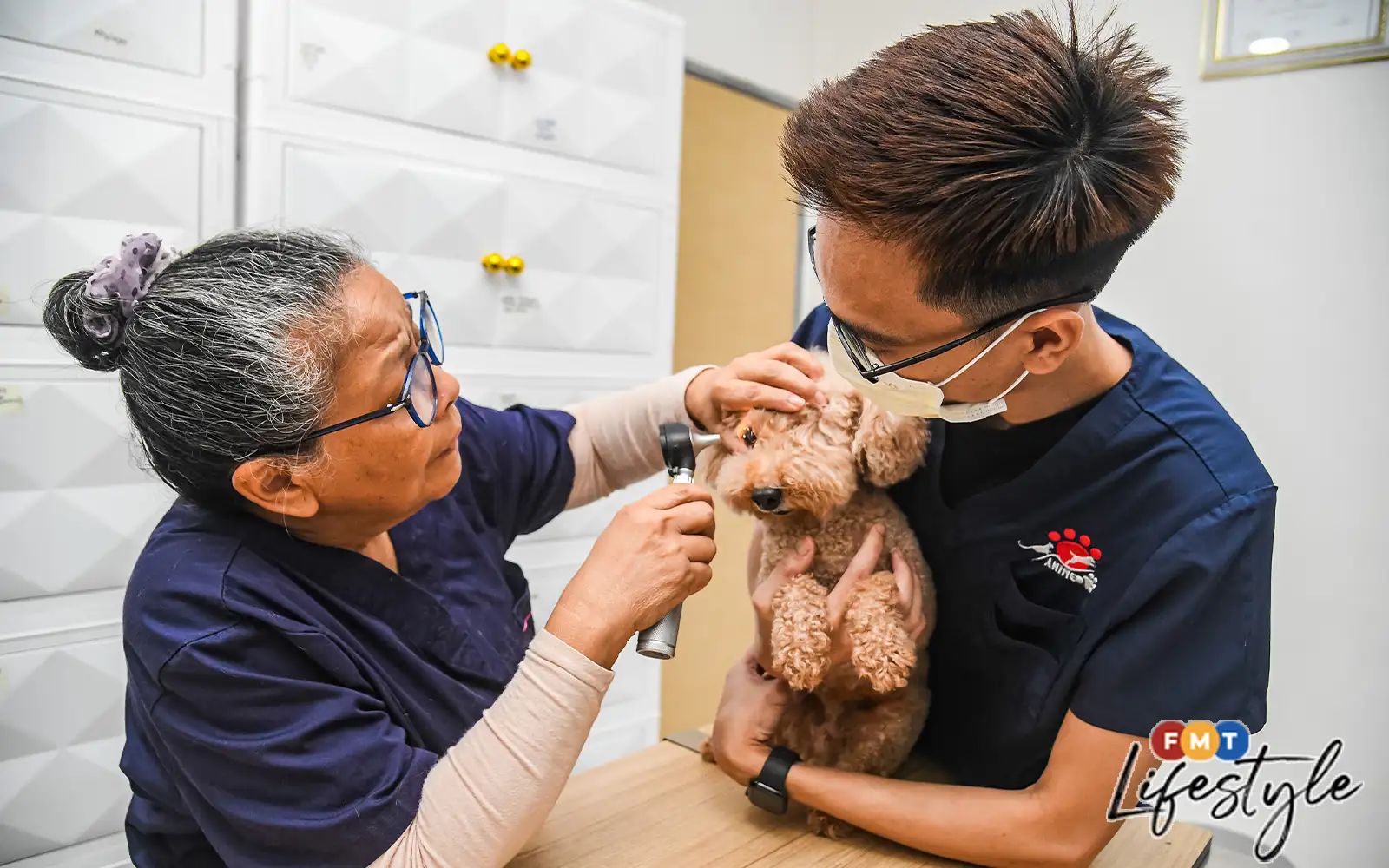
Furthermore, there is a lesser-known link worth noting – the crucial connection between oral and eye health. “Dental disease can sometimes contribute to issues around the eye, so regular dental care is important,” she stressed.
Understanding how animals see the world is also key. For instance, did you know that dogs and cats don’t see colours the same way humans do?
“Their vision is more pastel compared to ours; their colour vision isn’t very intense. But one colour that really stands out for dogs and cats is blue, like the blue of your face mask,” she noted.
Ultimately, paying attention to small changes in an animal’s eyes can help them continue to see world and they people they love well.
“So, check your pet’s eyes regularly. If anything looks unusual, seek veterinary attention early,” Nadzariah advised.
“Early detection can make a significant difference in preserving both vision and comfort.”