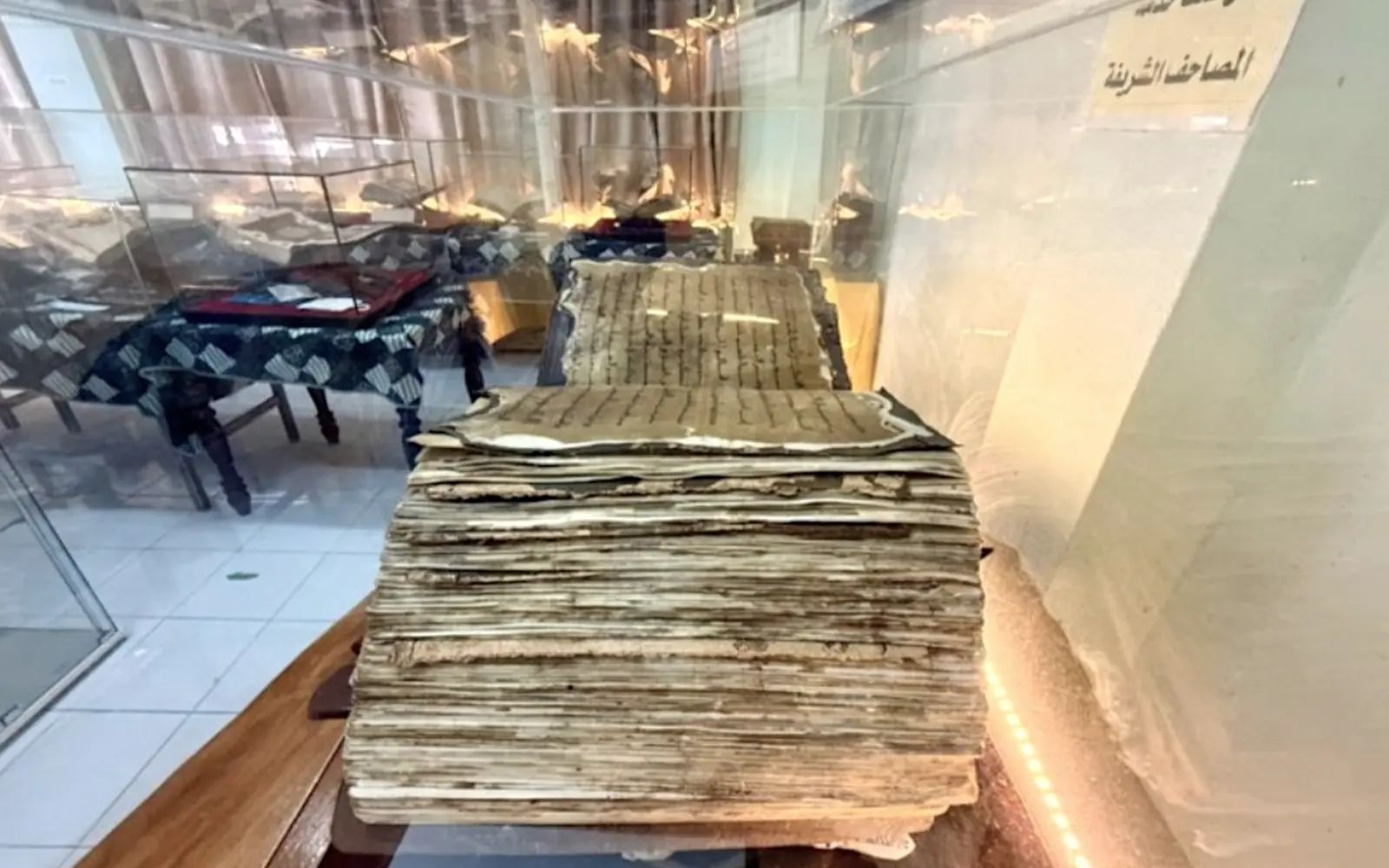
At the Museum of Islamic Cultural Heritage and Al-Quran Learning Centre in Narathiwat, southern Thailand, one extraordinary Quran manuscript offers a glimpse into that world.
Believed to be more than 1,000 years old, the massive manuscript weighs around 50kg and dates back to the Abbasid era.
Produced using 346 sheets made from animal skin and written entirely by hand in ancient Kufi script, it is considered one of the rarest Islamic artefacts preserved in the region.
Beyond its historical and religious significance, the manuscript tells a story of craftsmanship, sustainability, and the resourcefulness of early Muslim civilisations.
Museum officer Nik Ilham Nik Yusup said the Quran was produced using carefully processed animal skins sourced from Hadhramaut in Yemen.
“All the basic materials were specially brought from Hadhramaut,” he said, noting that the ink itself was also made entirely from natural ingredients.
He explained that early communities created carbon-based ink by burning materials such as wood and date palm bark before combining the residue with other organic elements gathered from forests.
“People in the past used whatever was available in nature,” he added.
The result is a manuscript that has survived centuries without the aid of modern materials or preservation technologies. And its survival today still depends on those same natural principles.
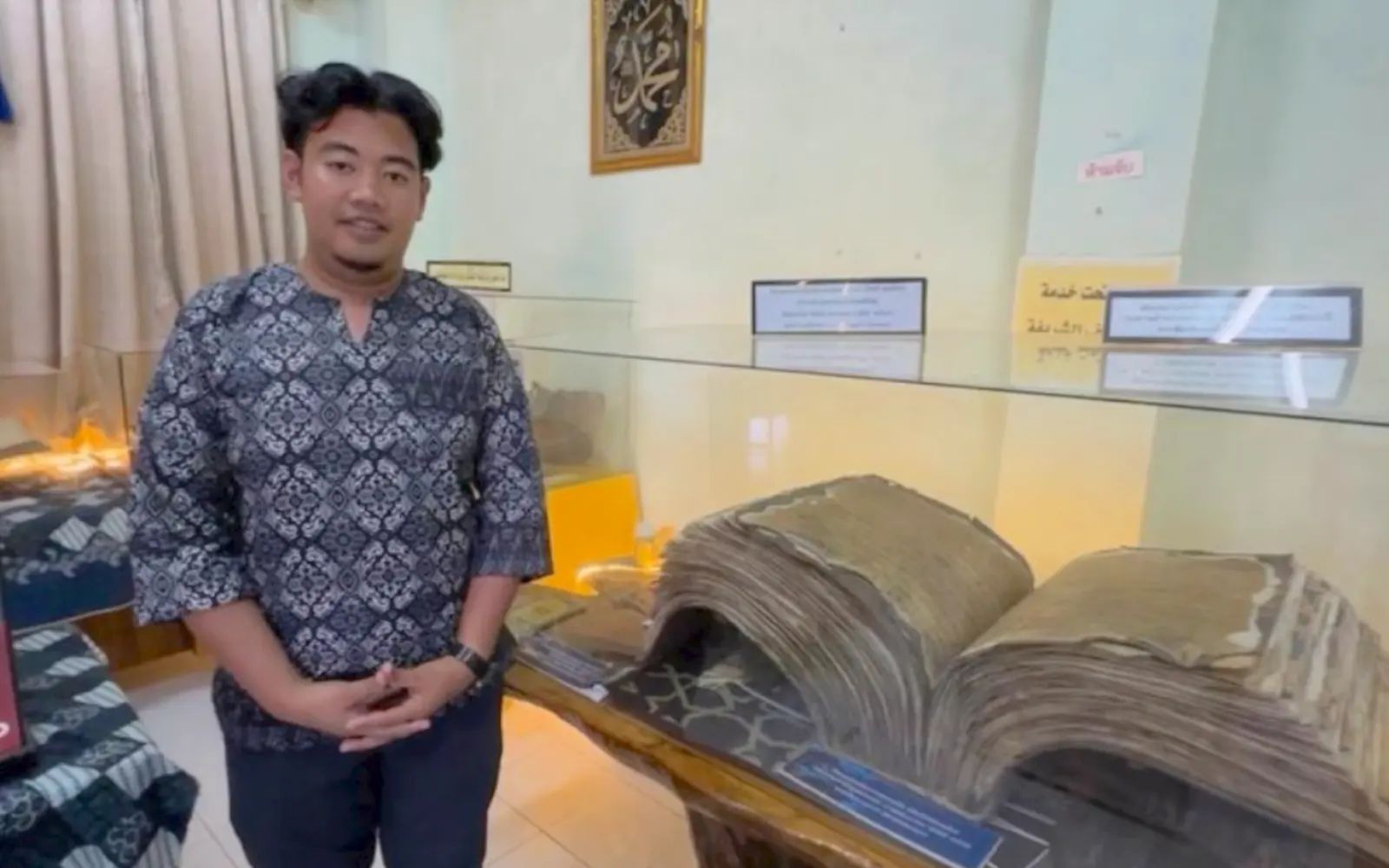
Because the Quran was created entirely using organic elements, conservation work must avoid modern chemicals and alcohol-based solvents, which could damage the delicate animal skin pages or cause the ancient ink to crack.
“The surface of these pages is extremely sensitive,” Nik Ilham stressed. “That is why we only use organic preservation methods to maintain its authenticity.”
Cleaning and restoration work is carried out every six months using specialised techniques designed to preserve the manuscript’s original texture and appearance.
The Quran’s journey to Narathiwat is itself part of a long historical trail. Nik Ilham said the manuscript is believed to have travelled from Yemen to the Malay Archipelago during the era of the early Islamic preacher Sheikh Jumadil Kubra.
It was later preserved in Indonesia for more than 500 years before being brought to Narathiwat about five years ago, during the pandemic.
Today, the manuscript is kept under tight security at the museum, where visitors are allowed to admire it from a distance but not touch it.
This Quran is a reminder of a time when knowledge, faith and craftsmanship were deeply intertwined, and when even the materials of nature could be transformed into an artefact that endures for centuries.