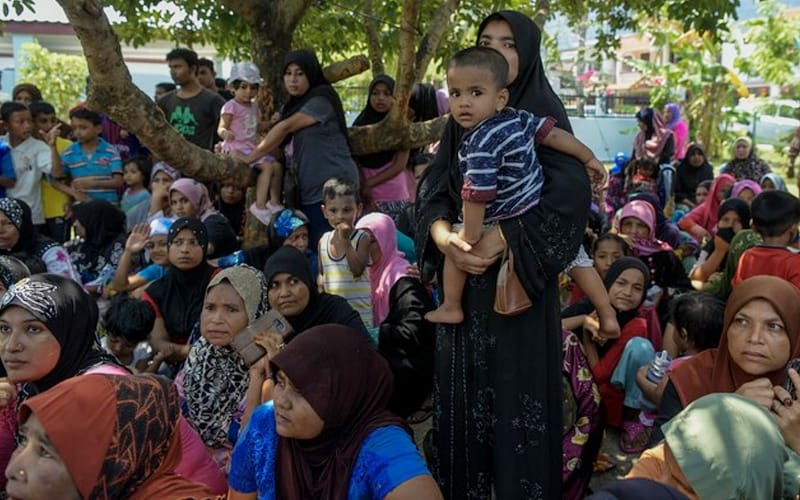
Myanmar Ethnic Rohingya Human Rights Organisation Malaysia (Merhrom) also asked if it was ethical for countries to do business with a “genocidal state”, adding that a stable regional environment is necessary for sustainability.
Merhrom president Zafar Abdul Ghani said the 35th Asean Summit, themed “Advancing Partnership for Sustainability”, was contradictory to the reality in the region.
“How do we expect to advance partnership for sustainability when Rohingya genocide is ongoing in Asean and affecting Asean member states and the rest of the world?
“Nothing has changed despite thousands of reports published, thousands of testimonies from the genocide survivors recorded and thousands of visits to the largest refugee camp in the world,” he said. “The most persecuted ethnic group in the world remains.”
In a statement, he said the region had become desensitised to the atrocities committed against the Rohingya, adding that a “state of denial” would continue to exist until the genocide is stopped.
He urged the Thai government to free Rohingya refugees in detention camps and prisons, and urged Bangkok to allow them to reside and work there until the violence is over.
“We ask for intervention from the UNHCR (United Nations High Commissioner for Refugees) regional office in Bangkok, to intervene to protect the rights of the survivors of the genocide.
“It is obvious that we need moral leadership in order to stop this genocide and to sustain the stability, peace and prosperity of Asean and the rest of the world,” he added.
He said repatriating the Rohingya back to Myanmar was not the solution, adding that the intergovernmental organisation and the United Nations had failed to protect the ethnic group.
Myanmar regards Rohingya Muslims as illegal migrants from the Indian subcontinent and has confined tens of thousands to camps in its western Rakhine state since violence swept the area in 2012.
According to UN agencies, more than 700,000 Rohingya crossed into Bangladesh in 2017 after a crackdown by Myanmar’s military sparked by Rohingya insurgent attacks on the security forces.
Thousands of Rohingya also fled Myanmar by sea in an exodus that peaked in 2015, crossing the Andaman Sea to Thailand, Malaysia, and Indonesia.